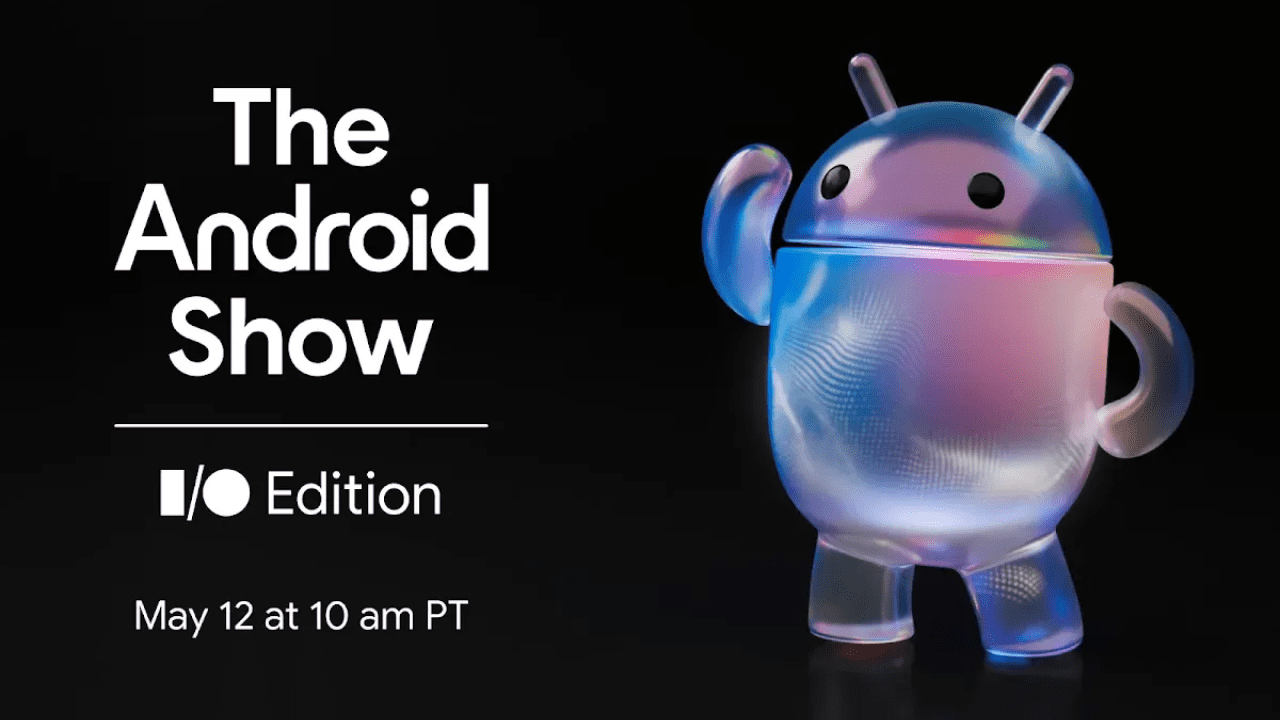
Google has officially confirmed it will host “The Android Show | I/O Edition” on May 12, setting the stage for what it calls one of the most significant years in Android’s history. The pre-recorded event, streaming on YouTube ahead of the company’s annual developer conference Google I/O starting May 19, is expected to unveil major updates to the Android ecosystem including potential design changes, new features, and long-rumored platform shifts.
The announcement signals a continued shift in how Google structures its product reveals. Instead of concentrating all announcements during I/O, the company is once again splitting consumer-facing updates into a standalone showcase, reserving more technical discussions for developers during the main conference.
This year’s edition comes amid growing anticipation around Android 17, deeper artificial intelligence integration, and the possible debut of a unified operating system that merges Android and ChromeOS an initiative that could redefine Google’s software strategy across devices.
A Dedicated Stage for Android’s Biggest Changes
The Android Show format, introduced last year, allows Google to spotlight user-focused innovations before diving into developer-centric sessions. In 2025, the company used the platform to introduce updates such as Material 3 Expressive and expanded Gemini integrations across its ecosystem.
For 2026, expectations are significantly higher. Google has explicitly framed this as a milestone year, suggesting a broader transformation rather than incremental updates.
Android 17 is currently nearing its final stages, with a stable release anticipated in June. While Google has yet to confirm specific features, the May 12 event is likely to preview enhancements that have not yet been publicly detailed.
Also read: India’s ‘Mission Drishti’ Launch Marks Breakthrough in All-Weather Satellite Surveillance
Design Evolution: A Shift Toward “Frosted Glass” UI
One of the most intriguing hints comes from a recently released teaser video, which showcases the Android mascot adopting a glossy, translucent appearance. The visual strongly suggests a new design language centered around blur effects and layered transparency often described as a “frosted glass” aesthetic.
Reports indicate that this redesign could introduce more depth and visual hierarchy across the interface, marking one of the most noticeable visual updates in years. If confirmed, it would align Android more closely with broader industry trends favoring immersive, glass-like UI elements.
Such a change would represent more than cosmetic refinement it could redefine how users interact with apps, notifications, and system elements by emphasizing clarity and spatial layering.
The Bigger Question: A Unified Google OS?
Beyond Android 17, attention is also focused on Google’s rumored effort to merge Android with ChromeOS into a single, unified platform. While details remain scarce, the initiative internally referred to in leaks as a new operating system has been quietly acknowledged by Google as part of its future roadmap.
Industry speculation suggests this platform could power a wide range of devices, from smartphones to laptops. Reports have even hinted that hardware partners like Samsung may already be preparing devices across multiple price tiers to support the new system.
Although a full reveal during The Android Show is uncertain, even partial confirmation or early insights could mark a pivotal moment in Google’s ecosystem strategy.
Also read: Oppo ColorOS 16 April Update Adds UEFA Champions League Watermarks and Enhanced Video Controls
Expert Analysis / What This Means
Google’s decision to spotlight Android ahead of I/O underscores how central the platform has become to its broader ecosystem ambitions. If the company delivers on its promise of a “big year,” the implications could extend far beyond smartphones.
For users, a redesigned interface combined with deeper AI integration could significantly change everyday interactions making devices feel more intuitive and responsive. For developers, a unified OS strategy could simplify app development across form factors, reducing fragmentation that has long challenged the Android ecosystem.
The rumored merger with ChromeOS is particularly significant. If executed successfully, it could position Google as a stronger competitor in the laptop and hybrid device market, directly challenging platforms that already offer seamless cross-device experiences.
Compared to previous Android updates, which often focused on incremental improvements, this year appears to signal structural change. That raises both opportunity and risk, while innovation could accelerate, the transition may also require adjustments from users and developers alike.
Ultimately, May 12 may offer the clearest indication yet of how Google envisions the future of computing across mobile and desktop environments.
Industry / Market Impact
A major Android overhaul could ripple across the entire tech industry. Smartphone manufacturers, app developers, and hardware partners all depend on Android’s direction, and significant changes often trigger widespread adaptation.
If Google introduces a unified operating system, it could reshape competition in the PC market, particularly in the budget and mid-range segments where Chromebooks currently dominate. A more versatile platform could also attract new hardware partners and expand Android’s reach beyond traditional devices.
Additionally, a refreshed design language could influence broader UI trends across the industry, as competitors respond to maintain visual and experiential parity.
Also read: Google’s ‘Pixel Glow’ Feature Hints at a New Era of Smart Device Design
What Happens Next
The Android Show on May 12 will likely serve as the first chapter in a broader rollout of announcements. Key highlights such as new features, design changes, or platform previews are expected to be followed by deeper technical sessions during Google I/O starting May 19.
A stable release of Android 17 is anticipated in June, meaning developers and device manufacturers will need to quickly adapt to any newly introduced capabilities.
Meanwhile, any confirmation of a unified OS strategy could set the stage for hardware announcements later in the year, potentially aligning with new device launches from Google and its partners.
As anticipation builds, all eyes are on May 12 to see whether Google delivers on its promise of a transformative year for Android.