
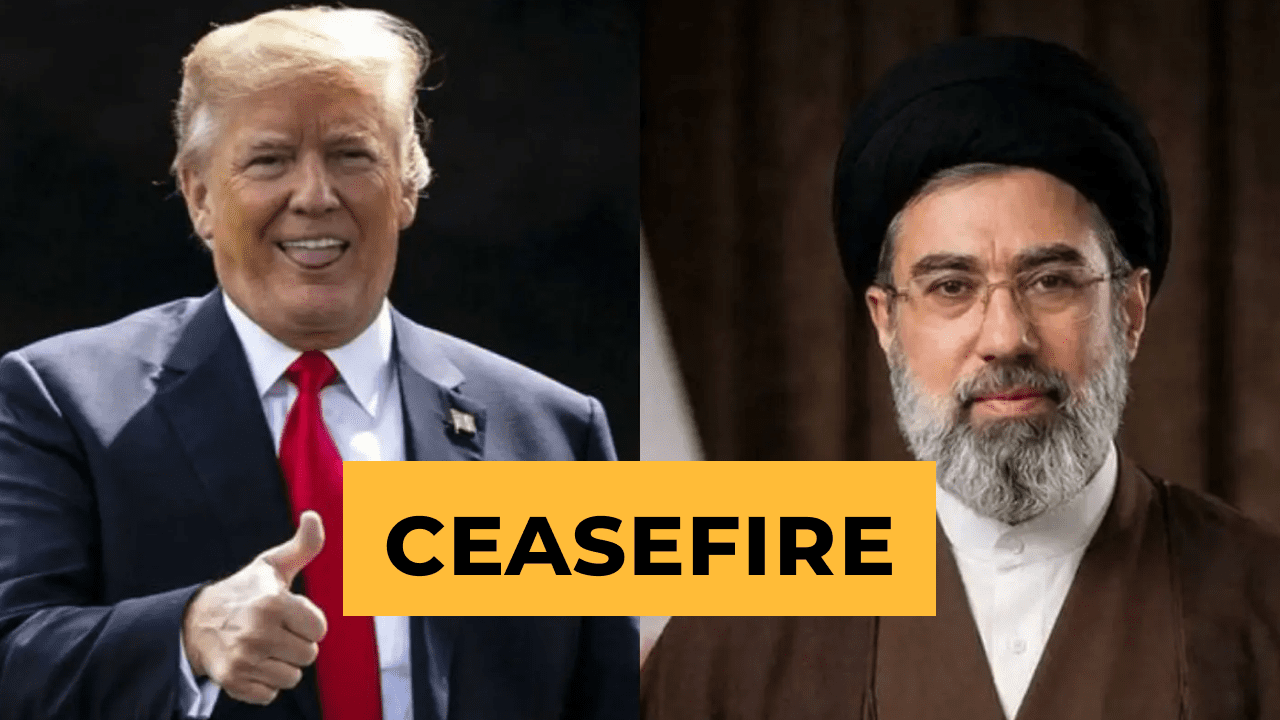
A fragile US-Iran ceasefire has been announced following one of the most volatile 24-hour periods in recent Middle East history, marked by coordinated airstrikes, threats of regional shutdowns, and rising fears of a global energy crisis. The breakthrough came after the United States launched strikes on Iran’s critical Kharg Island its primary oil export hub just hours before a deadline set by US President Donald Trump, intensifying pressure on Tehran to reopen the strategically vital Strait of Hormuz.
The two-week ceasefire agreement, brokered with mediation from Pakistan, calls for an immediate halt to hostilities, the reopening of key maritime routes, and the initiation of diplomatic talks in Islamabad. While both Washington and Tehran have signaled conditional acceptance, continued Israeli military operations across Iran underscore the fragility of the truce and the risk of renewed escalation.
Escalation Before the Pause
The hours leading up to the ceasefire were defined by rapid military escalation across multiple fronts. US and Israeli forces launched coordinated strikes on Iran’s energy and military infrastructure, including the South Pars gas field the world’s largest natural gas reserve shared with Qatar and several military installations.
Iran responded by targeting US-linked assets in Jordan and energy facilities across the Gulf region. Meanwhile, Israeli forces carried out a broad campaign, striking airports, missile launch sites, and defense production facilities. In central Tehran, an Israeli strike aimed at a senior military figure caused significant collateral damage, including the destruction of a synagogue.
Civilian infrastructure was also affected. Bridges and railway lines in major cities such as Tehran, Karaj, and Tabriz were hit, with Iranian authorities reporting casualties, including fatalities linked to strikes on transport routes.
Kharg Island: Strategic Flashpoint
At the center of the crisis was Kharg Island, a small but crucial facility that handles nearly 90% of Iran’s oil exports. Its strategic location in the Persian Gulf makes it indispensable to Iran’s economy and highly vulnerable in times of conflict.
US forces struck more than 50 targets on the island, according to reports, focusing on military installations while reportedly avoiding direct damage to oil infrastructure. The strikes came roughly 12 hours before Trump’s deadline for Iran to reopen the Strait of Hormuz a critical chokepoint through which a significant portion of the world’s oil supply passes.
Trump had repeatedly threatened severe consequences, including the destruction of Iran’s energy grid and transport infrastructure, if Tehran failed to comply. In a stark warning posted online, he cautioned that “a whole civilisation will die tonight,” drawing sharp criticism from international figures and political opponents.
Diplomatic Push and Ceasefire Terms
The ceasefire agreement emerged through backchannel diplomacy led by Pakistan’s Prime Minister Shehbaz Sharif, with US Vice President JD Vance acting as Washington’s primary interlocutor. Iranian officials confirmed receipt of a multi-point proposal and indicated conditional willingness to de-escalate.
Under the terms of the agreement:
- Both sides will halt military strikes for two weeks
- Iran will reopen the Strait of Hormuz to global shipping
- Diplomatic negotiations will begin in Islamabad toward a permanent settlement
Iran’s Foreign Minister Abbas Araghchi stated that Tehran would suspend defensive operations provided the US ceases attacks. However, Iran’s Supreme National Security Council issued a warning that its forces remain on high alert and prepared to respond to any perceived violations.
Despite the agreement, Israeli military officials indicated that their operations against Iranian targets would continue, complicating efforts to sustain the ceasefire.
Rising Threats Beyond the Battlefield
The conflict also raised alarms beyond conventional warfare. Iran’s Islamic Revolutionary Guard Corps warned of potential cyberattacks targeting US and regional energy infrastructure. Additionally, Tehran suggested that allied groups could disrupt shipping through the Bab el-Mandeb Strait, another critical maritime corridor.
Domestically, Iranian authorities mobilized civilians, urging youth to form human chains around potential targets, a move criticized by US leadership.
Meanwhile, Trump’s rhetoric sparked global backlash. Prominent political figures in the United States questioned his approach, while international voices, including religious leaders, called for restraint and a return to diplomacy.
Industry / Market Impact
The confrontation sent shockwaves through global energy markets. The temporary closure of the Strait of Hormuz and threats to Kharg Island triggered sharp volatility in oil prices, given the region’s role as a key oil transit hub.
Energy analysts warn that even a short disruption can have cascading effects on global supply chains, particularly for countries heavily reliant on Gulf exports. The ceasefire offers temporary relief, but uncertainty remains high as long as the underlying tensions persist.
Shipping and insurance costs in the region have also surged, reflecting heightened risk perceptions among global traders and logistics firms.
What Happens Next
The coming two weeks will be critical in determining whether the ceasefire can evolve into a durable peace framework or collapse under continued military pressure.
Key factors to watch include:
- Whether Israel aligns with the ceasefire or continues unilateral strikes
- Iran’s compliance with reopening maritime routes
- The success of diplomatic talks in Islamabad
- The potential for proxy escalations in other strategic waterways
Failure on any of these fronts could rapidly reverse the fragile de-escalation and reignite broader conflict.
Timeline of Events
- Sunday: Trump issues a 48-hour ultimatum to Iran to reopen the Strait of Hormuz
- Monday: US and Israeli forces strike major Iranian energy and military sites
- Tuesday (early): Civilian infrastructure and transport networks hit across Iran
- Tuesday (midday): US launches strikes on Kharg Island
- Tuesday (later): Trump announces two-week ceasefire agreement
- Post-announcement: Reports emerge of continued Israeli strikes despite US pause