
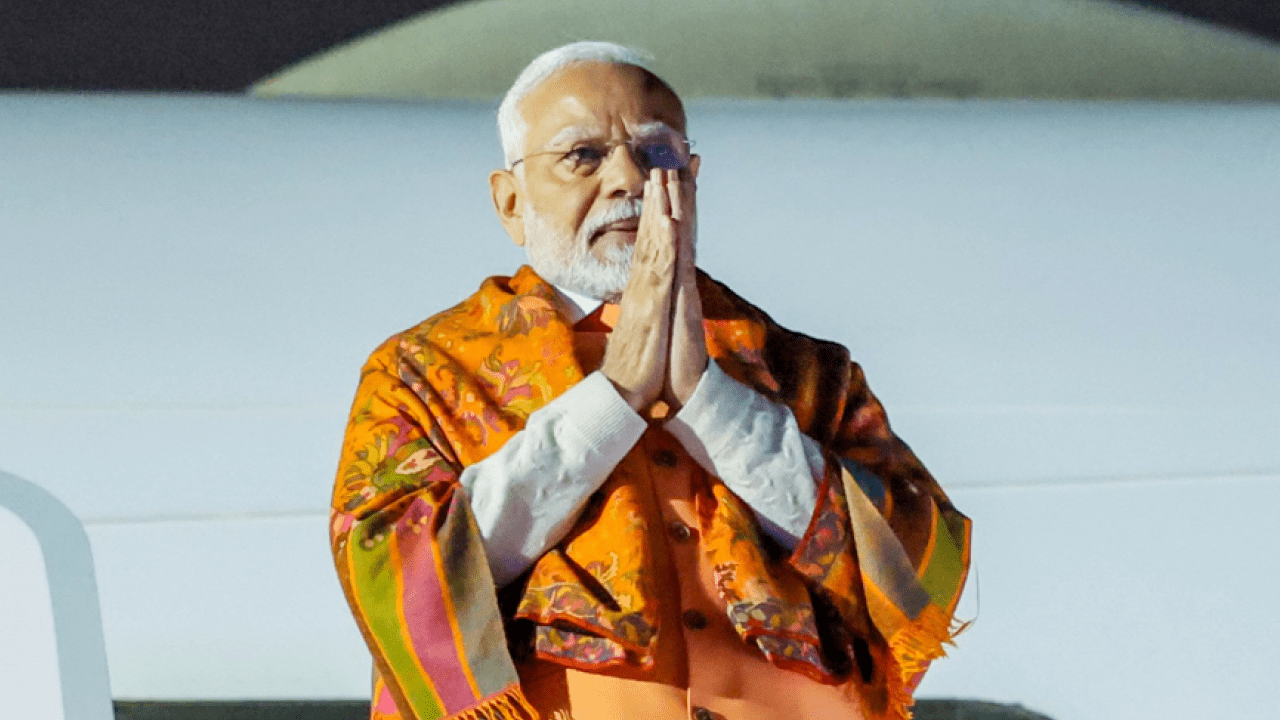
Prime Minister Narendra Modi will address the nation at 8:30 pm on Saturday, April 18, in the immediate aftermath of the Women’s Reservation Bill defeat in the Lok Sabha a major legislative setback that has intensified political tensions and revived debate over representation, federal balance, and electoral reforms in India. The address comes just a day after the Constitution (131st Amendment) Bill failed to secure the required two-thirds majority in Parliament, stalling a proposal that aimed to operationalize 33% reservation for women in legislatures ahead of the 2029 general elections.
While the government has not officially disclosed the subject of the Prime Minister’s speech, it is widely expected to focus on the failed legislation, the broader question of women’s political representation, and the contentious issue of delimitation that lay at the heart of the parliamentary deadlock.
The bill’s defeat marks a significant moment in India’s legislative process, as it sought not only to expand women’s participation in politics but also to restructure parliamentary representation through an increase in seats.
Also read: Women’s Quota Amendment Bill Fails in Lok Sabha, Dealing Rare Setback to Modi Government
What Led to the Bill’s Defeat
The Constitution (131st Amendment) Bill was introduced as a mechanism to implement women’s reservation by expanding the size of the Lok Sabha and state assemblies. The proposal included increasing Lok Sabha seats from the current 543 to as many as 816–850, depending on final delimitation outcomes, based on the 2011 Census.
This expansion was intended to create space for reserving one-third of seats for women without reducing existing representation for any constituency. The plan also extended to state and Union Territory legislatures, ensuring uniform implementation of the 33% quota.
However, the bill fell short of the constitutional requirement for passage. Out of 528 members who voted, 298 supported the legislation while 230 opposed it. A minimum of 352 votes was required for approval, leaving the ruling alliance significantly short of the mark.
The government subsequently urged the Speaker not to proceed with related legislative proposals, including the Delimitation Bill, 2026, and the Union Territories Laws (Amendment) Bill, 2026, signaling a temporary halt to the broader reform agenda.
Political Divide Over Delimitation
At the core of the opposition’s resistance was the linkage between women’s reservation and the delimitation process. While opposition parties maintained that they support the principle of reserving seats for women, they strongly objected to tying it to a redrawing of constituencies based on population data from the 2011 Census.
Critics argued that delimitation could disproportionately affect southern and smaller states by reducing their relative representation in Parliament compared to more populous northern states. This concern became a central point of political contention during the debate.
Senior opposition leaders framed the bill as a structural shift rather than a purely gender-focused reform. They contended that the proposed changes could alter the federal balance of power, raising broader constitutional and political questions beyond women’s representation.
On the other hand, the government accused opposition parties of obstructing a historic opportunity to advance gender equality in political institutions. The sharp divide has turned the issue into both a policy debate and a political flashpoint.
Why This Matters
The failure of the bill has significant implications for India’s efforts to enhance women’s participation in governance. Despite longstanding discussions and earlier legislative attempts, the path to implementing a nationwide quota for women remains uncertain.
The proposed framework aimed to ensure that women would hold one-third of seats in Parliament and state assemblies starting from 2029. Without the passage of this amendment, the timeline for achieving that goal is now unclear.
Beyond gender representation, the episode underscores deeper structural challenges in India’s legislative process, particularly when constitutional amendments intersect with politically sensitive issues like delimitation. It also highlights the difficulty of building consensus on reforms that have long-term implications for electoral representation and federal dynamics.
Background Context
The idea of reserving seats for women in legislatures has been debated in India for decades. While the Women’s Reservation Bill was passed in a previous form in 2023, its implementation has remained contingent on delimitation and seat expansion.
Delimitation the process of redrawing constituency boundaries based on population changes has not been undertaken since 2002 due to a constitutional freeze. The proposed reforms sought to revive this process using updated census data, making it a critical but controversial component of the new bill.
The linkage between reservation and delimitation was intended to avoid reducing existing seats for male candidates while accommodating new quotas. However, it also introduced complex political trade-offs that ultimately contributed to the bill’s failure.
What Happens Next
All eyes are now on Prime Minister Modi’s national address, which is expected to provide clarity on the government’s next steps. The speech could outline whether the administration plans to reintroduce the bill in a revised form, decouple it from delimitation, or pursue alternative legislative strategies.
The address may also serve as a political response to opposition criticism and an attempt to shape public opinion on the issue. Given the heightened political climate, it is likely to set the tone for future debates on electoral reforms and women’s representation.
In the absence of immediate legislative progress, the issue is expected to remain a key point of contention in national politics, particularly as the 2029 general elections approach.