
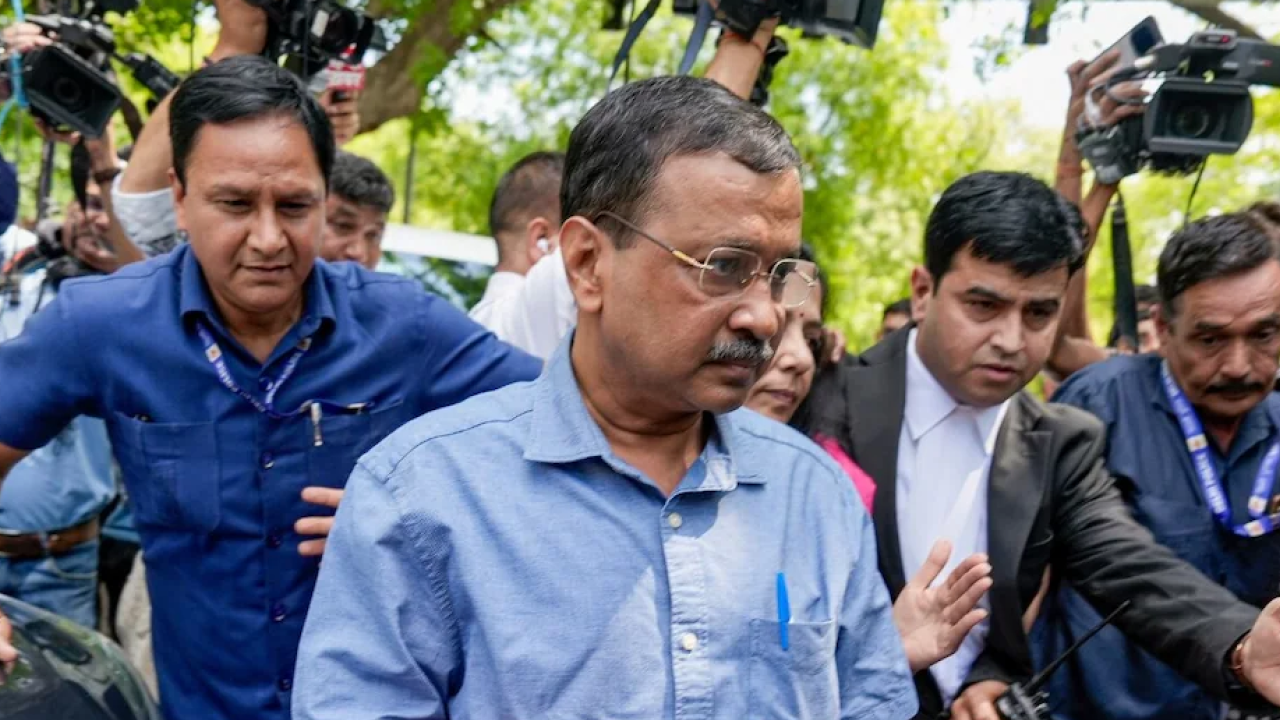
The Kejriwal recusal plea Delhi High Court proceedings in the Delhi excise policy case have reached a decisive stage, with the court set to pronounce its verdict at 4:30 pm today on whether Justice Swarana Kanta Sharma should withdraw from hearing the Central Bureau of Investigation’s (CBI) challenge to the discharge of former Chief Minister Arvind Kejriwal and other accused. The matter has drawn intense legal scrutiny as it touches upon questions of judicial impartiality, procedural fairness, and the boundaries of recusal standards in politically sensitive trials. At the center of the dispute are allegations raised by Kejriwal regarding an “apprehension of bias,” which the CBI has strongly rejected as unfounded and potentially harmful to judicial independence.
Also read: Kejriwal Seeks Judge’s Recusal, Set to Argue Case Himself in Delhi Excise Policy Row
What the Delhi High Court Is Deciding Today
The Kejriwal recusal plea Delhi High Court verdict being delivered today concerns whether Justice Sharma should continue hearing the CBI’s appeal against a trial court order that discharged Kejriwal, Manish Sisodia, and 21 others in February. The trial court had earlier held that the evidence presented by the agency did not establish a prima facie case in the alleged irregularities linked to the now-scrapped Delhi Excise Policy 2021–22.
The High Court had issued notice on the CBI’s appeal in March and also stayed certain related observations made by the trial court, including directions for departmental action against an investigating officer. These interim observations later became a key basis for the accused’s claim that the matter might not receive an impartial hearing.
On Monday, the court also dealt with procedural tensions after Kejriwal sought permission to file additional written submissions after the matter had been reserved for orders. The court allowed the filing but clarified it would be treated strictly as written submissions rather than formal pleadings, pushing the final ruling to later in the day.
Background of the Delhi Excise Policy Case
The dispute stems from allegations surrounding the formulation and implementation of the Delhi Excise Policy 2021–22, which has been under investigation by both the CBI and the Enforcement Directorate.
On February 27, a trial court discharged Kejriwal, Sisodia, and 21 co-accused, observing that the CBI’s case lacked sufficient material and was unable to withstand judicial scrutiny. The agency challenged this order before the High Court, arguing that key findings of the lower court were erroneous and required reconsideration.
In March, the High Court issued notice on the appeal and stayed parts of the trial court’s directions. Around the same time, the accused sought transfer of the case, expressing concern over judicial neutrality. That request was declined, with the Chief Justice noting that recusal decisions must be made by the concerned judge herself.
The recusal issue formally escalated in April when Kejriwal and others filed applications seeking Justice Sharma’s withdrawal from the matter, citing perceived conflict and prior judicial observations.
Also read: Raghav Chadha Breaks Silence After AAP Ouster, Raises Questions Over ‘Silencing’ in Rajya Sabha
Arguments Over Bias, Procedure, and Judicial Independence
At the heart of the Kejriwal recusal plea Delhi High Court dispute are allegations that Justice Sharma’s family members are empanelled with the Union government’s legal panel. Kejriwal argued that her son and daughter’s professional association with government litigation created a perception of institutional overlap in a politically sensitive case involving central agencies.
He also contended that earlier judicial observations had created a perception that the outcome was effectively predetermined. At one point during arguments, Kejriwal claimed he felt “almost declared guilty,” stressing that recusal standards should be based on reasonable apprehension rather than proof of actual bias.
The CBI strongly opposed these claims, calling them speculative and legally insufficient. It argued that accepting such grounds would open the door to “bench hunting” and undermine judicial stability, especially in cases involving political figures. The agency also clarified that the judge’s children had no involvement in the excise case and were independent practitioners.
Solicitor General Tushar Mehta further argued that procedural rules do not permit fresh filings once a matter has been reserved for judgment, warning that allowing such exceptions could distort established court practice. The court, however, permitted Kejriwal’s submissions to be recorded as written material, emphasizing that it was ensuring he was not left feeling unheard.
Also read: ED Raids Target AAP MP Ashok Mittal’s Lovely Group Days After Rajya Sabha Role Change
What Happens Next After the Verdict
The ruling on the Kejriwal recusal plea Delhi High Court will determine whether Justice Sharma continues to hear the CBI’s appeal or whether the matter is reassigned to another bench. If the recusal plea is rejected, the High Court is expected to proceed with adjudicating the CBI’s challenge to the discharge order in the coming hearings.
If the plea is accepted, it could reset the hearing process, potentially delaying the larger case involving allegations tied to the excise policy investigation.
Legal experts view the outcome as significant beyond this individual case, as it may clarify the threshold required for establishing “reasonable apprehension of bias” in Indian courts, particularly in cases involving political figures and central investigative agencies.
Timeline of Key Developments
- February 27: Trial court discharges Kejriwal, Sisodia, and others in the excise policy case
- March 9: High Court issues notice on CBI’s appeal and stays parts of trial court directions
- March 11–13: Accused seek transfer; request declined
- April 6: Kejriwal files recusal plea before High Court
- April 13: Court hears arguments and reserves judgment
- April 20 (Today): Verdict on recusal plea scheduled for 4:30 pm
Why This Matters
The case sits at the intersection of criminal law, judicial ethics, and political accountability. A ruling in favor of recusal could set a precedent for how courts assess perceived conflicts involving family associations and institutional proximity. A rejection, on the other hand, would reinforce the judiciary’s existing high threshold for proving bias claims and limit recusal arguments to more direct and demonstrable conflicts.