
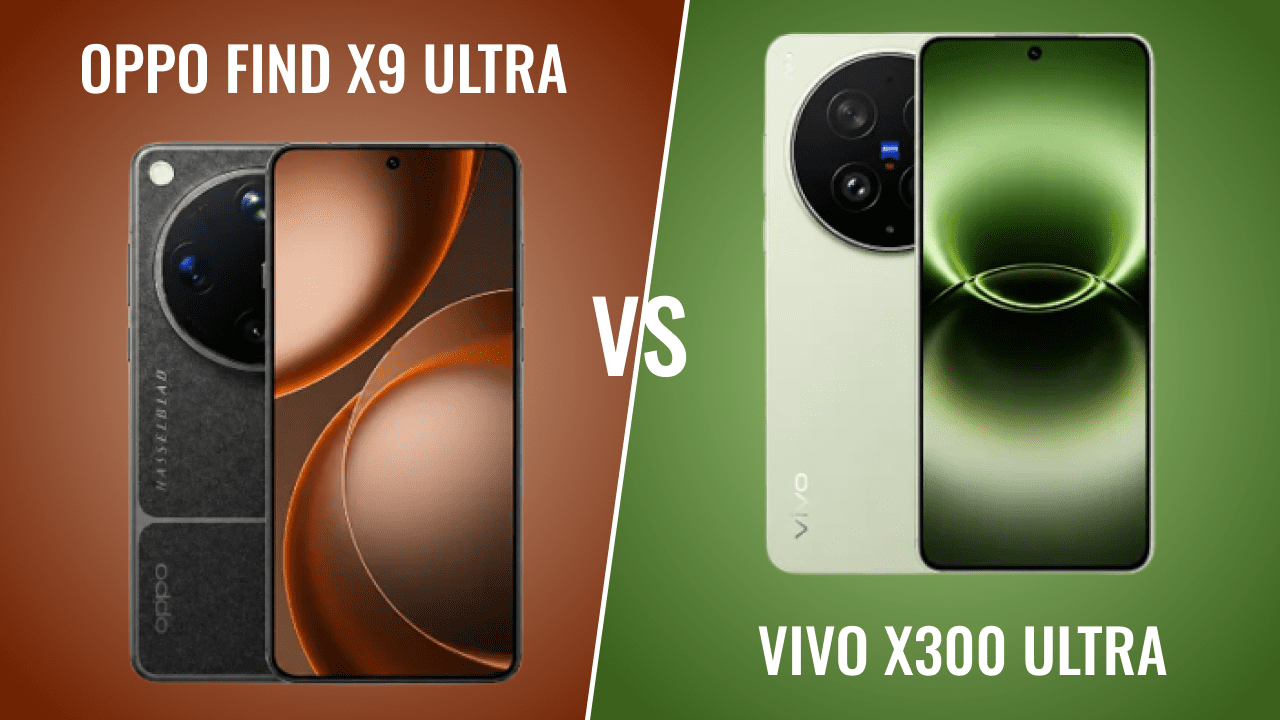
The battle for smartphone supremacy has intensified with the launch of two of the most advanced ultra-flagship devices to date, the Oppo Find X9 Ultra and the Vivo X300 Ultra. Both smartphones are redefining what premium mobile hardware can achieve, but they take sharply different paths to get there. While Oppo leans into raw power, extreme battery capacity, and a more aggressive imaging system, Vivo focuses on refined usability, superior accessory integration, and computational photography precision.
At the heart of this comparison is not just which phone is technically better, but which philosophy of “Ultra” delivers more meaningful value to users in real-world scenarios.
Ultra Flagship Philosophy: Power vs Refinement
Both the Oppo Find X9 Ultra and Vivo X300 Ultra are powered by the same Snapdragon 8 Elite Gen 5 chipset paired with the Adreno 840 GPU, making them virtually identical in raw performance benchmarks. Everyday speed, gaming performance, and multitasking capability are effectively indistinguishable between the two.
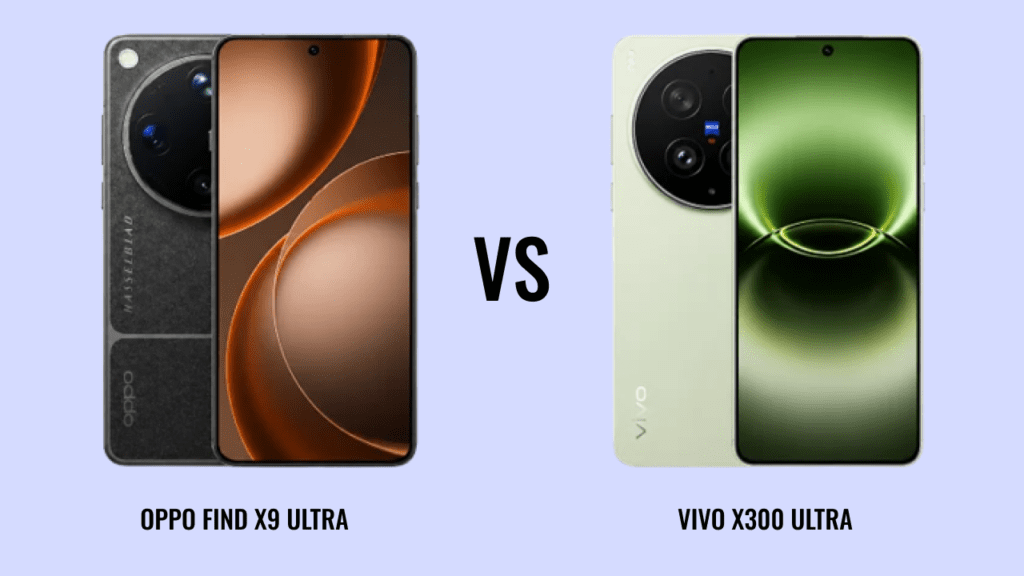
However, divergence begins in execution. Oppo prioritizes endurance and feature density, equipping its device with a larger 7050mAh battery, faster wireless charging, and a more expansive camera system. Vivo counters with a more balanced 6600mAh–6400mAh battery configuration but compensates through better ergonomics and tighter system integration, particularly in its camera ecosystem.
This split defines the entire comparison, Oppo builds for extremes, while Vivo builds for consistency.
Also read: Vivo X300 Ultra India Launch Confirmed as Premium Camera Flagship Push Intensifies
Display and Design: Comfort vs Impact
Both devices feature 144Hz LTPO AMOLED panels with Dolby Vision support, placing them at the top tier of mobile display technology. However, subtle tuning differences separate them in everyday use.
Vivo’s X300 Ultra introduces higher PWM dimming at 2160Hz, reducing eye strain during extended usage and making it more comfortable for users sensitive to screen flicker. Oppo, on the other hand, pushes peak brightness up to 3600 nits, giving it a stronger presence in direct sunlight and a more visually aggressive output.
Design philosophy further reinforces this divide. The Oppo Find X9 Ultra embraces expressive styling, including eco-leather finishes and a more tactile premium feel. Vivo opts for a cleaner glass-and-metal aesthetic that prioritizes understated elegance and uniformity.
In short, Vivo feels refined and restrained, while Oppo feels bold and experimental.
Also read: Oppo Find X9 Ultra and Find X9s Pro Set New Benchmark With Dual 200MP Cameras Ahead of Global Launch
Camera Systems: Two Paths to Ultra Photography
The most dramatic differences between these two devices emerge in their camera ecosystems. Both phones feature 200MP-class primary sensors and advanced computational imaging pipelines, but their configurations and philosophies differ significantly.
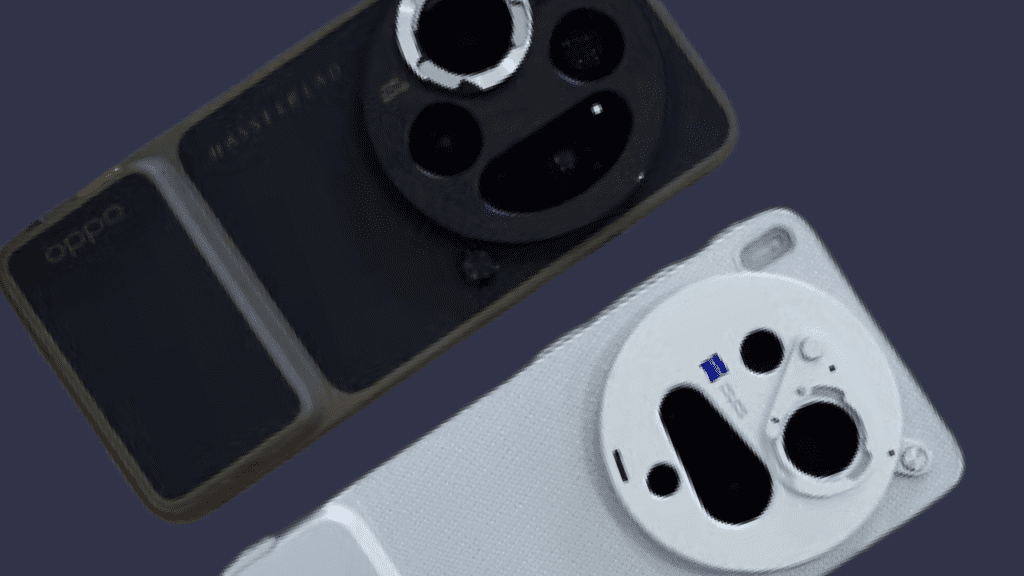
Oppo equips its Find X9 Ultra with a quad-camera setup, including dual 200MP sensors and a dedicated 10x periscope zoom lens, making it one of the most versatile native zoom systems in the industry. Vivo uses a triple-camera setup but relies more heavily on software tuning and optional external teleconverter lenses.
Where Oppo’s system is built for built-in versatility, Vivo’s approach is modular and expandable.
Color science also differs: Oppo partners with Hasselblad tuning for natural tones and dynamic balance, while Vivo relies on Zeiss optics and stronger stabilization tools, including gimbal-based OIS and advanced LUT processing.
Teleconverter Battle: Mobile Photography Goes Modular
The most disruptive innovation comes from both companies’ optional photography kits, which transform the phones into near-professional imaging systems.
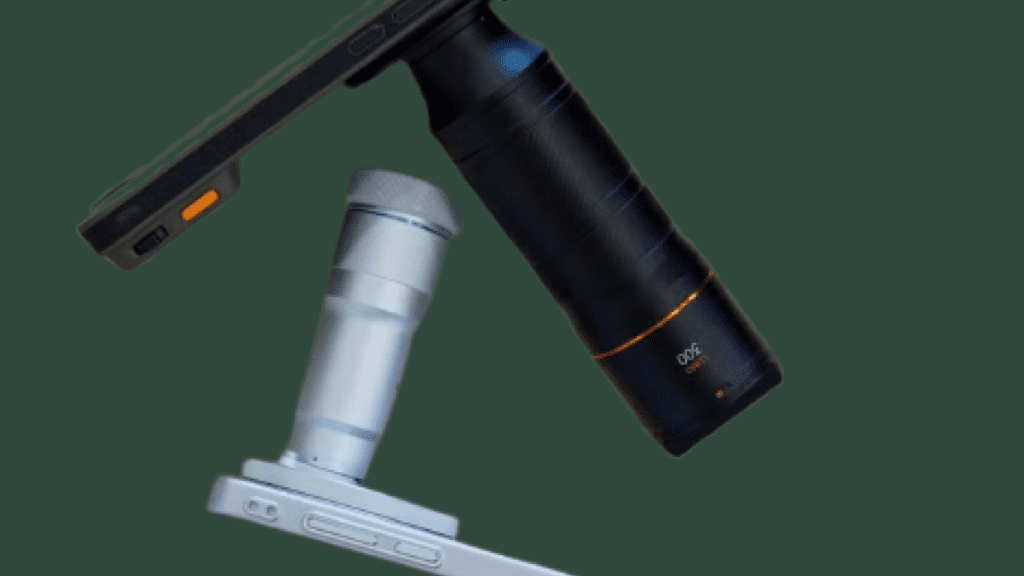
Oppo’s kit includes a massive 300mm teleconverter that significantly extends zoom reach but adds considerable bulk, making the device difficult to handle. Vivo counters with two teleconverters: a compact G2 lens and a more powerful 400mm G2 Ultra option, offering greater flexibility across shooting conditions.
While Oppo’s system delivers strong results at moderate telephoto ranges, its extreme zoom performance often relies on heavy computational enhancement. Vivo’s smaller G2 lens, however, produces cleaner results with less reliance on post-processing.
A key difference lies in usability. Vivo’s USB-C-based connection allows instant activation and smoother controls, while Oppo relies on Bluetooth pairing, adding friction to setup and use. Vivo’s camera grip is also more advanced, featuring dedicated shutter, zoom, and video controls with a built-in battery, while Oppo’s equivalent is functional but less refined.
Despite Oppo’s stronger stabilization in handheld use, Vivo’s modular system ultimately offers greater versatility, especially for users willing to carry multiple lenses.
Image Quality: Consistency vs Creativity
Real-world photography reveals a nuanced split.
Oppo’s Find X9 Ultra excels in main sensor photography, producing balanced tones, accurate white balance, and natural contrast. It performs especially well in standard shooting conditions and delivers strong results up to moderate zoom levels.
Vivo, however, often outperforms in challenging environments and motion-heavy scenes. Its autofocus system is more reliable, and its image processing produces sharper detail in complex textures such as wildlife and water movement.
At extreme zoom ranges, the comparison becomes more complex. Vivo’s teleconverter system produces sharper long-distance results, but with more visible computational enhancement. Oppo’s ultra-zoom images are more natural in certain ranges but struggle beyond their optimal optical limits.
In essence, Oppo is more consistent at base performance, while Vivo is more adaptable at extremes.
Industry / Market Impact
The Oppo Find X9 Ultra and Vivo X300 Ultra signal a major shift in smartphone photography strategy. Instead of relying solely on sensor upgrades, both brands are moving toward modular optical ecosystems that extend hardware capabilities beyond the phone itself.
This approach places them in a new competitive category alongside traditional flagship rivals, forcing the industry to rethink how zoom, stabilization, and professional-grade photography are delivered on mobile devices.
The inclusion of external teleconverters also suggests a future where smartphone cameras may increasingly resemble interchangeable-lens systems, blurring the line between phones and compact camera rigs.
What Happens Next
The next phase of competition will likely focus on refinement rather than expansion. Early feedback highlights clear trade-offs, Oppo’s system is powerful but cumbersome, while Vivo’s is more usable but still reliant on accessories for peak performance.
Future iterations will likely aim to reduce accessory bulk, improve native zoom quality, and streamline software integration so that modular photography feels less like an add-on and more like a seamless extension of the device.
Verdict: Two Winners, Two Different Users
There is no single victor in this ultra-flagship showdown.
The Oppo Find X9 Ultra is the better choice for users who prioritize raw camera hardware, larger battery capacity, and a more powerful native imaging system.
The Vivo X300 Ultra is better suited for users who value usability, accessory integration, eye comfort, and more consistent performance in real-world photography scenarios.
Both devices push mobile imaging forward but they do so in fundamentally different directions.