
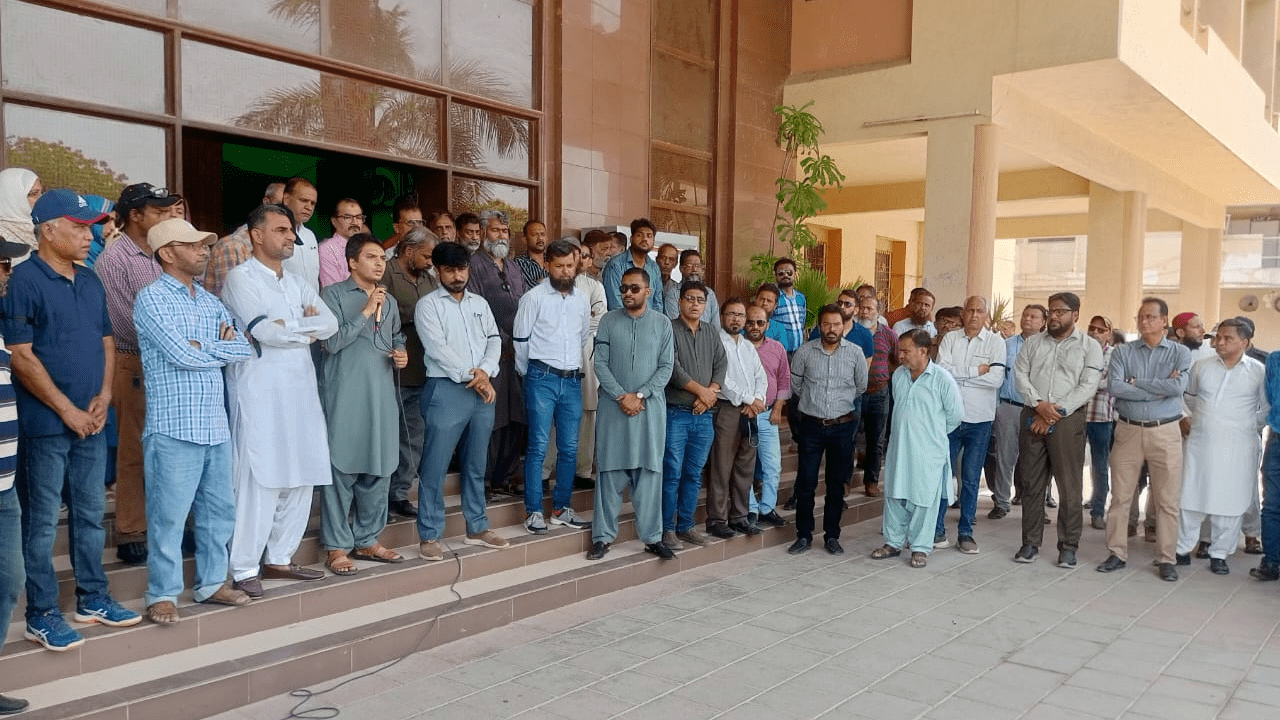
The Karachi University exams boycott has brought one of Pakistan’s largest public universities to a standstill, underscoring a growing institutional and economic crisis. Faculty members at Karachi University (KU) refused to conduct semester examinations this week, citing prolonged non-payment of salaries, allowances, and examination-related compensation. The disruption not only affects thousands of students but also highlights deeper governance and financial challenges within Pakistan’s higher education sector amid ongoing economic instability.
The boycott, led by the Karachi University Teachers’ Society (KUTS), marks an escalation of tensions that had been building for weeks. Earlier protests, including a “black day” demonstration, signaled mounting frustration among teachers, administrative staff, and campus employees. The latest action reflects a breakdown in negotiations between faculty and university authorities over unpaid dues and financial transparency.
Mounting Financial Grievances Trigger Academic Shutdown
At the heart of the crisis is the non-payment of multiple categories of compensation owed to faculty and staff. Teachers report delays in payments for evening classes, examination duties, paper checking, invigilation, and housing-related allowances. Additional pending benefits, such as leave encashment and supervisory fees, have compounded the issue.
Faculty members say the delays have stretched on long enough to create severe financial distress. With inflation surging across Pakistan, the real income of educators has sharply declined, making routine expenses increasingly difficult to manage. Rising fuel and commodity prices have further intensified the strain.
KUTS leadership described the boycott as an unavoidable step after repeated attempts to engage the administration failed to yield results. According to faculty representatives, warnings were issued multiple times, but no meaningful action was taken to address their concerns or provide a roadmap for clearing dues.
Also read: Iran Proposes Phased Deal to End War and Reopen Strait of Hormuz Amid Stalled US Talks
Protests Escalate Amid Governance Concerns
The current strike follows a series of protests involving not only teachers but also university officers and employees. During a recent demonstration, participants demanded immediate settlement of outstanding payments and called for structural reforms to address what they described as chronic financial mismanagement.
Leaders of campus organizations emphasized that the crisis is not merely about delayed payments but reflects deeper governance failures. Calls were made for improved accountability mechanisms, including regular financial audits and oversight of university leadership.
The protest movement has also gained emotional weight following the passing of a senior faculty representative, adding to the somber atmosphere on campus even as demonstrations continue.
PKR 1.3 Billion Deficit Raises Alarm
The university’s financial instability is underscored by a reported deficit of approximately PKR 1.3 billion. Faculty leaders have urged the Sindh government to intervene, requesting an independent investigation into the shortfall to ensure transparency and accountability.
They have also called on Chief Minister Murad Ali Shah to implement systemic reforms, including stricter oversight of financial management and clearer accountability for both current and past administrators.
Without such intervention, faculty warn that the situation could deteriorate further, potentially leading to prolonged academic disruption and reputational damage for the institution.
Also read: White House Dinner Shooting Scare: Suspect in Custody After Gunfire Erupts Near Washington Event
Students Caught in the Middle
The immediate impact of the Karachi University exams boycott is being felt by thousands of students whose academic schedules have been thrown into uncertainty. With examinations postponed indefinitely, concerns are growing about delayed graduations, disrupted academic calendars, and long-term consequences for students’ careers.
While faculty members acknowledge the disruption, they argue that the protest is necessary to ensure the long-term sustainability of the institution and protect the integrity of academic operations.
Expert Analysis / What This Means
The Karachi University exams boycott reflects a broader systemic crisis in Pakistan’s public education sector, where financial instability and administrative inefficiencies are increasingly common. For students, the immediate consequence is academic uncertainty, but the longer-term risk lies in declining educational quality if faculty morale continues to erode.
For the government, this crisis signals the urgent need for structural reforms in university funding and governance. Similar incidents in the past have often been resolved temporarily without addressing root causes, raising the likelihood of recurring disruptions.
The situation also highlights how macroeconomic pressures particularly inflation are directly impacting public institutions. As operational costs rise and funding gaps widen, universities may struggle to maintain basic functions.
From an institutional perspective, failure to resolve the crisis could damage Karachi University’s reputation, potentially affecting student enrollment and faculty retention. In a competitive global education environment, sustained instability can have lasting consequences.
Ultimately, the boycott underscores the need for transparent financial systems, accountable leadership, and sustainable funding models to prevent similar crises across the higher education landscape.
Timeline of Events
- Early protests: Faculty and staff begin demonstrations over unpaid dues, including a “black day” protest.
- Escalation warnings: KUTS warns of potential examination boycott if issues remain unresolved.
- May 5 (scheduled): Exams set to begin amid growing uncertainty.
- May 6: Majority of faculty boycott semester examinations, halting academic activities.
- Ongoing: Faculty await outcomes of internal meetings and possible government intervention.
What Happens Next
The continuation of the boycott will likely depend on the outcome of negotiations between faculty representatives, university administration, and provincial authorities. A scheduled general body meeting is expected to determine the next course of action.
If immediate financial relief or a credible reform plan is not announced, faculty leaders have indicated that protests could intensify further. This may include expanding the scope of the boycott or initiating broader industrial action.
Government intervention could prove decisive. A transparent audit and phased payment plan may help de-escalate tensions, but long-term stability will require systemic changes in financial governance.