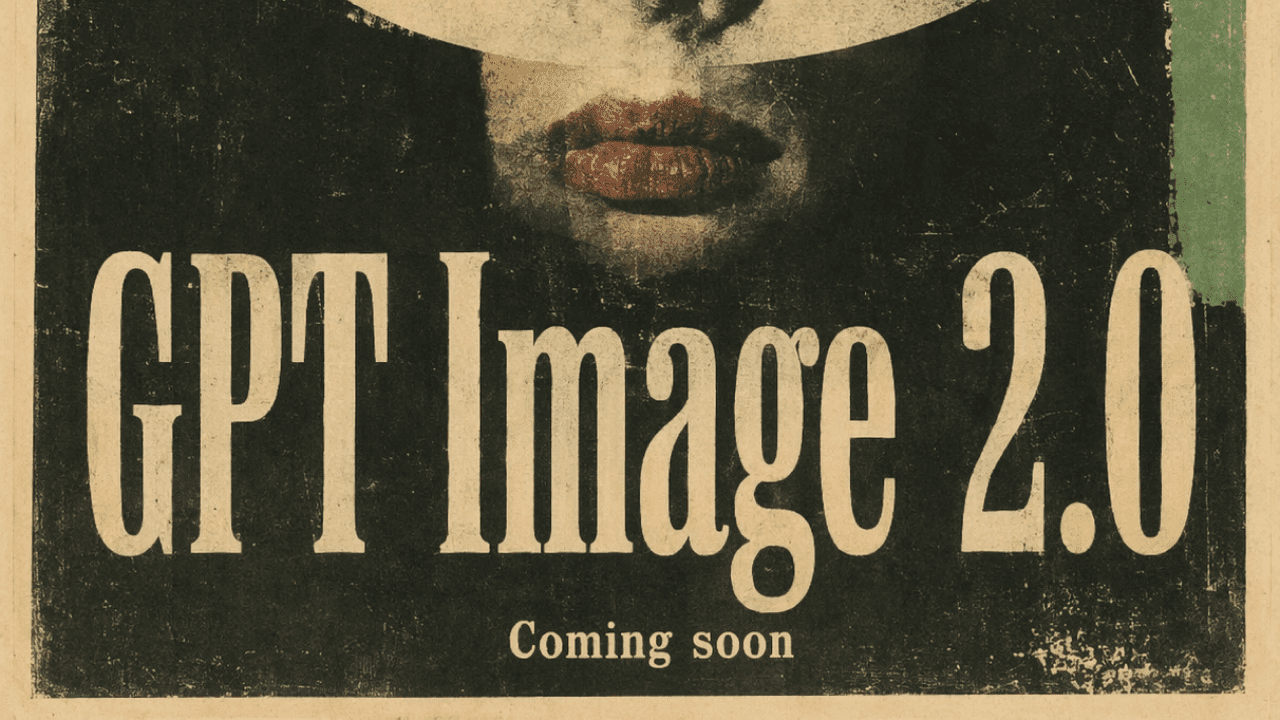
ChatGPT Images 2.0 is rapidly emerging as a major leap in artificial intelligence-driven creativity, following its global rollout this week. Developed by OpenAI, the upgraded image-generation model introduces significantly improved text rendering, enhanced instruction-following, and more sophisticated visual composition capabilities that experts say could reshape how businesses, creators, and developers produce digital content.
The release has drawn strong reactions across the AI community, with early users highlighting how the model overcomes one of the most persistent limitations in image generation, producing accurate, readable text within visuals. Combined with new “thinking” capabilities and broader multilingual support, the tool signals a shift toward more practical, production-ready AI-generated imagery.
A Step Change in AI Image Quality
At its core, ChatGPT Images 2.0 represents a notable advancement over earlier models by delivering outputs that appear less synthetic and more intentionally designed. OpenAI describes it as a “state-of-the-art” system capable of executing complex visual tasks with high fidelity, including generating detailed compositions, maintaining stylistic consistency, and accurately placing objects within a scene.
One of the most striking improvements lies in text rendering. Historically, AI image tools struggled with spelling and layout due to the way diffusion models reconstruct visuals from noise, often prioritizing larger visual patterns over fine textual details. The new model addresses this limitation, enabling it to generate clean, legible text even in dense layouts like menus, posters, and diagrams.
Early demonstrations show the system producing restaurant menus, marketing materials, and multi-panel comics that require minimal to no manual correction something that was nearly impossible just a few years ago.
Also read: Google Unveils Gemma 4: Open AI Models Designed to Run From Data Centres to Smartphones
“Thinking” Capabilities Enable Smarter Outputs
A defining feature of ChatGPT Images 2.0 is the introduction of “thinking” capabilities, which allow the model to process prompts more intelligently before generating results. This includes the ability to:
- Generate multiple image variations from a single request
- Validate and refine outputs internally
- Incorporate real-time or contextual information when needed
These enhancements make it possible to move from concept to finalized visual assets more efficiently, particularly for use cases like branding, storytelling, and educational design.
The system also supports output at up to 2K resolution and can adapt images across various aspect ratios, making it suitable for platforms ranging from social media to presentations and advertising formats.
Multilingual and Cross-Format Versatility
Another major advancement is the model’s improved handling of non-Latin scripts. ChatGPT Images 2.0 can accurately generate text in languages such as Hindi, Japanese, Korean, Bengali, and Chinese not just as labels, but as integrated elements of design.
This opens up new possibilities for global users who require localized visual content, including infographics, instructional diagrams, and promotional materials tailored to regional audiences.
In addition to language support, the model can produce a wide range of styles from photorealistic imagery to illustrations, cinematic scenes, and comic strips while maintaining coherence and aesthetic quality.
Also read: JioHotstar and OpenAI Launch ChatGPT-Powered Conversational Streaming Experience in India
Industry / Market Impact
The launch of ChatGPT Images 2.0 is likely to intensify competition in the AI image generation space, particularly as it sets new benchmarks in usability and output quality. On benchmarking platforms like Arena AI, the model has already surged to the top position, reportedly achieving a record margin over competing systems in text-to-image performance.
For businesses, the implications are significant. The ability to generate ready-to-use marketing assets, UI mockups, and branded visuals without extensive editing could reduce reliance on traditional design workflows. Startups and small teams, in particular, stand to benefit from lower production costs and faster turnaround times.
Developers also gain access through the gpt-image-2 API, enabling integration into applications that automate design, content creation, and visual editing processes.
Why This Matters
The evolution of AI image generation from novelty to utility marks a broader shift in how digital content is created. Earlier models were often limited to artistic experimentation, but ChatGPT Images 2.0 moves closer to professional-grade output.
Its ability to handle fine-grained details such as small text, icons, and structured layouts addresses real-world needs across industries, including:
- Marketing and advertising
- Education and training
- Product design and prototyping
- Media and entertainment
By reducing the gap between concept and execution, the technology could significantly accelerate creative workflows while lowering barriers to entry for non-designers.
Also read: Google Launches AI-Powered Shopping Upgrades in India Across Gemini, Search, and Circle to Search
What Happens Next
While early feedback has been overwhelmingly positive, questions remain about the underlying architecture powering the model, as OpenAI has not disclosed specific technical details. The system’s knowledge cutoff December 2025 may also limit its accuracy in generating visuals tied to very recent events.
Access to ChatGPT Images 2.0 is now available across ChatGPT, Codex, and the API, with enhanced capabilities offered to paid tiers such as Plus, Pro, and Business users. Pricing for API usage varies depending on output quality and resolution.
Looking ahead, continued improvements in speed, accuracy, and contextual awareness are expected as competition in generative AI intensifies. If current trends hold, tools like ChatGPT Images 2.0 could soon become standard infrastructure for digital content creation rather than optional enhancements.