
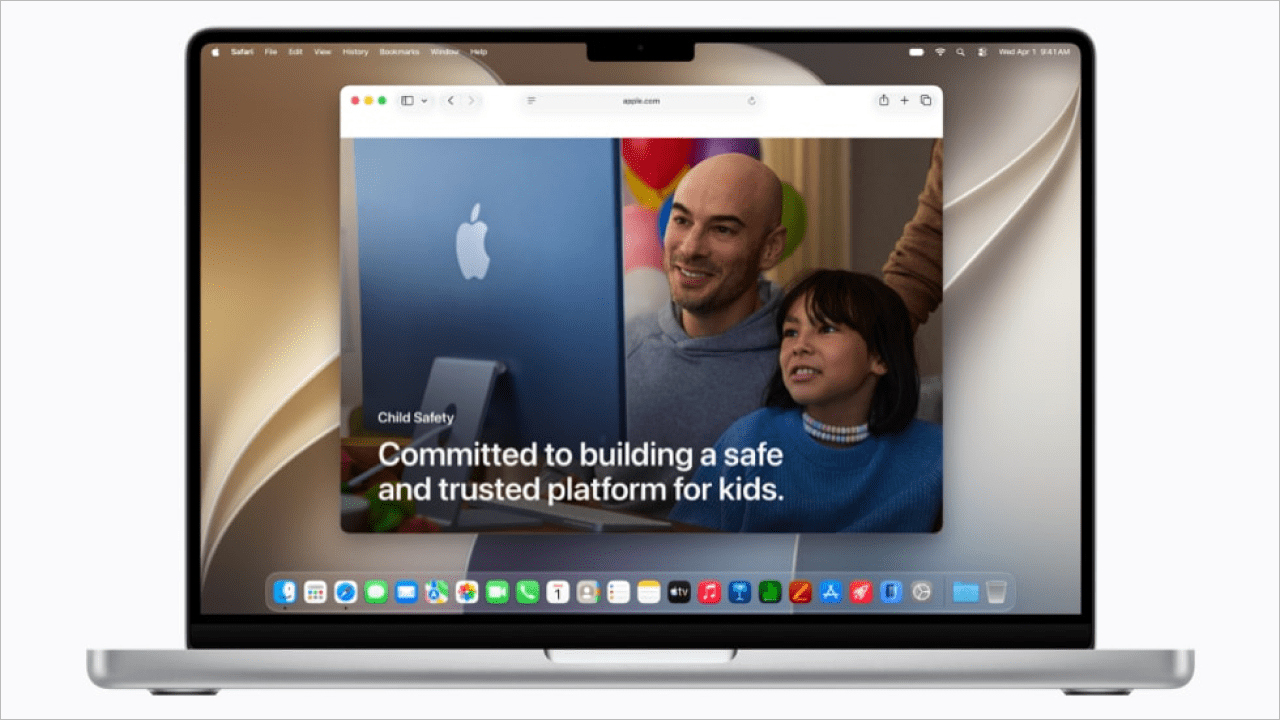
Apple has unveiled a major expansion of its child online safety tools, introducing new parental controls, communication safeguards, and screen-time management features as governments around the world intensify pressure on technology companies to better protect young users online. The announcement comes amid growing scrutiny of social media platforms and digital services, with Australia highlighting the move as evidence that stronger regulation can influence how global technology companies design products for children.
Australian Prime Minister Anthony Albanese said Apple CEO Tim Cook personally briefed him on the new measures, noting that Australia’s under-16 social media restrictions and ongoing research into children’s digital wellbeing helped shape discussions around online safety. The development places Apple at the center of a broader international debate about age assurance, platform accountability, and the role technology companies should play in protecting children from harmful online experiences.
Apple’s latest safety initiative introduces a range of features aimed at helping parents manage what children can access online, who they can communicate with, and how much time they spend using digital devices. The company says the updates are based on guidance from health professionals, child development experts, and online safety researchers.
Also read: Apple Blocks $2.2 Billion in App Store Fraud as AI-Powered Threats Surge Globally
New Tools Designed for Parents and Children
Among the most significant additions is a simplified child account setup process. Apple says child accounts enable age-appropriate protections across devices, including restrictions on adult websites, media content controls, and App Store limitations. The company requires child accounts for users under 13 and offers them for users up to age 18.
Parents will also gain new controls over app access through a recommended set of essential applications that can be enabled when a device is first configured. Access can then be expanded gradually as children grow older.
A new feature called Ask to Browse extends parental oversight beyond app downloads. Similar to Apple’s existing Ask to Buy system, children will need parental approval before accessing new websites through Safari. The feature is intended to give parents greater visibility into their children’s online activity across iPhone, iPad, and Mac devices.
Communication controls are also being strengthened. Parents can require approval before children add new contacts, while Apple’s Communication Safety technology will expand beyond nudity detection to also identify and intervene when violent or graphic content is shared through images or videos.
Also read: Apple iPhone 18 Pro Leak Points to New Dark Cherry Finish as Pricing Rumors Offer Mixed Outlook
Screen Time Gets a Major Overhaul
Apple is also redesigning its Screen Time platform, which has long served as the company’s primary parental control system.
The update introduces Time Allowances, giving parents more flexible ways to manage usage across categories such as entertainment, gaming, and social media. Apple says the feature will include recommendations based on expert research and age-specific guidance, while still allowing parents to customize limits according to their family’s preferences.
The redesigned Screen Time dashboard will provide parents with a clearer overview of device usage patterns, most-used applications, and activity trends. Parents will be able to make real-time adjustments to restrictions, helping them limit device use during school hours, family activities, meals, or other designated periods.
Apple says these changes are part of a broader effort to encourage healthier digital habits while giving families more practical tools to manage technology use.
Background Context
The announcement arrives at a time when governments, regulators, and advocacy groups are increasingly focused on the impact of social media and digital platforms on children’s mental health and wellbeing.
Australia has emerged as one of the most prominent advocates of stricter online protections for minors. Albanese argued that the country’s regulatory approach has helped push the global conversation forward, claiming that millions of under-16 social media accounts have already been removed, restricted, or deactivated under various compliance efforts.
The Prime Minister also emphasized that technology and social media companies have a responsibility to protect younger users and suggested that more countries are considering similar age-based restrictions.
The issue has gained momentum globally as lawmakers examine whether existing safety measures are sufficient to shield children from harmful content, excessive screen exposure, and unwanted online interactions.
Also read: Apple’s macOS 27 Set to Refine Liquid Glass Design and Supercharge AI Features
Expert Analysis / What This Means
Apple’s latest announcement reflects a growing shift toward device-level safety controls rather than relying solely on social media platforms to police children’s online experiences. By embedding protections directly into operating systems, companies can create safeguards that apply across apps, websites, and services.
For parents, the new tools could offer more visibility and flexibility in managing children’s digital habits. Features such as Ask to Browse and expanded communication approvals address areas that have become increasingly difficult to monitor as children spend more time online.
For the technology industry, the move signals that regulatory pressure is beginning to shape product design. Governments are no longer focusing exclusively on social media companies, device manufacturers are also being expected to play a role in child protection.
However, the effectiveness of these measures will depend heavily on execution. Critics have long argued that parental controls are only valuable if they are reliable, intuitive, and difficult to bypass. If the new system improves usability and enforcement, it could become a benchmark for the broader industry.
The announcement may also accelerate similar safety initiatives from competing technology companies seeking to demonstrate compliance with emerging child safety expectations worldwide.
Industry and Market Impact
Apple’s expanded parental control strategy highlights a growing trend across the technology sector, integrating child safety features as a core product capability rather than treating them as optional add-ons.
As governments debate age-verification requirements and platform accountability rules, companies are increasingly investing in tools that can demonstrate proactive efforts to protect minors. The trend could influence app developers, device manufacturers, and social media companies to adopt more comprehensive age-based experiences.
Apple is also encouraging developers to participate through privacy-focused tools that allow applications to adapt content and features according to a user’s age range without collecting sensitive personal information such as birth dates.
What Happens Next
The new features are expected to arrive through upcoming software updates later this year. Apple will also launch expanded educational resources for parents, including guidance on digital wellbeing and family technology management.
At the same time, public scrutiny of parental control systems is unlikely to fade. Some technology observers and parents have previously criticized Screen Time for usability issues, synchronization problems, and ways children can circumvent restrictions.
As the updated tools roll out, Apple will face pressure to prove that the improvements address longstanding concerns while delivering the safer digital environment it promises. Regulators, parents, and child safety advocates will be watching closely to see whether stronger controls translate into meaningful real-world protection for young users.