
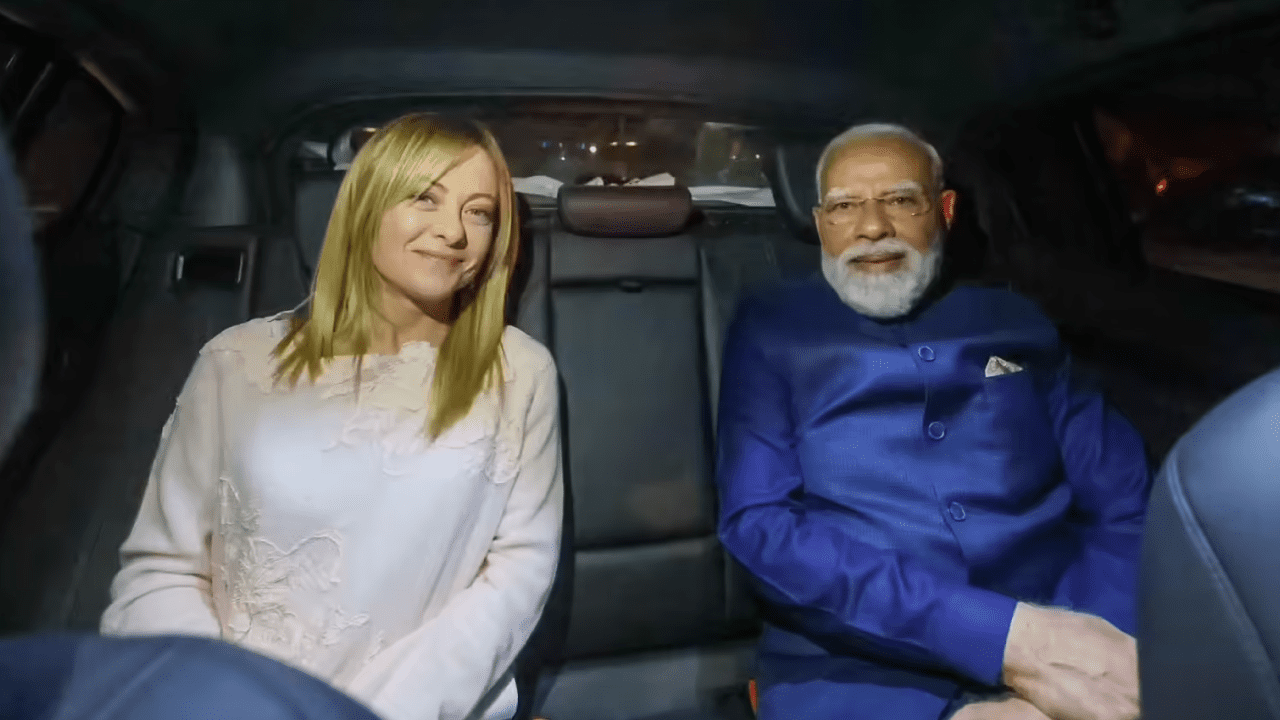
Prime Minister Narendra Modi arrived in Rome on Tuesday, marking the final leg of his five-nation diplomatic tour, where he was warmly received by Italian Prime Minister Giorgia Meloni for a series of informal engagements including a dinner meeting and a late-evening visit to the iconic Colosseum. The visit, part of broader efforts to strengthen India–Italy relations, comes as both countries look to expand cooperation under the India–Italy Joint Strategic Action Plan 2025–2029, with a strong focus on trade, defence, technology, energy, and connectivity. The Rome stop follows Modi’s visits to Norway, Sweden, the Netherlands, and the United Arab Emirates, underscoring an active European outreach aimed at reinforcing strategic and economic partnerships.
Upon arrival in the Italian capital, Modi was received at the airport by Italian Deputy Prime Minister and Foreign Minister Antonio Tajani, before heading into a tightly packed diplomatic schedule. Shortly after landing, he met Prime Minister Meloni for a private dinner, where the two leaders reportedly discussed a broad range of global and bilateral issues. The meeting quickly transitioned into a more informal engagement, with the leaders later visiting the Colosseum, Rome’s ancient amphitheatre, in what has been widely described as a moment of “car diplomacy” reflecting the growing personal rapport between them. Social media posts shared by both leaders showed them walking, talking, and viewing the illuminated monument, with Meloni welcoming Modi as a “friend” and Modi highlighting continued conversations on strengthening India–Italy ties.
The Prime Minister’s engagements in Rome also include planned meetings with Italian President Sergio Mattarella and formal bilateral discussions with Meloni, where both sides are expected to review progress under existing cooperation frameworks and explore new areas of strategic convergence. According to official statements shared on social media by the Ministry of External Affairs, the visit is aimed at adding momentum to what has been described as a “multifaceted partnership” between the two nations, particularly in the context of evolving global economic and geopolitical dynamics.
A notable aspect of the visit has been the emphasis on informal diplomacy alongside structured negotiations. Images and videos circulating online showed Modi and Meloni sharing a car ride through Rome, walking through historic sites, and engaging in extended conversations against the backdrop of sunset views over the city. These interactions have drawn attention not only for their symbolism but also for reflecting a pattern of increasingly personalized diplomacy between world leaders in the digital age.
Beyond bilateral discussions, Modi is also scheduled to visit the headquarters of the Food and Agriculture Organization (FAO), reinforcing India’s commitment to global food security and multilateral cooperation. The visit aligns with India’s broader diplomatic messaging on sustainable development and global governance reform, themes that have been consistently highlighted in recent international engagements.
Expert Analysis / What This Means
The Rome engagement reflects a clear shift toward high-visibility, relationship-driven diplomacy that complements formal state negotiations. Personal rapport between leaders like Modi and Meloni adds an additional layer of strategic trust, which can accelerate decision-making on complex issues such as defence collaboration and infrastructure investment. For users and businesses, closer India–Italy ties may translate into expanded market access, particularly in sectors like renewable energy, manufacturing, and digital technology. From a geopolitical standpoint, Italy’s role in the India–Middle East–Europe Economic Corridor (IMEC) positions it as a critical European partner in India’s long-term connectivity strategy. Compared to earlier diplomatic models that relied heavily on institutional exchanges, the current approach blends media visibility, cultural symbolism, and economic planning into a single diplomatic framework. This makes agreements more publicly visible, but also increases expectations for tangible outcomes following high-profile visits. The continuation of the Joint Strategic Action Plan 2025–2029 suggests a structured attempt to move beyond symbolic engagement toward measurable cooperation outcomes over the next decade.
Industry / Market Impact
The strengthening of India–Italy relations is expected to influence multiple sectors, particularly trade, green energy, and industrial manufacturing. Italian expertise in advanced manufacturing and design aligns with India’s push for “Make in India” expansion into high-value exports. Energy cooperation, especially in renewables and hydrogen technologies, could see renewed investment flows. The emphasis on the IMEC corridor also signals long-term infrastructure and logistics opportunities, potentially reshaping trade routes between South Asia and Europe.
Background Context
India and Italy share a long-standing diplomatic relationship that has evolved into a strategic partnership in recent years. Modi’s previous visit to Italy was during the G7 Summit in 2024, where discussions focused on global governance and economic stability. The current visit builds on that foundation, with both sides now aiming to institutionalize cooperation through structured frameworks like the 2025–2029 action plan. The personal diplomatic exchanges seen in recent years, including informal meetings at global summits, have contributed to a visible strengthening of bilateral engagement.
What Happens Next
Formal bilateral talks between Modi and Meloni are expected to take place during the Rome visit, focusing on expanding cooperation in defence, trade, clean energy, and digital infrastructure. The outcomes of these discussions may feed into updated implementation roadmaps under the Joint Strategic Action Plan. Further announcements related to investment partnerships or corridor development initiatives could follow after the conclusion of the visit. Modi is expected to depart for India after completing his engagements in Rome, concluding a five-nation diplomatic tour that has spanned key regions across Europe and the Middle East.