
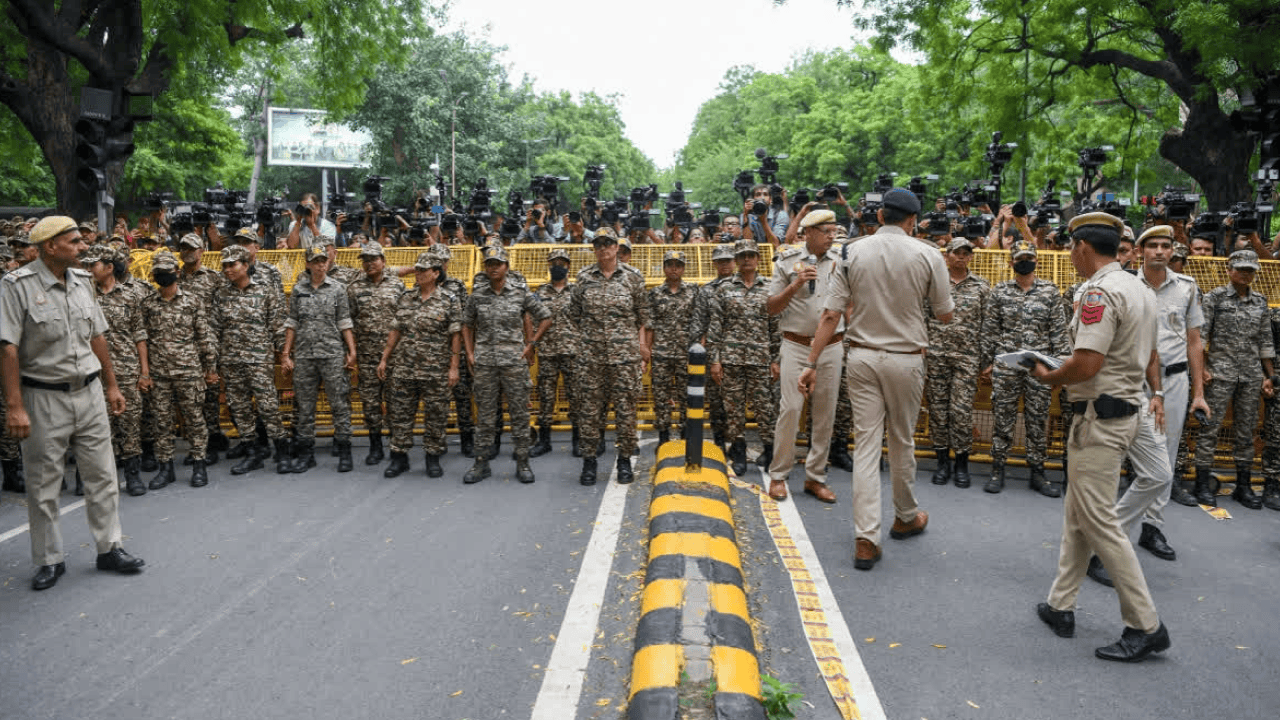
The CRPF deployment in Delhi has been significantly expanded after the Union government ordered 20 additional companies of the Central Reserve Police Force (CRPF) to the national capital, citing heightened security concerns arising from ongoing Cockroach Janta Party (CJP) protests, demonstrations by various political groups, and the Monsoon Session of Parliament. The reinforcement comes as authorities seek to maintain law and order following multiple instances of violent clashes during recent protests, underscoring the government’s focus on preventing further disruptions in one of the country’s most sensitive administrative zones.
The Ministry of Home Affairs (MHA) issued the deployment order on Tuesday night, directing that the additional CRPF personnel be airlifted from Kolkata, where they had remained stationed after the West Bengal Assembly elections. Security officials said the companies were initially retained in West Bengal at the request of the state government following the completion of the electoral process but have now been reassigned to Delhi in response to evolving security requirements.
Each CRPF company consists of approximately 100 personnel, meaning the latest deployment adds around 2,000 security personnel to the capital’s existing security apparatus.
Security Measures Intensified Across the National Capital
The latest reinforcement is intended to strengthen Delhi Police’s ability to manage large-scale protests while ensuring security around Parliament and other key government installations during the ongoing Monsoon Session.
Officials indicated that recent confrontations during demonstrations prompted the Centre to enhance preventive security arrangements. The additional CRPF personnel are expected to support crowd management, protect strategic locations, and assist local police in maintaining public order should protests escalate.
The deployment follows an earlier decision by the Centre to provide around 30 companies of the CRPF and its specialized anti-riot wing, the Rapid Action Force (RAF), to assist Delhi Police in handling security responsibilities linked to the protests and parliamentary proceedings.
Background Context
The Monsoon Session of Parliament began on July 20 and traditionally witnesses heightened political activity both inside and outside Parliament. Such sessions often coincide with demonstrations by political parties, advocacy groups, and civil society organizations seeking to draw attention to national issues.
According to security officials, the combination of ongoing political protests and reports of violent clashes during recent demonstrations increased the need for additional central forces in Delhi.
The 20 CRPF companies being moved from West Bengal had remained deployed there after the state’s Assembly elections. Their reassignment reflects the Centre’s ability to redeploy reserve forces based on changing security priorities across different regions.
Expert Analysis / What This Means
The latest reinforcement demonstrates the Centre’s preference for preventive security deployment rather than reactive intervention during politically sensitive periods. By increasing the presence of central armed police forces before protests intensify, authorities aim to reduce the risk of large-scale disturbances affecting critical government institutions.
For residents and commuters in Delhi, the expanded security presence could translate into tighter barricading, increased police checkpoints, possible traffic diversions, and enhanced surveillance around Parliament and other high-security zones.
From an administrative perspective, deploying central forces allows Delhi Police to distribute responsibilities more effectively, particularly when multiple demonstrations occur simultaneously across the capital.
The decision also reflects the strategic role of the CRPF in supporting civil administration during periods of heightened political activity. Unlike routine policing, crowd control during major protests often requires specialized personnel trained in riot management and rapid response.
The inclusion of the Rapid Action Force alongside regular CRPF units further indicates that authorities are preparing for various law-and-order scenarios while seeking to minimize disruption during the Parliament session.
Historically, central security reinforcements have been used during major political gatherings, election periods, and large demonstrations in Delhi. The current deployment follows that established approach, highlighting the government’s emphasis on maintaining security around the country’s legislative institutions.
Industry / Governance Impact
The deployment underscores the operational flexibility of India’s central armed police forces, particularly the CRPF, which is frequently tasked with election duties, counter-insurgency operations, and internal security responsibilities.
Reassigning personnel from West Bengal to Delhi illustrates how central security resources are dynamically allocated based on national priorities. Such redeployments require coordinated logistics, including rapid air transportation, personnel management, and integration with local law enforcement agencies.
The move also reflects the continuing reliance on central forces to supplement state police capabilities during periods of elevated political activity and public demonstrations.
What Happens Next
Authorities are expected to continue monitoring protest activity and the overall security situation throughout the Monsoon Session of Parliament.
The additional CRPF personnel will likely remain deployed until officials determine that security risks have subsided or parliamentary proceedings conclude. Depending on developments on the ground, further adjustments to force deployment could be made if required.
Delhi Police, supported by CRPF and RAF personnel, is expected to maintain enhanced security around Parliament, major government offices, protest sites, and other strategically important locations to prevent disruptions and ensure public safety.
Key Figures and Data
- 20 additional CRPF companies deployed to Delhi.
- Approximately 100 personnel serve in each CRPF company.
- Roughly 2,000 additional CRPF personnel are being added through the latest deployment.
- Around 30 CRPF and Rapid Action Force (RAF) companies had already been provided to Delhi Police before the latest reinforcement.
- The Monsoon Session of Parliament commenced on July 20.
- The additional forces are being airlifted from Kolkata, West Bengal, following Ministry of Home Affairs directives.