
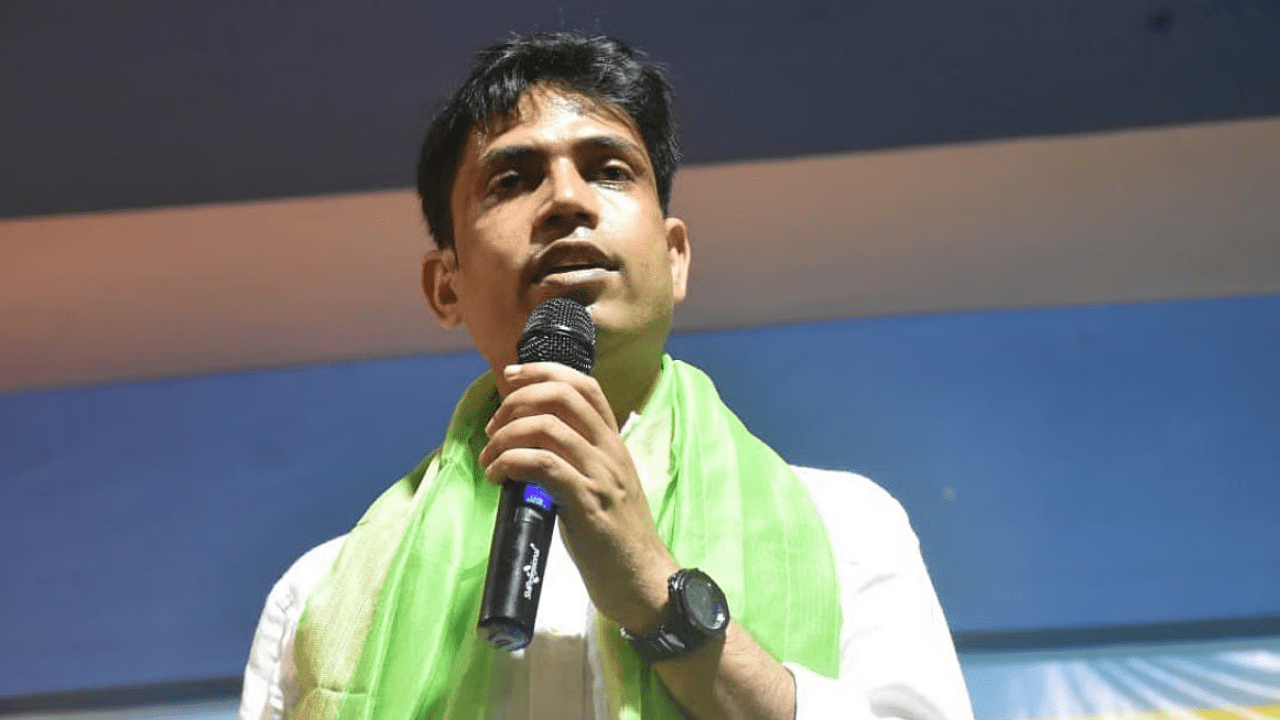
Trinamool Congress (TMC) leader Jahangir Khan has been arrested near the India-Nepal border by West Bengal Police in a major development in the ongoing investigation into allegations of extortion, intimidation, assault and poll-related violence linked to the Falta Assembly constituency. The arrest marks a significant escalation in a case that has drawn political attention across West Bengal following allegations of electoral misconduct and criminal intimidation during the recent assembly by-election process.
According to police officials, Khan had been evading arrest for several days before investigators tracked his movements and apprehended him close to the international border on Sunday. His detention comes after multiple criminal complaints were registered against him and several of his associates, prompting a wider crackdown on individuals allegedly connected to the network under investigation.
Authorities have been examining allegations ranging from extortion and threats against local residents to incidents of assault and electoral violence. Khan’s arrest follows a series of actions by law enforcement targeting individuals believed to be closely associated with him.
Arrests of Key Associates Deepen Investigation
The investigation gained momentum after police arrested Israfil Chakdar, the chief of Bagnanagar-II Gram Panchayat and a close associate of Khan, from Hasimnagar in South 24 Parganas district.
Police said several complaints had been filed against Chakdar, accusing him of extortion, intimidation and assault. Following an investigation, officers conducted an operation that led to his arrest.
Earlier, another alleged associate of Khan, Nasir Sheikh, a leader linked to the Indian National Trinamool Trade Union Congress (INTTUC), was also taken into custody. Sheikh was accused of extorting money from factory workers and allegedly using intimidation tactics in the Falta Special Economic Zone. Investigators claim workers were threatened with job disruptions if certain demands were not met.
The arrests indicate that authorities are examining not only individual allegations but also broader claims of organized intimidation and influence within the region.
Poll Violence Allegations Triggered Public Outrage
The controversy surrounding Khan intensified after unrest erupted in Hasimnagar following polling conducted on April 29 in the Falta Assembly constituency.
Local residents, particularly women, staged road blockades for two consecutive days, alleging that groups associated with local political operatives prevented voters from exercising their democratic rights. Protesters claimed they were confined to their homes during polling hours and accused certain individuals of assault and harassment.
The allegations generated widespread public attention and increased pressure on election authorities to intervene. Residents demanded corrective action, arguing that the integrity of the electoral process had been compromised.
The protests eventually became a catalyst for a broader review of the polling process in the constituency.
Election Commission Ordered Re-Polling
Responding to multiple complaints and reports of irregularities, the Election Commission took the unusual step of cancelling the entire polling exercise in the constituency.
Fresh elections were subsequently ordered and held on May 21.
The re-election produced a dramatically different political outcome. BJP candidate Debanshu Panda secured victory by a margin exceeding one lakh votes. Meanwhile, Jahangir Khan, who had withdrawn from active electoral contention before the re-poll, ultimately finished fourth and forfeited his deposit.
The result was widely viewed as a significant setback for Khan and highlighted the extent to which the controversy had reshaped the political landscape in the constituency.
Also read: K Annamalai Exits BJP, Announces New Political Party as Tamil Nadu Politics Faces Fresh Realignment
Expert Analysis / What This Means
The arrest of Jahangir Khan represents more than an isolated law-enforcement action, it reflects growing scrutiny of allegations surrounding electoral conduct and local political influence in West Bengal. For voters, the case underscores the importance of institutional intervention when complaints regarding voter intimidation and electoral fairness emerge.
From a governance perspective, the Election Commission’s decision to cancel an entire polling process demonstrates an increasingly assertive approach toward preserving election integrity. Such actions remain relatively rare and are typically reserved for situations involving serious concerns.
Politically, the developments could influence public perception of local leadership structures and party accountability. The arrests of multiple associates suggest investigators are pursuing a broader inquiry rather than focusing on a single individual.
The case may also encourage stricter monitoring of future elections, particularly in politically sensitive constituencies where allegations of coercion or violence arise. Comparisons are already being drawn with past instances in which allegations of poll-related misconduct resulted in administrative intervention and heightened security oversight.
As investigations continue, the outcome could have implications for both political accountability and law-enforcement responses to election-related complaints across the state.
Timeline of Events
- April 29: Polling held in Falta Assembly constituency.
- Late April–Early May: Residents launch protests alleging voter intimidation and violence.
- Following Complaints: Election Commission reviews allegations and complaints.
- May 21: Fresh polling conducted after cancellation of the original election process.
- Post Re-Poll: BJP candidate Debanshu Panda wins by over one lakh votes.
- Subsequent Weeks: Police arrest alleged associates Israfil Chakdar and Nasir Sheikh.
- Latest Development: Jahangir Khan arrested near the India-Nepal border after reportedly evading authorities.
Why This Matters
The case has emerged as a significant test of how institutions respond to allegations involving political influence, electoral integrity and criminal misconduct. The combination of voter complaints, administrative intervention, multiple arrests and a high-profile political figure’s detention has transformed what began as a local dispute into a matter of broader state-level interest.
For citizens, the developments reinforce the role of law enforcement and election authorities in addressing allegations that could undermine democratic processes. For political parties, the episode serves as a reminder that local-level controversies can rapidly evolve into major political challenges with statewide consequences.
What Happens Next
Investigators are expected to continue questioning Khan and examining evidence connected to extortion, intimidation, assault and poll violence allegations. Further arrests or charges cannot be ruled out as authorities review complaints and witness statements gathered during the investigation.
Legal proceedings in the coming weeks will likely determine whether additional cases are pursued and whether the arrests lead to broader accountability measures. The investigation remains active, and officials are expected to continue gathering evidence linked to the Falta controversy.