
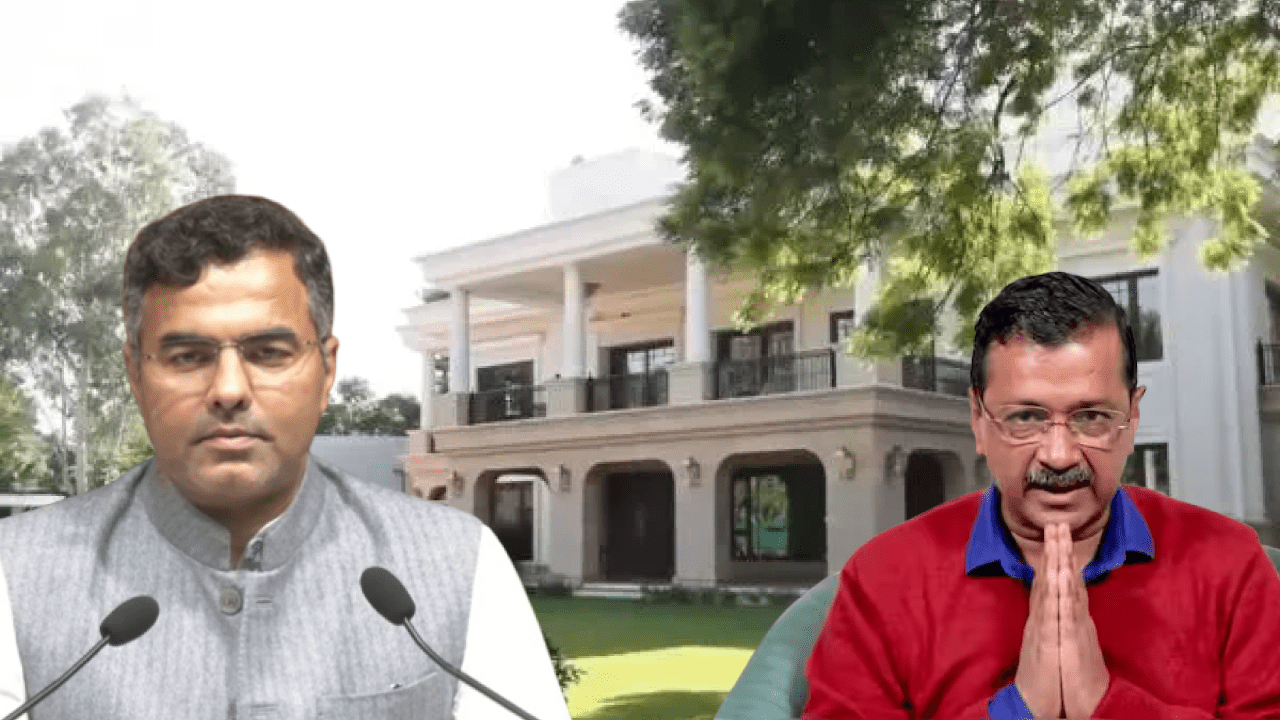
The Sheesh Mahal 2 controversy has escalated into a major flashpoint in Delhi politics after Rajya Sabha MP Raghav Chadha, along with six other Aam Aadmi Party (AAP) MPs, defected to the Bharatiya Janata Party (BJP) and publicly backed allegations of extravagant living against former Delhi Chief Minister Arvind Kejriwal. The renewed political attack centers on claims that Kejriwal has constructed another high-end official residence, intensifying scrutiny over his personal conduct and governance style. The dispute comes at a politically sensitive moment, following AAP’s recent electoral setbacks in Delhi and growing internal instability within the party.
The controversy was triggered after BJP leaders alleged that Kejriwal had shifted from his earlier official residence already dubbed “Sheesh Mahal” due to its reported opulence to a new government-allotted bungalow in Delhi’s Lodhi Estate, which they claim reflects similarly lavish upgrades. The accusations were quickly amplified by Chadha’s remarks and BJP’s broader criticism of AAP leadership, including Punjab Chief Minister Bhagwant Mann.
Also read: AAP Faces Major Political Crisis as Raghav Chadha Leads Mass Rajya Sabha Defection to BJP
Political Defections Intensify the Narrative
The latest escalation follows a significant political realignment in which seven AAP Rajya Sabha MPs, including Raghav Chadha, joined the BJP. This shift has not only weakened AAP’s parliamentary presence but also strengthened BJP’s ability to frame the Sheesh Mahal 2 controversy as evidence of alleged corruption and elitism within the rival party.
Chadha, in his first major public criticism of Kejriwal since switching sides, endorsed BJP’s allegations and suggested that public perception of Kejriwal’s residence played a role in AAP’s electoral decline. He argued that the controversy surrounding the chief minister’s residence had become symbolic of broader dissatisfaction among voters.
BJP leaders, meanwhile, intensified the attack. Delhi Minister Parvesh Sahib Singh Verma accused Kejriwal of hypocrisy, claiming that after leaving his earlier official residence in Civil Lines, he moved to Punjab and later “established” a similarly luxurious residence in Delhi’s Lodhi Estate.
Background Context: From Flagstaff Road to Lodhi Estate
The Sheesh Mahal 2 controversy builds on earlier disputes over Kejriwal’s former residence at 6, Flagstaff Road in Delhi’s Civil Lines area, where he lived during his tenure as chief minister until 2024. The BJP had previously criticized renovations carried out at the bungalow, alleging excessive spending and misuse of public resources.
A Comptroller and Auditor General (CAG) report later added fuel to the debate, highlighting significant cost escalations in renovation work. According to the audit findings, an initial estimate of ₹7.91 crore eventually rose to ₹33.66 crore more than four times the projected cost. The report also cited procedural lapses and missing documentation in parts of the project execution, which the BJP has repeatedly referenced to question AAP’s governance record.
The current allegations surrounding the Lodhi Estate bungalow are being presented by BJP leaders as a continuation of the same pattern, though AAP has strongly rejected all claims.
Also read: Raghav Chadha Leads Mass Exit of AAP MPs to BJP in Major Rajya Sabha Shift
Reactions: AAP Denies Allegations, Calls Images “Fake”
AAP has dismissed the BJP’s claims as politically motivated and factually incorrect. Senior party leader Atishi described the photographs circulating on social media as fabricated and misleading, alleging they were sourced from the internet to create a false narrative.
She further accused BJP leaders of attempting to manipulate public perception using digitally altered or unrelated images, suggesting that artificial intelligence tools or stock images may have been used to support the allegations.
The party maintains that the residence in question is a standard Type VII government-allotted bungalow and denies any unauthorized modifications or luxury enhancements beyond permitted standards.
Why This Matters
The Sheesh Mahal 2 controversy has evolved beyond a dispute over official residences into a broader political narrative about governance, ethics, and voter perception in Delhi politics. With AAP facing internal fragmentation and high-profile defections, the issue has become a central talking point in BJP’s political messaging.
For AAP, the challenge lies in containing reputational damage while addressing recurring allegations that have persisted since the earlier Flagstaff Road controversy. For the BJP, the issue serves as a strategic tool to question AAP’s anti-corruption image and reinforce its campaign narrative ahead of future electoral battles.
What Happens Next
Political analysts expect the controversy to continue dominating public discourse in the short term, particularly as more documents, photographs, or statements emerge from either side. Parliamentary debates and media briefings are likely to intensify, with both parties attempting to shape the narrative ahead of upcoming legislative sessions and electoral cycles.
Legal scrutiny may also expand if audit-related findings or housing allocation records are formally revisited, though no new official inquiry has been announced at this stage.
As both parties escalate their messaging, the Sheesh Mahal 2 controversy is likely to remain a symbolic battleground reflecting broader tensions in Delhi’s shifting political landscape.