
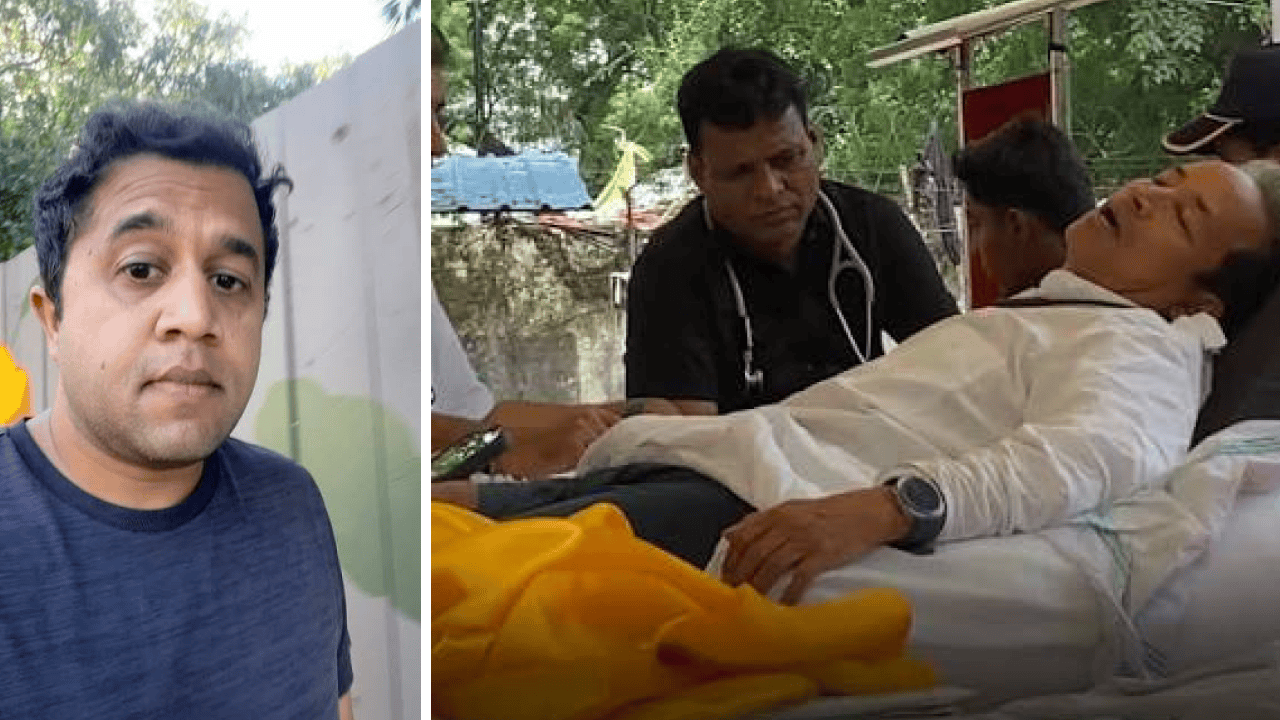
Sonam Wangchuk hunger strike has drawn renewed national attention after actor Omi Vaidya, remembered for portraying Chatur “Silencer” Ramalingam in 3 Idiots, issued an emotional public appeal urging people to pay attention to the activist’s deteriorating health and the issues behind his ongoing protest. As Wangchuk’s indefinite fast at Delhi’s Jantar Mantar entered its 17th day on July 14, concerns have intensified over his medical condition, while political leaders, public figures and civil society members continue to rally behind the movement.
Wangchuk, the Ladakh-based engineer, education reformer and climate activist who inspired Aamir Khan’s iconic character Phunsukh Wangdu in 3 Idiots, joined the Cockroach Janta Party’s (CJP) protest on June 28 after demonstrations began on June 20. The campaign seeks the resignation of Union Education Minister Dharmendra Pradhan over alleged irregularities in the NEET-UG examination and demands ₹1 crore in compensation for families of students who allegedly died by suicide following the controversy.
Omi Vaidya’s Emotional Appeal Revives Public Focus
In a video shared on social media, Vaidya introduced himself as “Chatur from 3 Idiots” before appealing directly to viewers.
“I don’t want Phunsukh Wangdu to die,” he said, referencing the beloved fictional character inspired by Wangchuk’s life.
The actor urged the public to look beyond political divisions and learn more about Wangchuk’s work and current campaign. Having met the activist personally, Vaidya described him as humble, accomplished and deeply committed to public causes.
He also expressed concern that the hunger strike has not received sufficient public attention, encouraging people to understand the broader issues surrounding education reforms, environmental concerns and Ladakh-related demands rather than dismissing the protest based on political affiliation.
Wangchuk’s Health Raises Serious Concerns
Health updates released by the organisers indicate that Wangchuk’s condition has continued to weaken as the fast progresses.
According to the Cockroach Janta Party, Wangchuk has lost between 8.5 and 9 kilograms since beginning his indefinite hunger strike. Organisers say he has experienced severe muscle loss, persistent dizziness, declining blood sugar levels and increasing physical weakness. His blood pressure has also been reported at 109/70, while supporters claim prolonged fasting has left him in considerable pain.
CJP founder Abhijeet Dipke said supporters have repeatedly urged Wangchuk to end the fast. However, Wangchuk has maintained that meaningful dialogue with the government remains absent, insisting that attention should instead focus on why negotiations have not taken place.
Growing Political and Public Support
The protest has attracted support from leaders across multiple political parties and prominent members of civil society.
Among those who have publicly backed the movement are:
- Trinamool Congress MP Mahua Moitra, who appealed to Wangchuk to end his fast while continuing the campaign.
- An Aam Aadmi Party delegation led by former Delhi Chief Minister Atishi, which visited the protest site.
- Former Maharashtra Chief Minister Uddhav Thackeray.
- CPI(M) MP Amra Ram along with senior Left leaders.
- Eminent public figures including author Arundhati Roy, actors Naseeruddin Shah and Ratna Pathak Shah, and economist Jayati Ghosh, who expressed solidarity with the protest while urging Wangchuk to discontinue the indefinite fast due to health concerns.
The organisers have also called for a peaceful march to Parliament on July 20, coinciding with the start of the Monsoon Session.
Background Context
The current agitation began at Delhi’s Jantar Mantar on June 20, with the Cockroach Janta Party leading demonstrations over alleged irregularities in the NEET-UG examination process.
Wangchuk joined the protest on June 28 and subsequently began an indefinite hunger strike. Besides demanding the resignation of the Union Education Minister, the campaign has called for financial compensation for families of students allegedly affected by the examination controversy.
While Wangchuk has long been recognised nationally for his educational innovations and environmental advocacy, the present movement has expanded his public role into a broader campaign centred on accountability, educational governance and democratic engagement.
Also read: NEET UG 2026 Leak Fallout: Government Admits Failure, Orders Retest as CBI Probes NTA Link
Expert Analysis / What This Means
Omi Vaidya’s intervention has significantly broadened public visibility for the ongoing protest by reconnecting audiences with the cultural legacy of 3 Idiots. Because Sonam Wangchuk inspired the film’s iconic Phunsukh Wangdu character, the actor’s appeal carries emotional resonance beyond conventional political messaging.
The growing support from opposition leaders, academics and cultural figures suggests the protest is evolving into a wider debate over public accountability in India’s education system. At the same time, Wangchuk’s deteriorating health introduces urgency that could increase pressure on both organisers and the government to seek dialogue.
If the hunger strike continues, medical risks are likely to become the central focus, potentially overshadowing the policy demands themselves. Similar prolonged fasts in India’s protest history have often shifted public attention from the original issue toward humanitarian concerns, influencing political negotiations and media coverage.
The proposed Parliament march could become a key moment in determining whether the movement gains broader national momentum or prompts official engagement.
What Happens Next
Attention is now likely to centre on three developments:
- Whether the government opens formal discussions with protest organisers.
- Wangchuk’s health, which will continue to be closely monitored by supporters and medical teams.
- The planned July 20 march to Parliament, expected to test the movement’s ability to mobilise wider public participation during the Monsoon Session.
How these developments unfold could determine whether the campaign remains a symbolic protest or develops into a larger national movement around educational accountability and governance.
Timeline of Events
- June 20: Cockroach Janta Party launches protest at Jantar Mantar.
- June 28: Sonam Wangchuk joins the agitation and begins an indefinite hunger strike.
- Early July: Political leaders, student groups and civil society members begin extending support.
- July 14: Hunger strike enters its 17th day as Omi Vaidya issues an emotional public appeal.
- July 20: Organisers plan a peaceful march to Parliament during the opening of the Monsoon Session.