
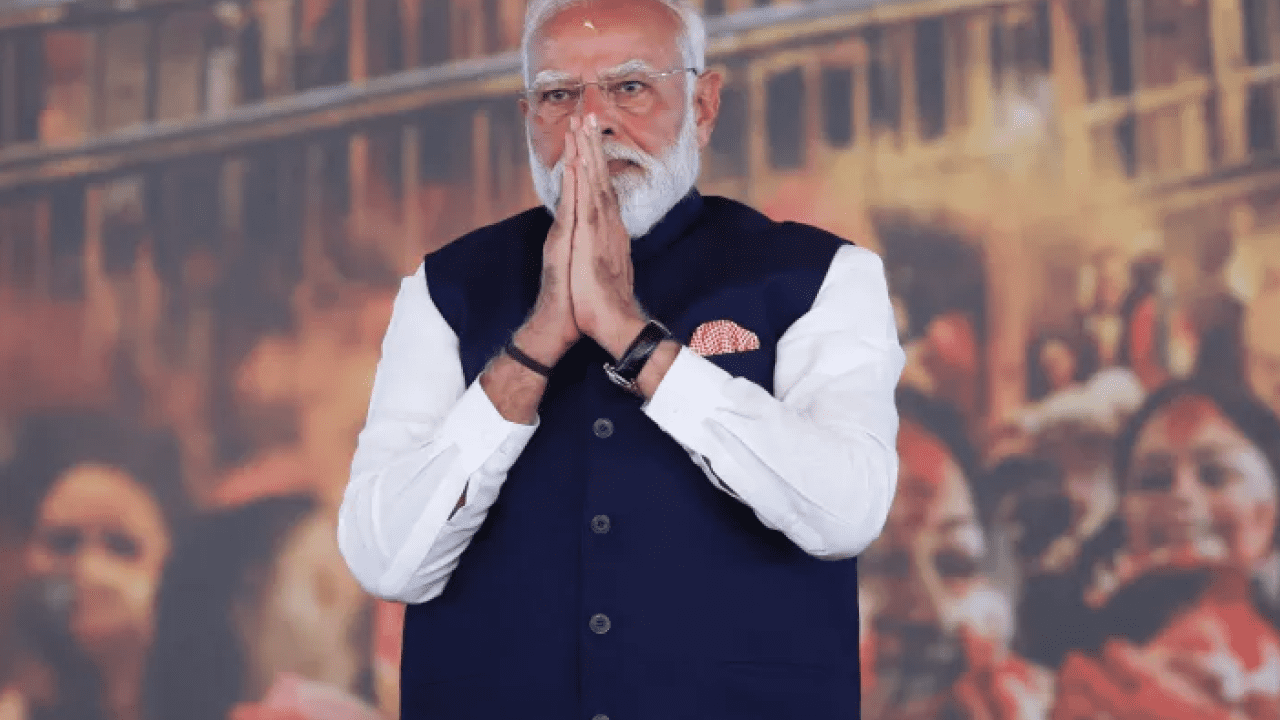
Prime Minister Narendra Modi has received a formal invitation from Iran to attend the state funeral of Supreme Leader Ayatollah Ali Khamenei, placing New Delhi before a significant diplomatic decision amid evolving geopolitical dynamics in West Asia. The invitation, sent by Iranian President Masoud Pezeshkian through diplomatic channels, comes ahead of a week-long series of funeral and burial ceremonies scheduled across Iran from July 4 to July 9.
The Ayatollah Khamenei funeral is expected to be one of the largest state commemorations in Iran’s recent history, drawing foreign leaders, senior diplomats, and millions of mourners. While India has acknowledged receiving the invitation, officials have yet to determine the level of representation that will attend the ceremonies.
Khamenei, Iran’s Supreme Leader for more than three decades, was killed along with several family members and senior officials in a joint US-Israeli military strike on February 28. Although Islamic traditions generally call for burial within 24 hours of death, authorities postponed the funeral multiple times due to ongoing regional conflict and security concerns.
The upcoming ceremonies are designed as a nationwide tribute to the late leader and will conclude with his burial in Mashhad, one of Shia Islam’s holiest cities and Khamenei’s hometown.
Also read: US-Iran Peace Framework Sets Stage for End of Regional Conflict, Strait of Hormuz Reopening
Funeral Ceremonies to Span Multiple Cities
According to Iranian authorities, the official mourning events will begin in Tehran on July 4, where Khamenei’s body is expected to lie in state at the Grand Mosalla complex for public viewing and prayers.
A state funeral procession is scheduled for July 6 in the Iranian capital, with Tehran province observing public holidays during key stages of the ceremonies. Commemorative events will then move to other major religious centers, including Qom and Mashhad.
The final burial ceremony is scheduled for July 9 at the Imam Reza shrine in Mashhad. Iranian officials estimate that as many as 20 million people could participate in the various events nationwide, underscoring Khamenei’s influence within Iran and across the wider Shia Muslim world.
Beyond Iran’s borders, neighboring Iraq is also expected to host special memorial gatherings in the holy cities of Najaf and Karbala, reflecting the regional significance of the late leader.
Also read: Iran Proposes Phased Deal to End War and Reopen Strait of Hormuz Amid Stalled US Talks
India Yet to Decide Its Participation
Sources familiar with the matter indicate that the invitation was formally transmitted to the Ministry of External Affairs through the Iranian Embassy in New Delhi earlier this week. However, Indian authorities have not yet finalized whether Prime Minister Modi will attend personally or whether another senior representative will be designated.
India and Iran maintain long-standing strategic ties spanning energy cooperation, regional connectivity projects, and diplomatic engagement. The decision on representation is therefore likely to be closely watched by regional observers.
Following Khamenei’s death, India formally conveyed condolences to Tehran. Foreign Secretary Vikram Misri visited the Iranian Embassy in New Delhi and signed the condolence book on behalf of the Government of India. External Affairs Minister S. Jaishankar also engaged with his Iranian counterpart, Seyed Abbas Araghchi, following the incident.
The current situation mirrors India’s response to the 2024 death of Iranian President Ebrahim Raisi in a helicopter crash, when then Vice-President Jagdeep Dhankhar represented New Delhi at memorial ceremonies in Tehran.
Also read: Modi Rallies Global Leaders as West Asia Crisis Threatens Energy Flows and Trade Routes
Background Context
India and Iran have shared important diplomatic and economic relations for decades despite shifting geopolitical pressures in the region.
Prime Minister Modi last visited Iran in 2016, when both countries advanced cooperation on the strategically important Chabahar Port project. The initiative remains a key component of India’s efforts to strengthen connectivity with Central Asia and Afghanistan.
More recently, Modi and President Pezeshkian met on the sidelines of the BRICS Summit in Kazan in October 2024, where discussions focused on bilateral cooperation and future engagement between the two nations.
Iran has reportedly extended invitations to several global leaders, including representatives from China, Russia, Qatar, France, and Pakistan, signaling Tehran’s intention to present the funeral as an event of international diplomatic significance.
Expert Analysis / What This Means
The Ayatollah Khamenei funeral carries implications far beyond a ceremonial farewell. For India, the decision regarding representation will be viewed as an indicator of how New Delhi intends to balance its strategic interests across a highly polarized Middle East landscape.
Attendance by a senior Indian delegation could reinforce long-standing ties with Tehran at a time when regional alliances are being reshaped. Conversely, the level of representation will also be scrutinized by other international partners, including countries with competing interests in the region.
The funeral itself is expected to serve as a major political moment for Iran’s leadership, offering an opportunity to project unity and continuity after the loss of its most influential figure. Large international participation could strengthen Tehran’s diplomatic messaging and demonstrate that it retains substantial global engagement despite recent conflicts.
Compared with previous high-profile state funerals in the region, the scale of Khamenei’s ceremonies appears significantly larger, reflecting both his domestic stature and his influence across the broader Shia world. The event may also provide insight into future power dynamics within Iran as the country navigates a post-Khamenei era.
What Happens Next
The immediate focus will be on confirming which world leaders and senior officials will attend the ceremonies between July 4 and July 9. Iran is expected to release additional logistical details as preparations intensify.
For India, an official decision on representation is likely in the coming days. Whether Prime Minister Modi attends personally or appoints a senior delegate, the choice will carry diplomatic significance and could shape perceptions of India-Iran relations in the months ahead.
The funeral events themselves are expected to become one of the most closely watched international gatherings of the year, bringing together political leaders, religious figures, and millions of mourners during a pivotal moment in Iran’s modern history.
Timeline of Events
- February 28: Ayatollah Ali Khamenei killed in a joint US-Israeli strike.
- March 2025: Initial burial plans postponed amid escalating regional conflict.
- March 5: India formally conveys condolences, Foreign Secretary Vikram Misri signs condolence book.
- June 2026: Iran sends formal invitations to world leaders, including PM Narendra Modi.
- July 4–5: Public viewing and prayers in Tehran.
- July 6: State funeral procession in Tehran.
- July 7: Tribute ceremonies in Qom.
- July 8: Memorial events in Iraq’s Najaf and Karbala.
- July 9: Final burial at Imam Reza shrine in Mashhad.