
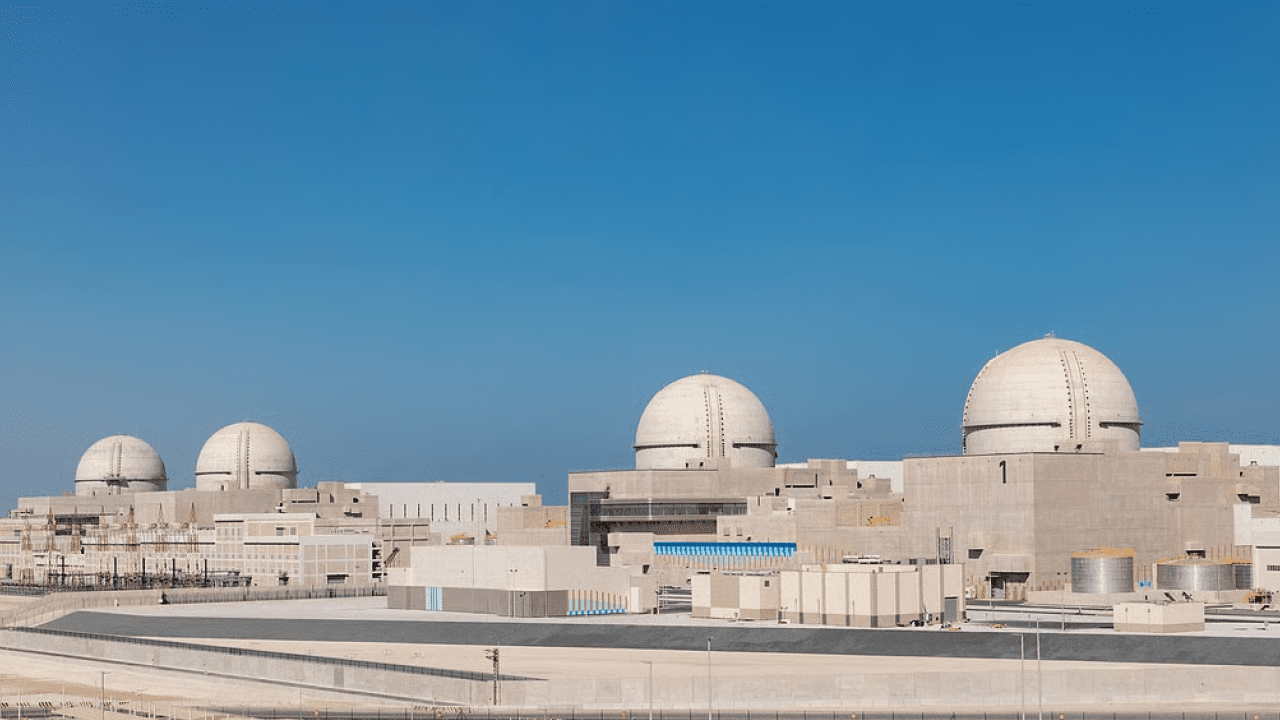
India has sharply condemned the drone strike near the UAE’s Barakah Nuclear Power Plant, describing the incident as a “dangerous escalation” amid rising instability across the Middle East. The attack, which triggered a fire near critical infrastructure linked to the facility in Abu Dhabi’s Al Dhafra region, has intensified international concerns over the growing vulnerability of civilian nuclear sites in conflict-prone regions.
In an official statement, India’s Ministry of External Affairs (MEA) said it was “deeply concerned” by the attack and called for immediate restraint and renewed diplomatic engagement to prevent further deterioration in regional security.
The strike involved three drones that reportedly entered from the UAE’s western border. Emirati authorities said one drone struck an electricity generator outside the plant’s inner perimeter, causing a fire, while two additional drones were intercepted before reaching the facility. Officials confirmed there were no casualties, no radiation leaks, and no damage to the nuclear reactors themselves.
The UAE condemned the incident as a “terrorist attack” and warned that targeting civilian nuclear infrastructure represented a serious violation of international law and humanitarian principles. Abu Dhabi said it reserved the right to respond through all legitimate means to protect its sovereignty and critical infrastructure.
The Barakah facility, valued at nearly $20 billion and developed with South Korean assistance, is the Arab world’s first operational nuclear power plant. Since beginning operations in 2020, the four-reactor site has become a cornerstone of the UAE’s clean energy ambitions, supplying roughly 25 percent of the country’s electricity needs.
Also read: Trump Announces Death of ISIS Deputy Leader Abu-Bilal al-Minuki in Joint US-Nigerian Operation
Regional Tensions Deepen After Strike
The attack comes at a particularly fragile moment for the Middle East, where regional ceasefire efforts remain uncertain and geopolitical tensions involving Iran, proxy groups, Gulf nations, and Western powers continue to escalate.
Saudi Arabia strongly condemned the drone strike and revealed that it had intercepted three drones that entered through Iraqi airspace. Riyadh described the incident as a direct threat to regional stability and warned that it would take all necessary measures to defend its sovereignty.
UAE Foreign Minister Sheikh Abdullah bin Zayed Al Nahyan held emergency consultations with counterparts from Saudi Arabia, Qatar, Jordan, Kuwait, Bahrain, Morocco, and Egypt following the attack. According to Emirati officials, participating nations reaffirmed the UAE’s right to defend itself against threats targeting civilian infrastructure.
Anwar Gargash, diplomatic adviser to the UAE president, appeared to indirectly reference Iran and Tehran-backed regional groups in his remarks following the strike. He warned that attacks on peaceful nuclear facilities constituted a dangerous precedent that could destabilize the wider region.
While no group has officially claimed responsibility for the latest incident, the attack revived memories of earlier threats against the Barakah project. In 2017, Yemen’s Iran-backed Houthi rebels claimed they had targeted the plant during its construction phase, though UAE authorities denied any successful strike at the time.
Why Nuclear Infrastructure Has Become a Global Security Concern
The Barakah incident has reignited global debate over the risks associated with military activity near civilian nuclear infrastructure. International Atomic Energy Agency (IAEA) Director General Rafael Grossi condemned any action that jeopardizes nuclear safety, stressing that attacks involving nuclear facilities could have catastrophic humanitarian and environmental consequences even without direct reactor damage.
Security analysts say the latest strike reflects a broader pattern in which nuclear-linked infrastructure is increasingly being drawn into geopolitical confrontations.
The issue gained global attention during Russia’s invasion of Ukraine in 2022, when repeated shelling and military activity around nuclear plants raised fears of a major radiological disaster. Similar anxieties have surfaced in relation to Iran’s Bushehr nuclear facility, where Tehran has periodically alleged hostile activity amid its long-running standoff with the United States and Israel.
The UAE’s nuclear program differs significantly from Iran’s contentious nuclear ambitions. Abu Dhabi operates under a strict “123 Agreement” with the United States, under which it agreed not to enrich uranium domestically or reprocess spent fuel conditions designed to ease international proliferation concerns.
Iran, by contrast, has faced years of international scrutiny over uranium enrichment activities and restrictions placed on UN nuclear inspectors. Western governments have repeatedly accused Tehran of pursuing capabilities that could potentially support weapons development, allegations Iran denies.
Also read: Iran Proposes Phased Deal to End War and Reopen Strait of Hormuz Amid Stalled US Talks
Expert Analysis / What This Means
The drone strike near the Barakah nuclear plant marks a critical shift in the security landscape of the Gulf region. Even though the reactors were not damaged and radiation levels remained normal, the incident demonstrates how civilian energy infrastructure is increasingly becoming a strategic target in regional conflicts.
For Gulf nations investing heavily in clean energy and nuclear diversification, the attack raises urgent questions about infrastructure protection and air defense preparedness. It may also accelerate investments in anti-drone technologies and regional intelligence coordination.
For India, which maintains strong economic and energy ties with the UAE and broader Gulf region, the escalation carries significant strategic implications. Any prolonged instability could affect energy security, trade routes, expatriate safety, and diplomatic balances in West Asia.
Internationally, the strike is likely to intensify discussions at the IAEA and the United Nations regarding protections for civilian nuclear facilities during armed conflicts. The incident could also influence future nuclear agreements, with countries facing greater pressure to strengthen physical security frameworks around critical energy assets.
The attack further highlights how proxy warfare and drone technology are reshaping modern conflict dynamics. Unlike traditional military strikes, low-cost drones allow state and non-state actors to threaten high-value infrastructure with relatively limited resources, increasing unpredictability in already volatile regions.
Industry / Market Impact
The attack is expected to heighten concerns within global energy and insurance markets, particularly around infrastructure security in the Gulf. Analysts warn that repeated threats to strategic facilities could increase operational costs for nuclear and energy operators across the region.
Energy markets are also closely watching whether tensions escalate further, as instability involving Gulf states often triggers volatility in global oil prices and shipping routes.
The UAE has positioned Barakah as a symbol of its transition toward low-carbon energy generation. Any perceived vulnerability surrounding the plant could impact investor confidence in future nuclear and clean-energy projects across the Middle East.
What Happens Next
UAE authorities are continuing investigations into the origin and operational network behind the drones. Security agencies are expected to coordinate closely with regional allies to identify possible launch points and prevent additional attacks.
Diplomatic activity is also likely to intensify in the coming days as Gulf nations seek broader international backing against threats targeting civilian infrastructure. The incident may push regional governments to advocate for stronger global enforcement mechanisms protecting nuclear facilities during conflict.
Meanwhile, international observers will closely monitor whether the strike becomes an isolated episode or the beginning of a broader escalation involving critical infrastructure targets across the Middle East.