
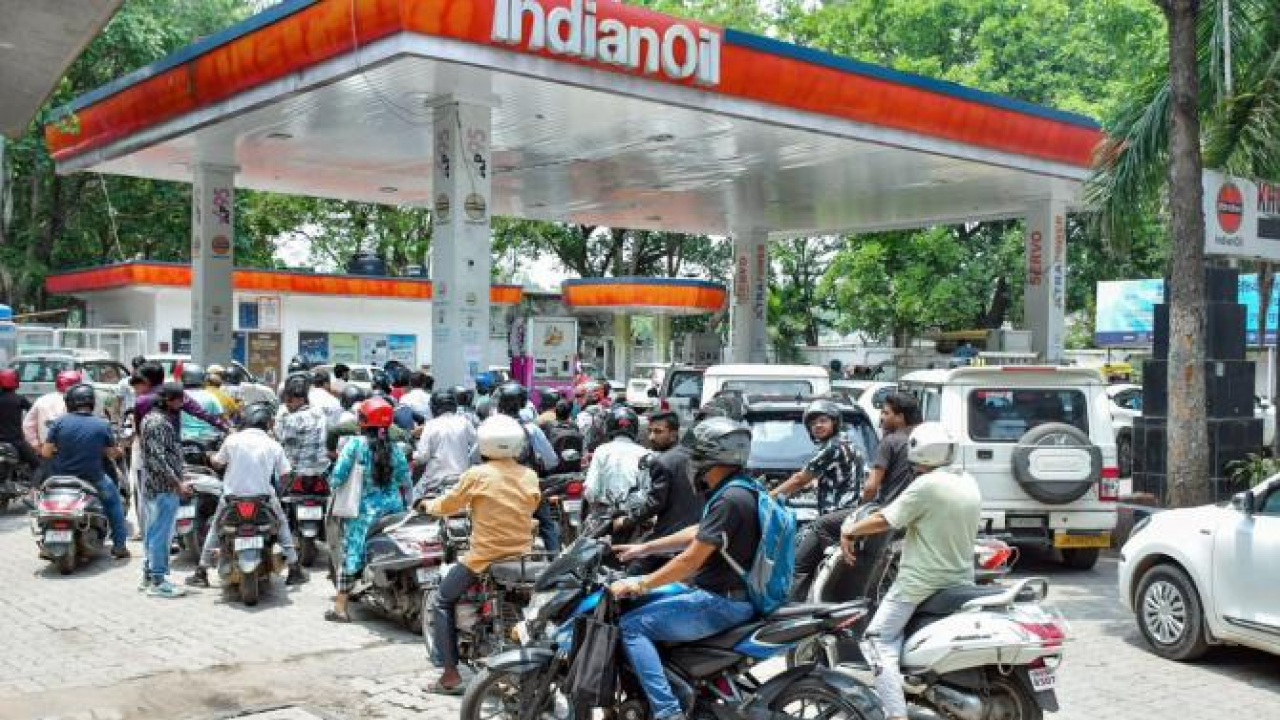
India’s fuel consumers are facing another sharp rise in transportation costs after state-run oil marketing companies (OMCs) increased petrol and diesel prices for the third time in just over a week, reflecting mounting pressure from soaring global crude oil prices linked to the intensifying West Asia conflict. The latest revision pushed petrol prices in Delhi to ₹99.51 per litre and diesel to ₹92.49 per litre, bringing cumulative hikes since May 15 to nearly ₹5 per litre.
The repeated revisions come as global energy markets remain volatile following the US-Iran conflict and growing disruptions around the Strait of Hormuz one of the world’s most strategically important oil transit routes. India, which imports nearly 88–90% of its crude oil requirements, has become increasingly vulnerable to rising international oil prices and a weakening rupee.
Saturday’s increase saw petrol prices rise by up to 94 paise per litre across metro cities, while diesel rates climbed by as much as 95 paise. The three dominant public sector fuel retailers Indian Oil Corporation (IOC), Bharat Petroleum Corporation Limited (BPCL), and Hindustan Petroleum Corporation Limited (HPCL) revised prices simultaneously as under-recoveries continued to strain their balance sheets.
Also read: India’s Retail Inflation Hits 13-Month High in April as Food Prices Surge Despite Stable Fuel Costs
Latest Petrol and Diesel Prices in Major Cities
Fuel prices across India’s four major metros now stand at the following levels:
| City | Petrol Price | Diesel Price |
|---|---|---|
| Delhi | ₹99.51 | ₹92.49 |
| Mumbai | ₹108.49 | ₹95.02 |
| Kolkata | ₹110.64 | ₹97.02 |
| Chennai | ₹105.31 | ₹96.98 |
The increases vary depending on local taxes and VAT imposed by state governments.
This marks the third upward revision since May 15, when fuel prices were first raised after remaining largely unchanged since April 2022. Prior to the current hikes, the only major adjustment had been a ₹2 per litre cut announced in March 2024 ahead of the Lok Sabha elections.
Global Oil Shock Driving Domestic Fuel Inflation
The latest increase is directly tied to the surge in international crude oil prices triggered by escalating geopolitical tensions in West Asia. Brent crude, which traded near $70–72 per barrel before the conflict intensified, has crossed the $100 mark and recently closed above $103 per barrel.
India’s crude oil basket has reportedly averaged around $113–114 per barrel in recent months, compared to roughly $69 per barrel earlier this year. Analysts say supply concerns surrounding the Strait of Hormuz have amplified fears of prolonged disruptions in global oil shipments.
The conflict’s impact is especially severe for India because crude imports are paid for in US dollars. A rise in oil prices combined with rupee depreciation significantly increases the country’s import burden and widens inflationary risks across sectors.
Government officials had earlier indicated that the three OMCs were collectively losing nearly ₹1,000 crore per day due to elevated crude costs while retail fuel prices remained frozen. Following successive hikes, daily under-recoveries are estimated to have fallen below ₹500 crore.
Expert Analysis / What This Means
The latest fuel price hikes could have far-reaching consequences for India’s economy beyond immediate transportation costs. Rising petrol and diesel prices directly affect logistics, freight movement, agriculture, manufacturing, and public transport, increasing inflationary pressure across the supply chain.
For consumers, the repeated hikes may translate into higher food prices, expensive cab fares, and increased household expenditure in the coming weeks. Diesel, in particular, plays a critical role in India’s transport and agricultural sectors, meaning sustained price increases could eventually impact essential commodities.
The situation also places the Reserve Bank of India in a difficult position. Higher fuel inflation may complicate monetary policy decisions and delay potential interest rate easing measures if crude prices remain elevated for an extended period.
From an industry perspective, the government appears to be balancing consumer sensitivity with the financial sustainability of state-run fuel retailers. The OMCs had absorbed losses for years after suspending daily fuel revisions following the Russia-Ukraine war in 2022. However, current crude prices have made that strategy increasingly unsustainable.
Compared with the post-Ukraine fuel shock in 2022, the present crisis carries additional risks because of threats to global shipping lanes and broader geopolitical instability in West Asia. If tensions worsen further, analysts believe India could face additional fuel price increases in the months ahead.
Industry / Market Impact
Despite the current losses from fuel retailing, India’s major OMCs recently posted strong financial results for FY26. Combined net profits for IOC, BPCL, and HPCL reportedly surged more than 130% year-on-year to over ₹77,000 crore, helped by relatively stable crude prices for much of the financial year before the latest geopolitical escalation.
Indian refiners had benefited from stronger refining margins and stable retail pricing until crude markets were disrupted again by the recent conflict involving Iran and the broader Middle East region.
However, analysts warn that prolonged crude prices above $100 per barrel could significantly erode profitability in upcoming quarters unless retail prices continue to be adjusted upward.
Stock markets are also closely monitoring India’s energy import bill, as rising crude costs could widen the current account deficit and increase pressure on the rupee.
Timeline of Events
February 2026
Escalation of conflict in West Asia triggers sharp rise in global crude prices.
May 15, 2026
India announces first fuel price increase since April 2022, with petrol and diesel prices rising by around ₹3 per litre.
May 19, 2026
Second fuel price hike of nearly 90 paise per litre implemented amid continued crude volatility.
May 23, 2026
Third hike announced, taking cumulative increases to almost ₹5 per litre in just eight days.
What Happens Next
Energy market experts believe fuel prices in India may continue rising unless international crude prices stabilize below the $100-per-barrel threshold. Some analysts suggest that prices closer to $70 per barrel would be necessary for meaningful relief to consumers and OMCs.
The Indian government has stated that the country currently maintains adequate fuel reserves and is taking steps to secure energy shipments, including enhanced naval deployment in the Persian Gulf region.
Meanwhile, Prime Minister Narendra Modi has urged citizens to reduce fuel consumption and conserve foreign exchange as India navigates one of its most challenging global energy environments since the Ukraine crisis.