
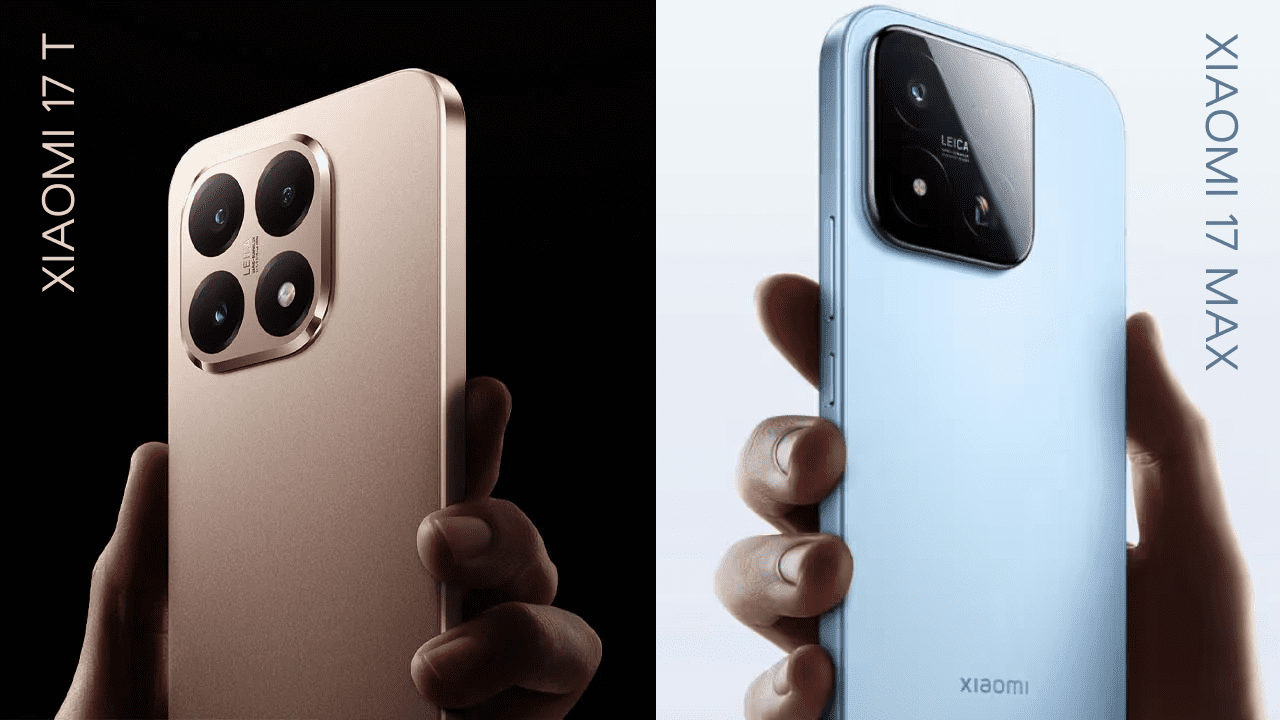
Xiaomi is accelerating its flagship smartphone strategy with two major announcements, the official debut of the Xiaomi 17 Max in China and the return of the company’s T-series lineup to India with the Xiaomi 17T launching on June 4. Together, the launches signal Xiaomi’s renewed focus on premium hardware, larger batteries, and Leica-powered mobile photography as competition intensifies across the global Android smartphone market.
The Xiaomi 17 Max arrives as the company’s most battery-focused flagship yet, combining an 8,000mAh silicon-carbon battery with Qualcomm’s Snapdragon 8 Elite Gen 5 processor and a Leica-engineered camera system. At the same time, Xiaomi is preparing to reintroduce its performance-oriented T-series devices to India after a multi-year absence, highlighting the growing importance of the Indian premium smartphone segment.
The dual announcements come as Chinese smartphone brands increasingly compete on camera technology, battery innovation, AI-driven software experiences, and ultra-fast charging capabilities in an effort to challenge Samsung and Apple in the high-end market.
Also read: iQOO 15T Launch Signals New Battery and Gaming Race in Premium Smartphone Market
Xiaomi 17 Max Targets Power Users With Massive Battery and Leica Cameras
The Xiaomi 17 Max is positioned as a flagship designed for users prioritizing endurance without sacrificing premium specifications. The standout feature is its 8,000mAh silicon-carbon battery, one of the largest capacities currently seen in a mainstream flagship smartphone.
Despite the large battery, Xiaomi has retained a relatively slim flagship-style design instead of opting for a bulkier rugged-device approach. The shift toward silicon-carbon battery technology reflects a broader trend among Chinese manufacturers seeking to increase battery density while maintaining thin form factors.
The smartphone features a 6.9-inch LTPO AMOLED display with 1.5K resolution, adaptive 120Hz refresh rate support, and peak brightness reaching 3500 nits. Xiaomi has also included IP68-rated dust and water resistance along with redesigned rear camera housing intended to visually differentiate the device from previous flagship generations.
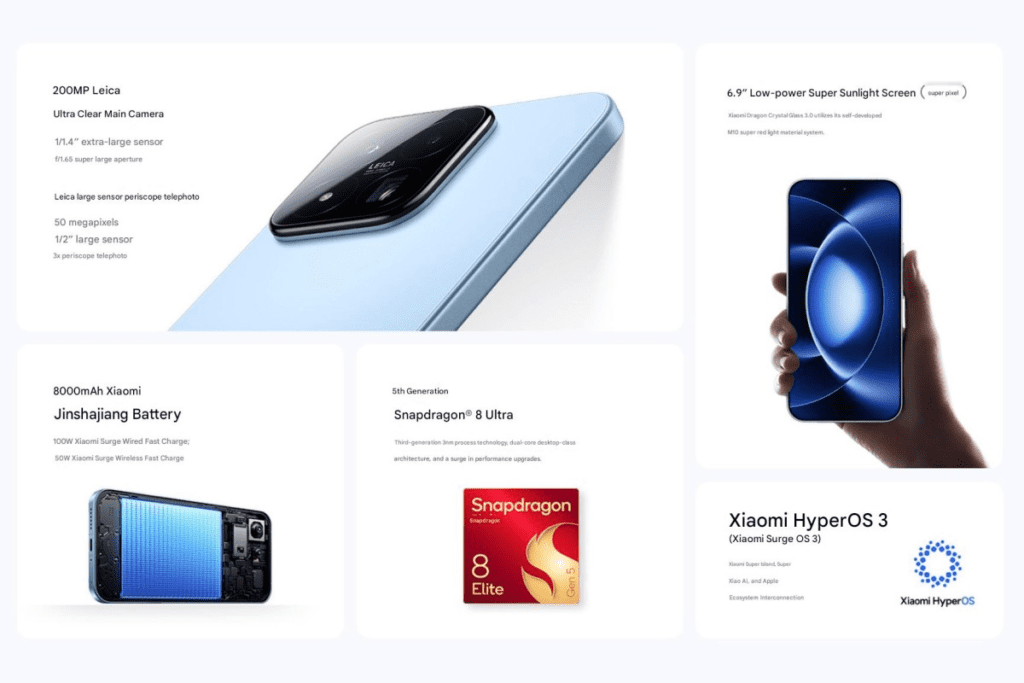
Under the hood, the Xiaomi 17 Max runs on Qualcomm’s Snapdragon 8 Elite Gen 5 chipset built on TSMC’s advanced 3nm process. The device supports up to 16GB LPDDR5X RAM and up to 512GB UFS 4.1 storage. Xiaomi says its upgraded IceLoop cooling system is designed to improve sustained performance during gaming, multitasking, AI processing, and long camera sessions.
Photography remains central to Xiaomi’s premium positioning strategy. The rear camera setup includes a 200MP Leica primary sensor, a 50MP ultra-wide camera, and a 50MP periscope telephoto lens. Xiaomi is also emphasizing computational photography features including AI scene optimization, enhanced portrait processing, advanced night photography, and 8K video recording.
The smartphone ships with HyperOS 3 based on Android 16 and includes Wi-Fi 7, Bluetooth 5.4, NFC, stereo speakers, and an in-display fingerprint sensor. Xiaomi has priced the device starting at CNY 4,799 in China, with sales beginning May 25.
Xiaomi 17T Marks the Return of the T-Series to India
While the 17 Max targets flagship enthusiasts in China, Xiaomi is simultaneously reviving its T-series lineup in India. The Xiaomi 17T is scheduled to launch in the country on June 4, following its global unveiling in Vienna on May 28.
The launch is notable because Xiaomi has not released a T-series smartphone in India since the Xiaomi 11T Pro in 2022. The company appears to be using the 17T to strengthen its position in the increasingly competitive upper mid-range and affordable flagship segments.
Unlike global markets, India is expected to receive only the standard Xiaomi 17T variant, while the Xiaomi 17T Pro may remain exclusive to international markets.
Leaked specifications suggest the Xiaomi 17T will feature a 6.59-inch 1.5K flat LTPS AMOLED display with refresh rates ranging between 120Hz and 144Hz depending on the final configuration. The smartphone is expected to be powered by MediaTek’s Dimensity 8500 Ultra chipset and paired with a 6,500mAh battery supporting 67W HyperCharge technology.
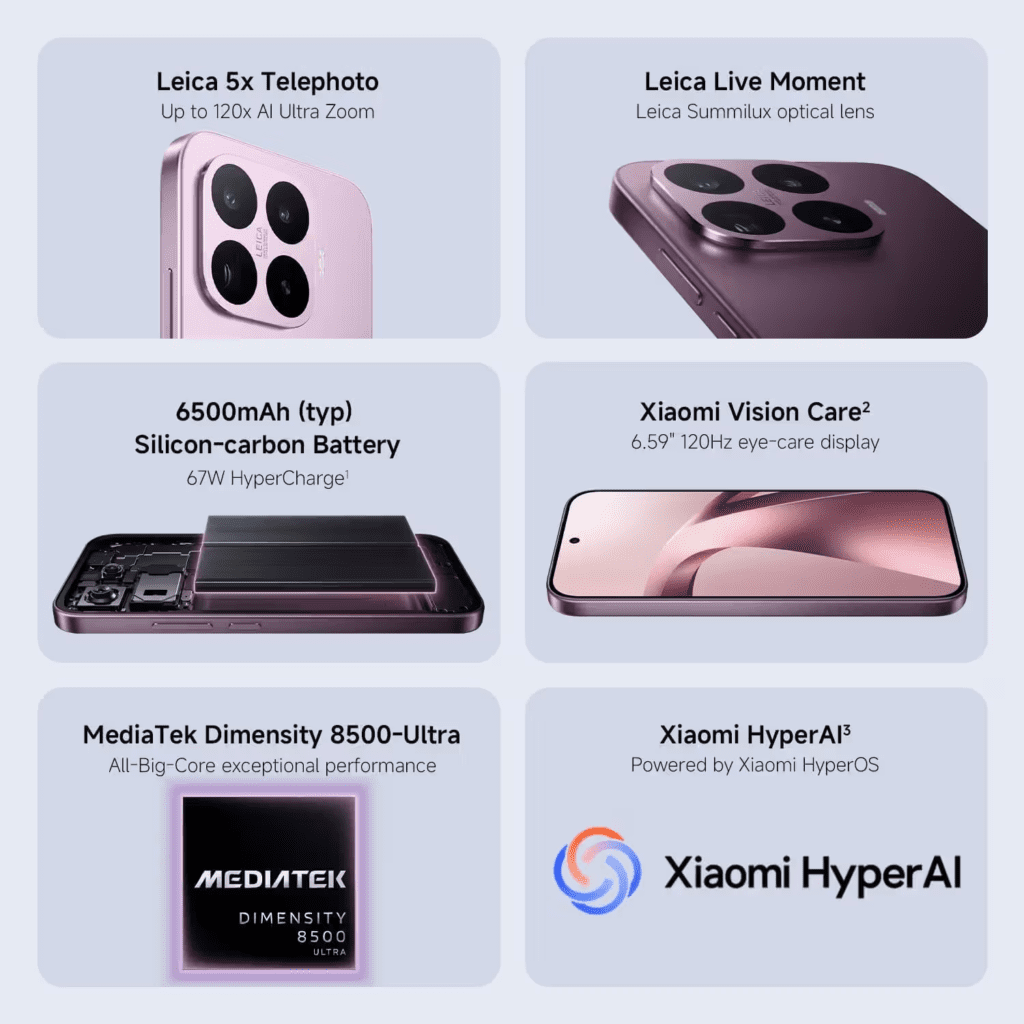
Xiaomi has already confirmed Leica co-engineered cameras for the 17T, reinforcing the company’s continued investment in imaging partnerships across multiple price categories. Reports indicate the phone may include a 50MP primary sensor, a 50MP periscope telephoto lens with 5x optical zoom, and a 12MP ultra-wide camera.
The device is also expected to carry an IP68 rating and will be sold through Xiaomi’s online store, Amazon India, and offline retail channels.
Also read: Vivo T5 Pro 5G Launched in India with Massive 9,020mAh Battery, Starting at ₹29,999
Expert Analysis / What This Means
Xiaomi’s latest launches demonstrate how the smartphone industry is shifting from incremental upgrades toward feature consolidation. Rather than competing on a single specification, brands are now attempting to combine flagship cameras, ultra-large batteries, premium displays, AI software features, and advanced chipsets into unified ecosystems.
The Xiaomi 17 Max particularly highlights the growing importance of battery technology in premium smartphones. For years, flagship devices prioritized thinness over endurance, but consumer demand for longer battery life especially among gamers, creators, and heavy multitaskers is reshaping product strategies.
The return of the T-series to India is equally significant. India has become one of the most aggressively contested premium smartphone markets, with Xiaomi facing pressure from Samsung, OnePlus, Vivo, Oppo, and Apple. Reintroducing the T-series allows Xiaomi to target consumers seeking flagship-like features at comparatively lower prices.
Leica’s continued partnership with Xiaomi also reflects how smartphone brands increasingly rely on camera branding and imaging software collaborations to differentiate themselves. Similar strategies from Vivo-Zeiss and Oppo-Hasselblad partnerships have intensified the camera-focused marketing battle in Android devices.
Another important trend is the rapid adoption of silicon-carbon batteries across Chinese smartphone manufacturers. If successful, this technology could allow future flagship devices to surpass traditional battery limitations without substantially increasing thickness or weight.
The broader implication is clear, smartphone makers are entering a new phase where battery endurance, AI processing, and camera ecosystems may matter more to consumers than marginal yearly chipset performance gains.
Industry / Market Impact
The Xiaomi 17 Max enters a premium smartphone category currently dominated by Samsung’s Galaxy Ultra series, Apple’s iPhone Pro lineup, and flagship devices from Vivo and Oppo. Xiaomi’s aggressive specification strategy could place pricing pressure on competitors, particularly in Asian markets where hardware value remains a major purchasing factor.
The inclusion of an 8,000mAh battery may also push rival manufacturers to accelerate adoption of higher-density battery technologies. Historically, battery capacities in flagship phones have remained near the 5,000mAh range due to thermal and design limitations.
Meanwhile, Xiaomi’s renewed focus on India signals the company’s attempt to regain momentum in a market where premium smartphone growth continues to outpace entry-level segments.
What Happens Next
Xiaomi is expected to reveal additional details about the Xiaomi 17T ahead of its May 28 global launch event. Questions also remain regarding international availability for the Xiaomi 17 Max, including potential launches in India and European markets.
Industry observers will closely watch real-world performance testing of the 17 Max’s battery efficiency, thermals, and camera consistency. If Xiaomi successfully balances endurance with flagship-level performance, the device could become one of the most influential Android releases of the year.
The company’s broader challenge, however, will be sustaining software support, ecosystem integration, and premium brand perception as competition in the flagship category becomes increasingly intense.