
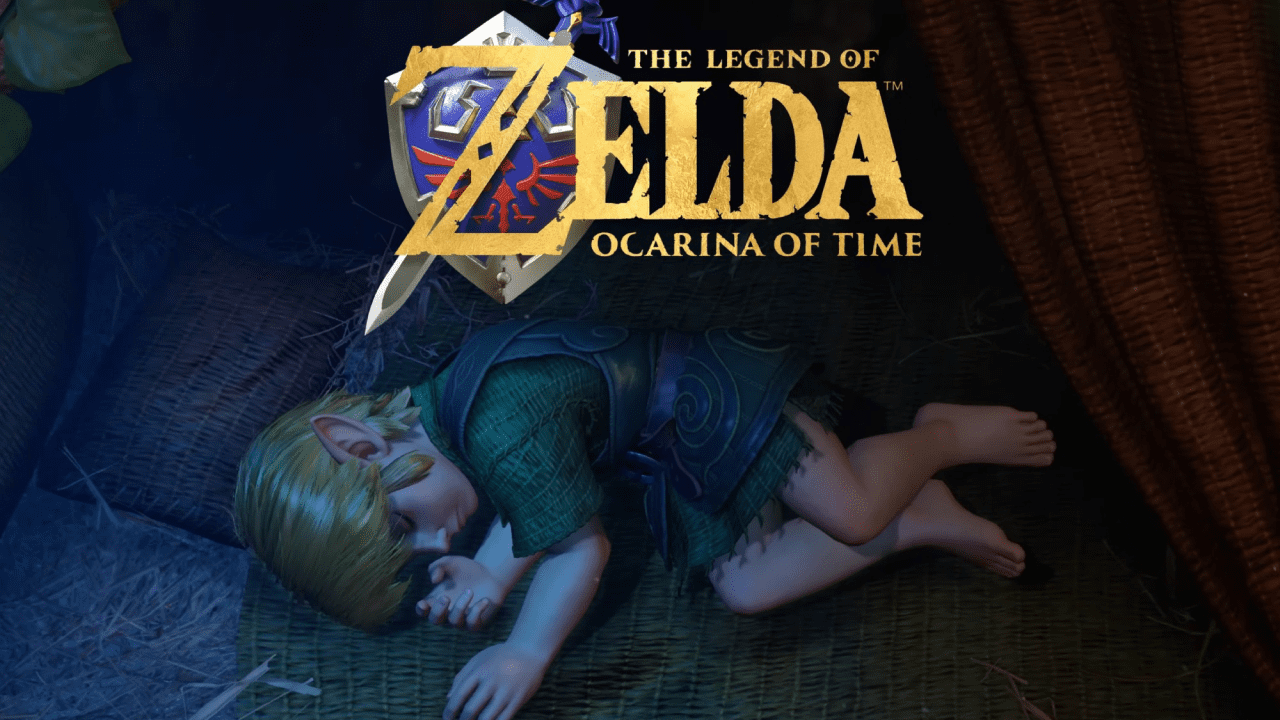
Nintendo has officially confirmed the long-rumored Zelda Ocarina of Time Remake, unveiling the project during its June 2026 Nintendo Direct and positioning it as one of the most significant upcoming exclusives for the Nintendo Switch 2. Yet while the announcement instantly became one of the event’s most talked-about moments, the reveal also highlighted a growing challenge for major game publishers, how to generate excitement when key details have already leaked months in advance.
The remake of The Legend of Zelda: Ocarina of Time, widely regarded as one of the most influential video games ever created, was revealed through a brief teaser that showed a visually reimagined Kokiri Forest and a sleeping young Link before ending with the game’s logo. Nintendo described the project as being “reborn exclusively for Nintendo Switch 2,” suggesting a far more ambitious undertaking than a traditional remaster.
The announcement capped a Nintendo Direct packed with major reveals, including Kingdom Hearts IV, Fire Emblem, Fortune’s Weave, updates to the Xenoblade series, and new looks at Star Fox, Splatoon Raiders, and Rhythm Heaven Groove. Despite the crowded showcase, Ocarina of Time quickly emerged as the centerpiece of post-event discussion.
A Historic Game Returns for a New Generation
Originally released in 1998 for the Nintendo 64, Ocarina of Time is frequently cited among the greatest video games ever made. Its innovations in 3D exploration, lock-on combat, dungeon design, and world-building helped establish design principles that continue to influence action-adventure games today.
Although the game received a remastered release on Nintendo 3DS in 2011 and remains available through Nintendo’s online services, the newly announced project appears to be a full-scale remake built specifically for modern hardware.
The teaser offered few concrete details, but its visual presentation suggested a more realistic artistic direction than recent Zelda entries such as Breath of the Wild and Tears of the Kingdom. Observers have compared its aesthetic more closely to Twilight Princess, featuring denser environments and more detailed character models.
What remains unclear is the scope of Nintendo’s ambitions. The company has yet to reveal gameplay footage, confirm development responsibilities, explain potential mechanical changes, or provide a precise release date beyond a 2026 launch window.
Also read: Nvidia and Microsoft Unveil RTX Spark, Launching a New Era of AI-Powered Windows PCs
Leak Culture Changes the Conversation
While the remake’s announcement would ordinarily have been one of Nintendo’s most shocking reveals in years, widespread leaks significantly altered audience expectations.
Reports about the existence of an Ocarina of Time remake circulated months before the Direct presentation, becoming part of a broader series of rumors that accurately predicted several Nintendo projects. By the time the teaser aired, many fans had already accepted the remake as inevitable.
Former Nintendo communications staff members Kit Ellis and Krysta Yang publicly argued that the leak weakened the impact of the reveal. Both suggested that Nintendo’s original presentation strategy may have worked if the project had remained secret, but felt the company should have adjusted its plans after details became widely known.
Their criticism focused less on the remake itself and more on the decision to show only a short teaser despite months of speculation. With fans already expecting the game, many anticipated a deeper look at gameplay, story enhancements, or new features.
The limited reveal instead generated as many questions as answers, fueling debate across social media and gaming forums.
Expert Analysis / What This Means
Nintendo’s Ocarina of Time remake announcement represents more than a nostalgic revival. It signals how the company intends to strengthen the Switch 2 during a crucial early phase of its lifecycle.
For players, the remake could become the definitive version of one of gaming’s most celebrated adventures, particularly if Nintendo expands beyond graphical improvements and modernizes gameplay systems. Expectations are exceptionally high because the original title remains such a landmark release.
For Nintendo, the project carries both opportunity and risk. A successful remake could drive hardware sales and attract longtime fans while introducing a younger audience to a foundational Zelda experience. However, if the final product is perceived as a straightforward visual upgrade, criticism may grow regarding Nintendo’s increasing reliance on remakes and remasters.
The situation also reflects a broader industry trend in which major leaks increasingly diminish the impact of carefully planned marketing campaigns. Publishers are being forced to reconsider how they reveal games when audiences often know about projects months before official announcements.
Compared with past Nintendo reveals that generated surprise and immediate excitement, the Ocarina announcement became a discussion about execution, expectations, and missing information rather than the game’s existence itself.
Also read: PlayStation 6 leak points to massive memory upgrade as Sony plans next-gen console
Why This Matters
Few franchises carry the cultural significance of The Legend of Zelda. As one of Nintendo’s most recognizable brands, Zelda often serves as a showcase for the company’s technological and creative ambitions.
The remake arrives at a time when Nintendo is balancing two priorities, preserving classic experiences and demonstrating the capabilities of new hardware. Ocarina of Time occupies a unique position because it is simultaneously a beloved legacy title and a potential system seller.
The project may also provide insight into Nintendo’s broader Zelda roadmap. Industry observers are already speculating that a separate internal team could be developing the franchise’s next original installment while another group handles the remake.
Industry and Market Impact
The announcement strengthens Nintendo’s 2026 software lineup and gives Switch 2 a marquee exclusive capable of driving consumer interest.
Large-scale remakes have become increasingly important across the gaming industry, with publishers leveraging established intellectual property to reduce risk while attracting both existing fans and new players. Recent successes from competing publishers have demonstrated that high-quality remakes can generate blockbuster sales and significant engagement.
Nintendo’s decision to revisit Ocarina of Time suggests confidence that premium remakes remain a powerful commercial strategy. However, market reception will depend heavily on how extensive the reimagining proves to be.
Questions surrounding development responsibilities, engine technology, gameplay enhancements, and content additions are likely to dominate discussion until Nintendo provides a more comprehensive showcase.
What Happens Next
With the remake scheduled for release in 2026, attention now turns to Nintendo’s next presentation.
Industry watchers expect the company to reveal gameplay footage, technical details, and additional information in a dedicated showcase later this year. Fans will be looking for answers regarding combat updates, dungeon redesigns, visual technology, quality-of-life improvements, and whether new story elements have been added.
Until then, Nintendo has achieved one objective beyond doubt, placing Ocarina of Time back at the center of gaming’s conversation. The challenge now is proving that this remake offers more than nostalgia and is worthy of one of the most revered names in video game history.