
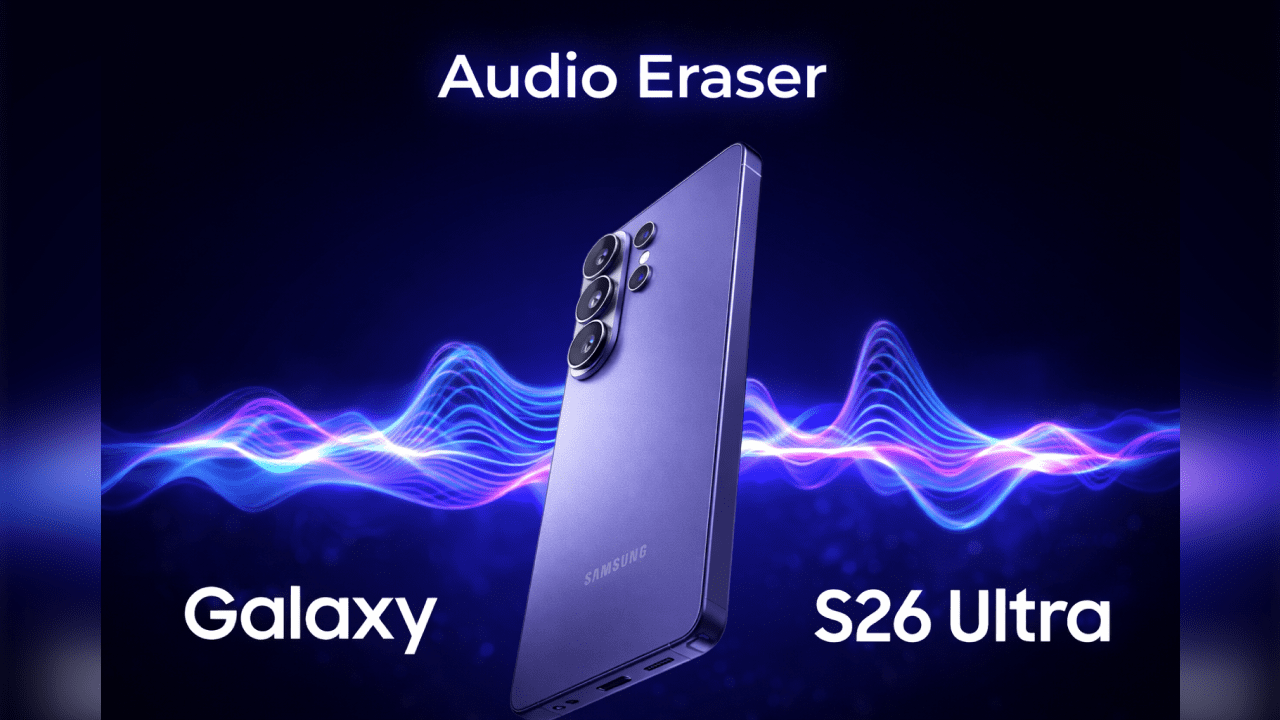
The Samsung Galaxy S26 series has introduced a major leap in on-device audio processing with its upgraded Audio Eraser feature, now enabling real-time sound optimization across streaming apps like Netflix, YouTube, Instagram, and other video platforms. Previously limited to editing recorded clips, the AI-powered tool has evolved into a system-wide audio enhancement engine that works while users watch content, marking a significant shift in how smartphone audio is experienced on the go.
The feature, part of Samsung’s broader Galaxy AI suite, is designed to isolate and balance different sound elements such as dialogue, music, wind, and background noise so viewers can enjoy clearer speech and reduced distractions even in noisy environments. With the Galaxy S26 lineup, Samsung has extended this capability beyond local files and native apps to live and streamed content, making it one of the most advanced mobile audio control systems available today.
Also read: Google’s ‘Pixel Glow’ Feature Hints at a New Era of Smart Device Design
Real-Time Audio Processing Across Streaming Apps
At the core of the upgrade is a new AI sound engine that performs live audio separation while content is playing. Instead of requiring post-editing, the Galaxy S26 processes sound instantly, allowing users to adjust what they hear in real time.
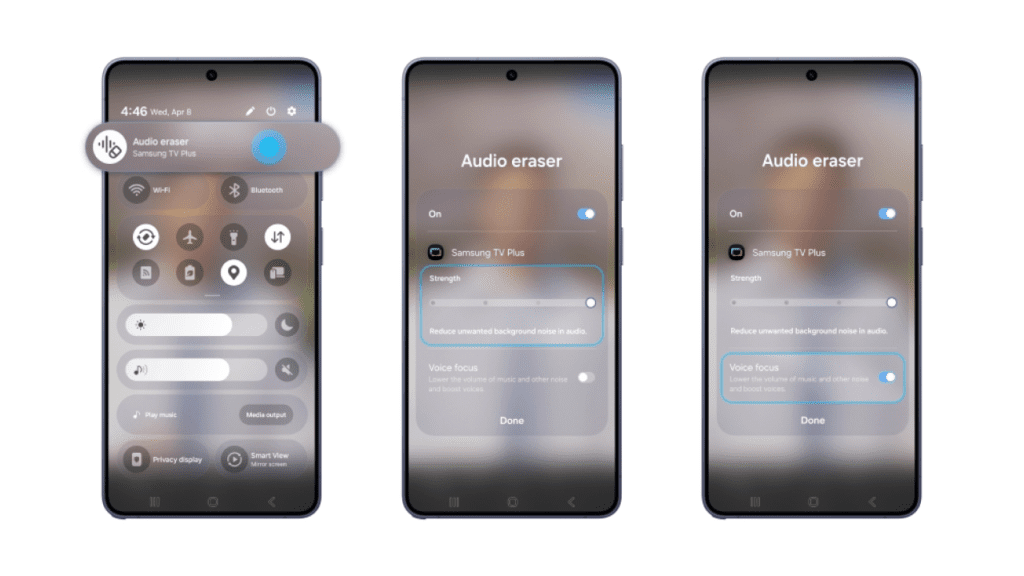
Whether watching a movie on Netflix or a short video on YouTube, users can now fine-tune audio directly through the Quick Panel without pausing or restarting playback. A simple swipe from the top right of the screen reveals the Audio Eraser controls, where users can instantly modify sound balance.
The system divides audio into multiple layers including voice, music, wind, nature, crowd, and background noise allowing precise filtering depending on the content type. This means dialogue-heavy scenes can be enhanced for clarity, while music or ambient sound can be toned down without affecting overall immersion.
How the Galaxy S26 Audio Eraser Works
Once activated during video playback, the feature provides two primary controls:
- A Strength slider to adjust the level of background noise reduction
- A Voice Focus toggle to prioritize dialogue and reduce competing sounds
The Voice Focus mode is especially effective for podcasts, interviews, and movie scenes where speech clarity is essential. When enabled, the system intelligently boosts vocal frequencies while suppressing surrounding noise such as music or environmental sound.
Samsung’s integration of this tool into real-time playback marks a notable evolution from earlier Galaxy models, where Audio Eraser was primarily used for editing recorded videos in the Gallery app.
From Post-Editing Tool to Live AI Audio Engine
Earlier iterations of Audio Eraser, introduced with previous Galaxy devices, focused on cleaning up saved recordings. Users could reduce wind noise, crowd interference, or other unwanted sound after filming.
The Galaxy S26 series expands this concept significantly. The feature is now embedded at the system level, allowing continuous audio optimization while content is streaming. This shift transforms Audio Eraser from a post-production tool into a live listening enhancement system.
Samsung has also refined the interface, making it easier for users to access controls mid-playback without interrupting viewing. The goal is to provide a more seamless and customizable media experience across all apps.
Also read: Samsung Galaxy Watch Battery Drain Issue Sparks User Frustration Across Multiple Models
Why This Upgrade Matters for Mobile Viewing
The rise of mobile-first entertainment has made audio quality increasingly important, especially in noisy public environments such as commutes, cafes, and travel hubs. The Galaxy S26’s real-time processing addresses a long-standing issue: poor dialogue clarity in streamed content.
By enabling users to isolate speech and reduce background noise instantly, Samsung is effectively bridging the gap between cinematic audio quality and mobile convenience. This is particularly relevant for users watching content without headphones or in uncontrolled environments.
Beyond convenience, the feature also highlights a broader industry trend toward AI-driven personalization in media consumption. Instead of relying on fixed audio mixes, users now gain direct control over how content sounds in real time.
What Happens Next for Galaxy AI Audio Features
With Audio Eraser now functioning across both local and streaming content, Samsung is positioning Galaxy AI as a central part of its multimedia strategy. Future updates are expected to further refine sound separation accuracy and expand compatibility across additional apps and devices.
As AI processing continues to move on-device rather than in the cloud, features like Audio Eraser could become standard across flagship smartphones, potentially influencing how other manufacturers approach mobile audio customization.
For now, the Galaxy S26 series stands out as one of the first smartphones to offer true real-time, app-wide audio control redefining what users can expect from mobile entertainment.