
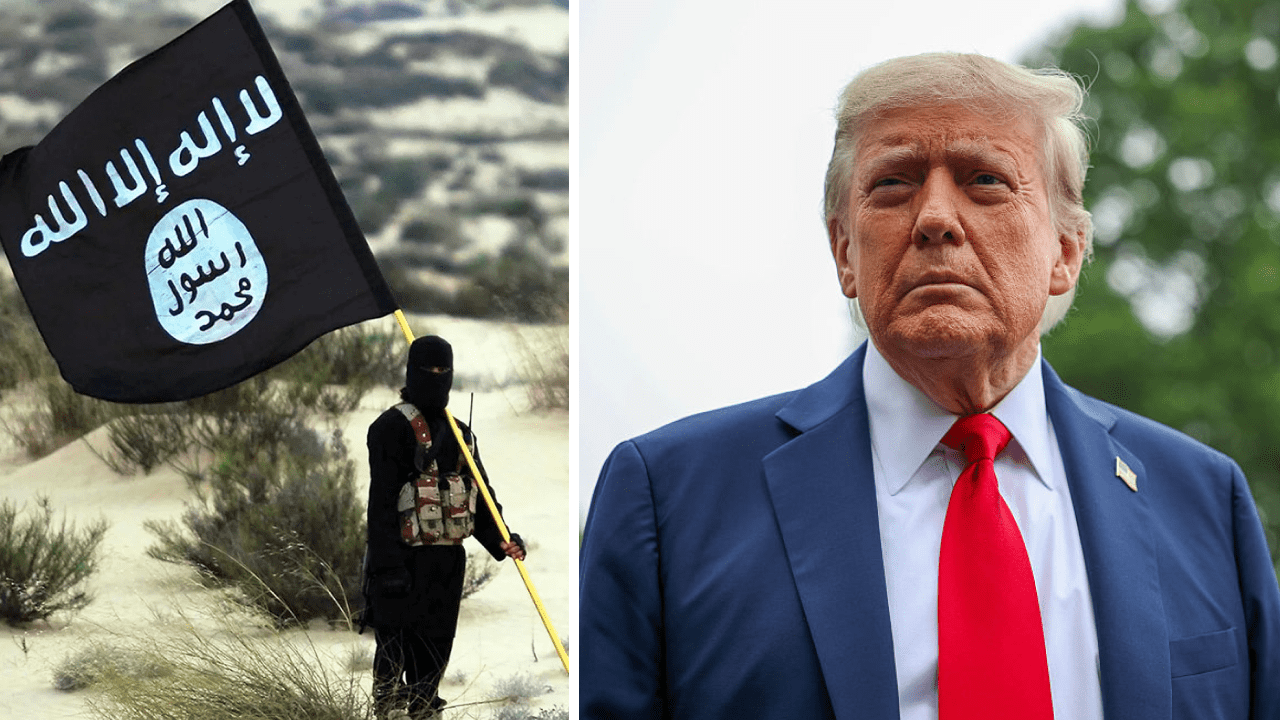
US President Donald Trump has announced that Abu-Bilal al-Minuki, described as the global second-in-command of the Islamic State group, was killed during a joint military operation involving American and Nigerian forces. The operation marks one of the most significant counterterrorism strikes in West Africa in recent years and highlights Washington’s expanding security cooperation with Nigeria amid growing extremist threats across the region.
In a statement posted on Truth Social on Friday, Trump said the mission was conducted “at my direction” and characterized it as a “meticulously planned and very complex” operation targeting what he called “the most active terrorist in the world.” While the exact location of the strike was not disclosed, Trump said intelligence sources had closely tracked al-Minuki’s movements across Africa before the operation was executed.
Abu-Bilal al-Minuki, a Nigerian national, had been designated a “specially designated global terrorist” by the United States in 2023 during the Biden administration due to his links to ISIS operations. American officials had previously accused him of helping coordinate militant activities tied to the Islamic State’s growing African network, which has increasingly become a focal point for global jihadist movements.
Trump said the operation significantly weakened ISIS’s international capabilities.
“He will no longer terrorize the people of Africa, or help plan operations to target Americans,” Trump wrote, adding that the removal of al-Minuki had “greatly diminished” ISIS’s global operations.
The US president also publicly thanked the Nigerian government for cooperating in the mission, underscoring the increasingly close military coordination between Washington and Abuja in recent months.
Also read: White House Dinner Shooting Scare: Suspect in Custody After Gunfire Erupts Near Washington Event
Background Context
The killing of al-Minuki comes amid escalating concerns over the expansion of Islamist insurgencies across West Africa. Extremist organizations linked to ISIS and al-Qaeda have intensified attacks in Nigeria and neighboring countries, exploiting weak border security, political instability, and humanitarian crises.
Nigeria has battled multiple insurgent factions for over a decade, including Boko Haram and Islamic State West Africa Province (ISWAP). While Nigerian authorities have claimed several military successes against militant groups, attacks on villages, military bases, and civilians have continued in the country’s northeastern and northwestern regions.
The United States has gradually increased its involvement in regional counterterrorism efforts. Following strikes against Islamic State-linked militants in December, Washington expanded intelligence-sharing operations and deployed drones along with approximately 200 military personnel to support Nigerian forces.
Nigerian military officials previously emphasized that American troops were operating strictly in advisory and intelligence-support roles rather than direct combat missions. However, Trump’s announcement suggests the latest operation involved deeper operational coordination between both countries.
Trump has previously criticized Nigeria over security failures and accused authorities of not doing enough to protect Christian communities targeted by extremist violence. Nigerian officials have repeatedly rejected allegations of religious bias, insisting that security operations are aimed at armed groups regardless of religion or ethnicity.
Industry / Market Impact
The operation is likely to reinforce growing international security investments across West Africa as governments seek stronger counterterrorism partnerships. Defense analysts say militant organizations in the Sahel and surrounding regions have become increasingly decentralized, making intelligence-sharing and drone surveillance critical tools in modern counterinsurgency campaigns.
The strike may also accelerate US military engagement in Africa at a time when global powers including Russia and China are competing for strategic influence on the continent. Washington’s cooperation with Nigeria Africa’s largest economy and one of its most powerful militaries is increasingly viewed as central to maintaining regional stability.
Security contractors, intelligence technology providers, and drone surveillance companies could also see increased demand as African governments expand efforts to monitor insurgent networks operating across porous borders.
Expert Analysis / What This Means
The reported death of Abu-Bilal al-Minuki represents more than just the elimination of a high-profile ISIS figure. It signals a broader shift in how global counterterrorism operations are evolving, particularly in Africa, where extremist groups have become more adaptive and geographically dispersed.
For the United States, the operation demonstrates a renewed willingness to pursue targeted missions beyond the Middle East as ISIS-linked groups strengthen their foothold in Africa. The region has increasingly replaced parts of Syria and Iraq as a major operational theater for jihadist organizations.
For Nigeria, the mission offers both strategic and political significance. Successfully participating in a high-level international counterterrorism operation could strengthen confidence in the country’s military capabilities and deepen future security cooperation with Western allies.
However, analysts caution that eliminating senior militant leaders rarely ends insurgencies entirely. Groups affiliated with ISIS have historically adapted quickly by replacing leadership structures and decentralizing operations. Similar high-profile killings in Iraq, Syria, and Afghanistan have weakened extremist organizations temporarily but often failed to eliminate underlying recruitment networks and ideological support systems.
The operation may also intensify retaliatory threats from extremist factions seeking to demonstrate continued operational strength. Security agencies across West Africa are expected to increase surveillance and readiness levels following the announcement.
At a geopolitical level, the mission reflects Africa’s growing importance in global security calculations. As instability spreads across the Sahel region, international powers are likely to deepen intelligence cooperation and military partnerships with African governments to contain transnational extremist threats before they expand further.
Timeline of Events
2023
- Abu-Bilal al-Minuki is designated a “specially designated global terrorist” by the United States government.
- US sanctions are imposed over his ties to ISIS operations.
December 2025
- US strikes target Islamic State-linked militants operating in Nigeria and surrounding areas.
- Washington increases drone surveillance and deploys approximately 200 troops for intelligence and training support.
May 2026
- President Donald Trump announces that al-Minuki was killed in a joint operation involving US and Nigerian forces.
- Trump describes the mission as a “very complex” operation coordinated through intelligence tracking.
What Happens Next
Counterterrorism experts expect both the United States and Nigeria to intensify operations against ISIS-linked networks operating across West Africa following the strike. Intelligence agencies will likely focus on identifying possible successors within the organization and monitoring potential retaliatory threats.
The operation may also encourage deeper military cooperation between African governments and Western allies, especially as extremist groups continue expanding influence across the Sahel corridor. Regional governments are expected to push for greater intelligence-sharing, drone capabilities, and logistical support to prevent militant groups from regrouping.
Whether the strike produces long-term security improvements, however, will depend on broader efforts to address governance failures, poverty, displacement, and instability that extremist organizations continue to exploit across the region.