
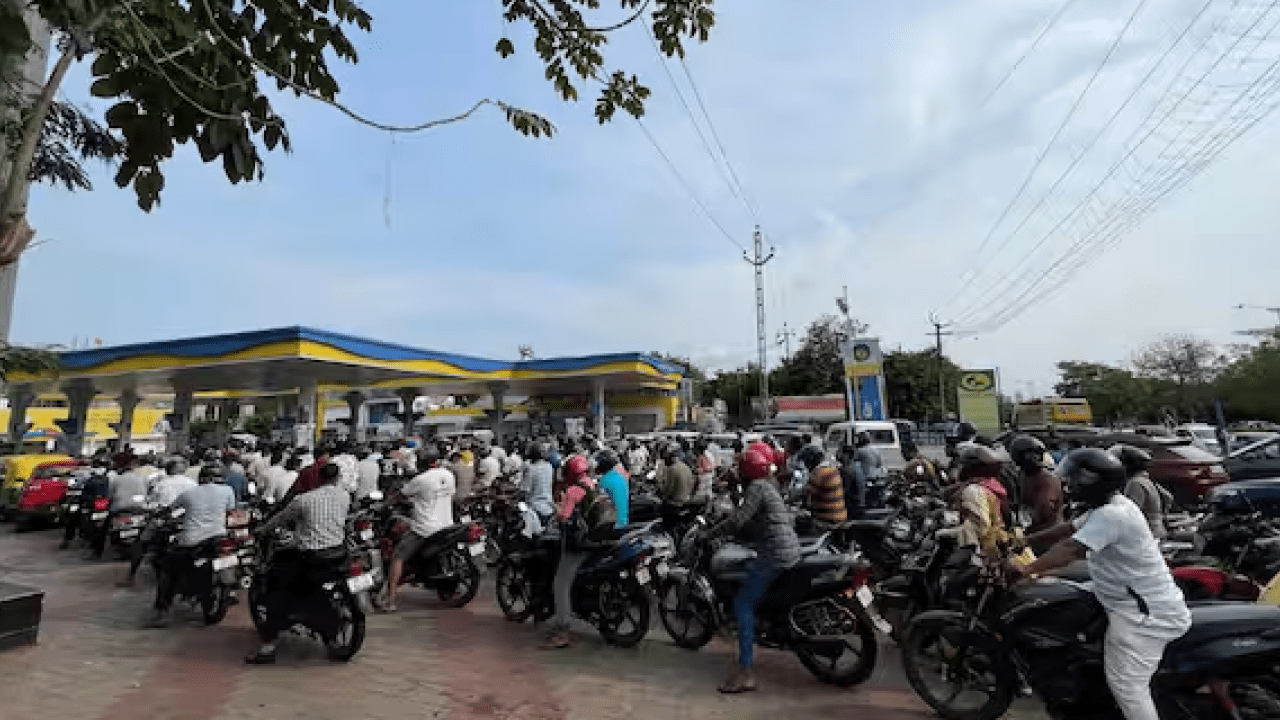
India’s fuel price crisis intensified on Monday after state-run oil marketing companies (OMCs) raised petrol and diesel prices for the fourth time in less than two weeks, pushing petrol above ₹100 per litre in Delhi for the first time in four years. The latest increases come amid continuing disruption in global oil markets triggered by the escalating US-Iran conflict and uncertainty surrounding shipping movement through the Strait of Hormuz.
With the newest revision, petrol prices in Delhi climbed by ₹2.61 to ₹102.12 per litre, while diesel rose ₹2.71 to ₹95.20. Across the country, cumulative increases since May 15 now stand at roughly ₹7.5 per litre for both fuels, raising concerns that Indian consumers may still not have seen the end of the price surge.
The fuel hikes reflect mounting pressure on India’s energy import system at a time when global crude prices remain elevated despite recent signs of diplomatic engagement between Washington and Tehran. Analysts warn that unless oil prices stabilize well below the $100-per-barrel mark, additional increases in domestic fuel prices may become unavoidable.
Also read: Petrol Prices Near ₹100 as India Announces Third Fuel Hike Amid Escalating West Asia Crisis
Strait of Hormuz Crisis Driving Global Oil Volatility
At the center of the crisis lies the Strait of Hormuz, the narrow maritime corridor between Iran and Oman through which nearly one-fifth of the world’s crude oil and liquefied natural gas supplies transit.
Following the outbreak of hostilities between the US and Iran earlier this year, commercial shipping activity in the region has faced severe disruption due to naval tensions, security threats, and rising insurance costs. The resulting uncertainty sent Brent crude prices soaring from around $72 per barrel in late February to nearly $120 in March before easing slightly in recent days.
India, which imports nearly 85–88% of its crude oil requirements, remains highly vulnerable to such global disruptions. As international oil prices climbed, domestic fuel retailers initially held prices steady for nearly 74 days, absorbing the difference between rising import costs and unchanged retail rates.
That freeze has now translated into staggered but increasingly steep price hikes.
Also read: India’s Retail Inflation Hits 13-Month High in April as Food Prices Surge Despite Stable Fuel Costs
Oil Companies Still Facing Massive Under-Recoveries
Despite four rounds of increases, financial analysts say India’s three major state-owned fuel retailers Indian Oil Corporation, Bharat Petroleum Corporation Limited and Hindustan Petroleum Corporation Limited continue to face substantial under-recoveries.
Industry estimates suggest that during the peak of the crude rally, the companies were collectively losing as much as ₹1,600 crore per day while maintaining unchanged retail fuel prices. By the time the first hike was introduced after assembly election results earlier this month, cumulative losses were reportedly estimated at more than ₹1.2 lakh crore.
Experts tracking fuel economics argue that the recent ₹7-plus increase per litre has only partially offset those losses.
Some market estimates indicate that a complete recovery of past losses would theoretically require fuel prices to rise by another ₹28–₹33 per litre a politically difficult and economically risky scenario. However, analysts believe more calibrated increases remain possible if global crude prices remain elevated.
The latest hikes also underscore the widening gap between international crude benchmarks and domestic fuel pricing mechanisms, particularly amid rupee pressure and higher transportation costs.
Metro Cities Witness Sharp Fuel Price Escalation
The latest revision affected all major metros, though the scale of increases varied by city.
In Mumbai, petrol prices rose to ₹111.21 per litre while diesel climbed to ₹97.83. Kolkata saw the steepest petrol increase among metro cities, with rates touching ₹113.51 per litre. Chennai recorded comparatively lower increases, but petrol still reached ₹107.77 while diesel neared the ₹100 mark.
Monday’s revision marked the first increase exceeding ₹1 per litre since the latest round of adjustments began earlier this month. Prior hikes had included a ₹3 increase followed by two smaller revisions of around 90 paise each.
Expert Analysis / What This Means
India’s fuel price escalation is no longer just an energy issue it is rapidly becoming a broader inflation and economic stability concern. Rising petrol and diesel costs directly increase transportation expenses, which eventually push up prices of food, consumer goods, logistics services and industrial production.
For households already dealing with expensive vegetables, edible oils and essential commodities, prolonged fuel inflation could significantly weaken purchasing power over the coming months.
The crisis also exposes India’s structural dependence on imported crude oil and the vulnerability of domestic fuel pricing to geopolitical events beyond its control. The disruption in the Strait of Hormuz has demonstrated how quickly external conflicts can translate into local economic stress.
For oil marketing companies, the challenge is equally severe. Continuing to absorb losses indefinitely could weaken future investments in refining capacity, infrastructure expansion and energy security planning.
The government now faces a difficult balancing act between controlling inflation and ensuring the financial health of state-run fuel retailers. Any aggressive increase in prices risks political backlash and economic slowdown, while delaying hikes further could deepen fiscal and corporate stress.
Compared to previous fuel crises linked to the Russia-Ukraine conflict in 2022, the current situation is potentially more complex because it directly threatens one of the world’s most critical energy transit routes.
Why This Matters
Fuel prices influence nearly every sector of the economy. Higher diesel prices raise freight and agricultural transportation costs, while petrol price increases directly affect commuters and urban consumers.
Economists warn that sustained fuel inflation could complicate the Reserve Bank of India’s efforts to maintain price stability. A prolonged rise in transport and manufacturing costs may also slow consumer demand and reduce business margins across sectors.
Additionally, India’s increasing exposure to geopolitical disruptions has reignited debate around energy diversification, strategic petroleum reserves and the acceleration of electric mobility initiatives.
What Happens Next
Global crude markets are currently watching diplomatic developments between the United States and Iran closely. Reports of possible backchannel negotiations and a potential ceasefire framework helped Brent crude fall below $100 per barrel recently after weeks of elevated pricing.
However, analysts caution that even if a diplomatic breakthrough is achieved, normal shipping operations through the Strait of Hormuz may not resume immediately. Security risks, insurance premiums and freight costs could continue to keep crude prices volatile in the near term.
Indian policymakers are therefore expected to monitor international crude movements carefully before deciding on future fuel price revisions. If Brent crude stabilizes sustainably below $100 per barrel, further domestic hikes may slow. If geopolitical tensions persist, consumers could face another round of increases in the coming weeks.
Timeline of Recent Fuel Price Hikes
- May 15, 2026: First fuel price hike of ₹3 per litre announced
- Following days: Two smaller increases of approximately 90 paise each implemented
- May 25, 2026: Fourth and steepest recent hike pushes cumulative increase to around ₹7.5 per litre
- Current Brent crude average: India’s crude basket averaged nearly $108 per barrel through May