
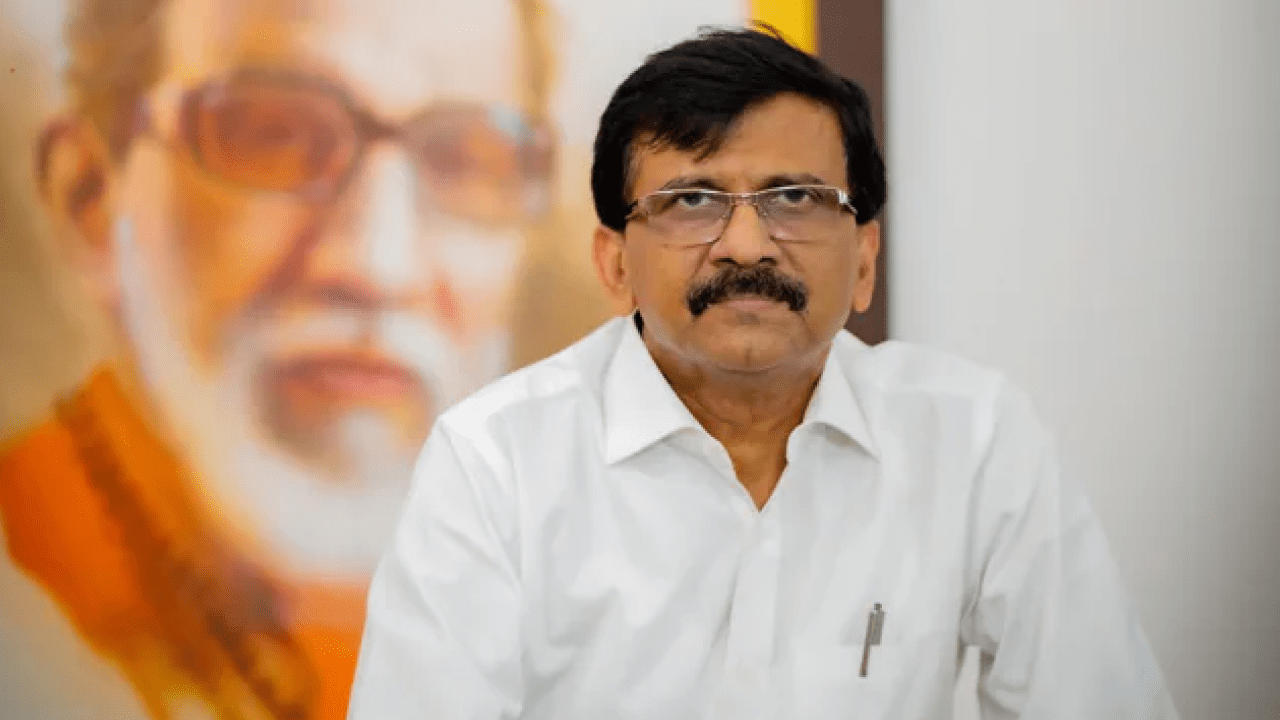
The Shiv Sena (UBT) is confronting a fresh political crisis amid growing speculation of a possible split within its parliamentary ranks, with senior leader Sanjay Raut alleging that Members of Parliament from the party are being offered massive financial incentives to defect. The development has intensified concerns about another round of political realignment in Maharashtra, nearly four years after the rebellion led by Eknath Shinde reshaped the state’s political landscape.
At the centre of the controversy are claims that several MPs belonging to the Uddhav Thackeray-led faction have been approached with offers worth up to ₹50 crore to switch allegiance. The allegations surfaced as reports emerged that a majority of the party’s Lok Sabha MPs could be considering a breakaway move that may significantly alter the balance of power within Maharashtra politics.
Speaking at a press conference, Raut claimed he had received information from a senior source indicating that certain MPs were promised ₹50 crore each, with an advance payment of ₹15 crore allegedly being offered. He further alleged that elected representatives in Maharashtra were being targeted through financial inducements in an attempt to engineer defections.
The accusations come at a sensitive moment for the opposition party, which has been struggling to consolidate its position following the 2022 split that saw Eknath Shinde and a large section of legislators break away from the undivided Shiv Sena.
Sena (UBT) Moves to Contain Rebellion
In response to the growing uncertainty, Shiv Sena (UBT) parliamentary party leader Arvind Sawant issued a whip directing all nine party MPs to attend a crucial meeting scheduled in New Delhi. The move is being viewed as an attempt to assess support within the parliamentary unit and prevent potential defections.
Raut maintained that lawmakers elected on the party’s symbol carry a responsibility toward both the organization and voters. He warned that any attempt to abandon the party could trigger a strong political and public reaction.
The concerns intensified after reports indicated that only four of the party’s nine Lok Sabha MPs attended a recent meeting convened by Uddhav Thackeray in Mumbai. Their absence fuelled speculation that a section of MPs may be exploring alternative political options.
Among those reportedly linked to the rebellion buzz are several Lok Sabha members from Maharashtra constituencies. However, no official announcement has been made, and the reports remain unverified.
‘Operation Tiger’ and the Political Calculus
Political observers have increasingly focused on what has been informally referred to as “Operation Tiger” an alleged effort to attract leaders and elected representatives from the Thackeray camp into the Shinde-led Shiv Sena.
The speculation gained further momentum after Maharashtra minister Pratap Sarnaik publicly indicated that MPs and MLAs who support the ideology of Shiv Sena founder Bal Thackeray and have confidence in Eknath Shinde’s leadership would be welcomed into the party.
Additional political intrigue emerged after Shiv Sena (UBT) MP Sanjay Deshmukh reportedly met Union minister and Shiv Sena leader Prataprao Jadhav in New Delhi. The meeting, combined with Deshmukh’s absence from a key party gathering, added to the perception of unrest within the opposition camp.
Despite the rumours, Raut has publicly rejected suggestions that a split is imminent. He insisted that all party MPs remain united behind Uddhav Thackeray and argued that attempts were being made to exaggerate internal differences.
Anti-Defection Law Could Shape Outcome
A crucial factor in the unfolding political drama is the anti-defection law. Under existing provisions, a breakaway faction representing at least two-thirds of a legislative party can potentially avoid disqualification.
If six out of the nine Lok Sabha MPs belonging to Shiv Sena (UBT) were to separate and form a distinct parliamentary group, they could meet the required threshold. Such a scenario would significantly strengthen the breakaway faction’s legal position while weakening Thackeray’s influence in Parliament.
This possibility has prompted heightened activity among party leaders, who are now engaged in efforts to maintain unity and prevent another organisational setback.
Also read: RBI Debunks Plastic Currency Rumours as Polymer Banknote Proposal Remains Under Review
Expert Analysis / What This Means
The current crisis represents more than a routine episode of political dissent. For Shiv Sena (UBT), it is a critical test of leadership stability and organisational resilience after already enduring a major split in 2022.
If a substantial number of MPs defect, the party could face reduced influence in Parliament, weaker bargaining power within opposition alliances, and fresh challenges in retaining grassroots support. The controversy also raises broader questions about political loyalty, party discipline, and the role of financial inducements in contemporary electoral politics.
For Maharashtra politics, another split could further consolidate Eknath Shinde’s position while complicating opposition efforts ahead of future electoral contests. It may also encourage similar realignments in regional parties across India if successful.
The allegations themselves are politically significant because they reinforce narratives frequently used by opposition parties that elected representatives are being encouraged to switch camps through incentives. Whether or not the claims are substantiated, the perception of instability can influence public opinion and party morale.
Most importantly, the episode highlights how parliamentary numbers remain a decisive factor in modern coalition politics, where even a handful of defections can alter strategic equations.
Background Context
The Shiv Sena’s internal divisions first erupted dramatically in 2022 when Eknath Shinde led a rebellion that resulted in the collapse of the Maha Vikas Aghadi government in Maharashtra. The split eventually led to a prolonged legal and political battle over the party’s identity, leadership, and electoral symbol.
Since then, Uddhav Thackeray’s faction has sought to rebuild its organisation while positioning itself as a key opposition force. Any further erosion of its parliamentary or legislative strength would represent another significant challenge to those efforts.
What Happens Next?
The immediate focus remains on the meeting called by the Sena (UBT) parliamentary leadership. Attendance and subsequent statements from MPs are expected to provide the clearest indication yet about the extent of internal dissatisfaction.
Political observers will also closely monitor whether any formal communication is made to Lok Sabha Speaker Om Birla regarding the formation of a separate parliamentary group. At the same time, reports that some MLAs may also be in contact with the Shinde camp suggest that developments could extend beyond Parliament and reshape the broader political landscape in Maharashtra.
For now, the allegations, denials, and speculation have set the stage for what could become one of the most consequential political confrontations in the state since the original Shiv Sena split.