
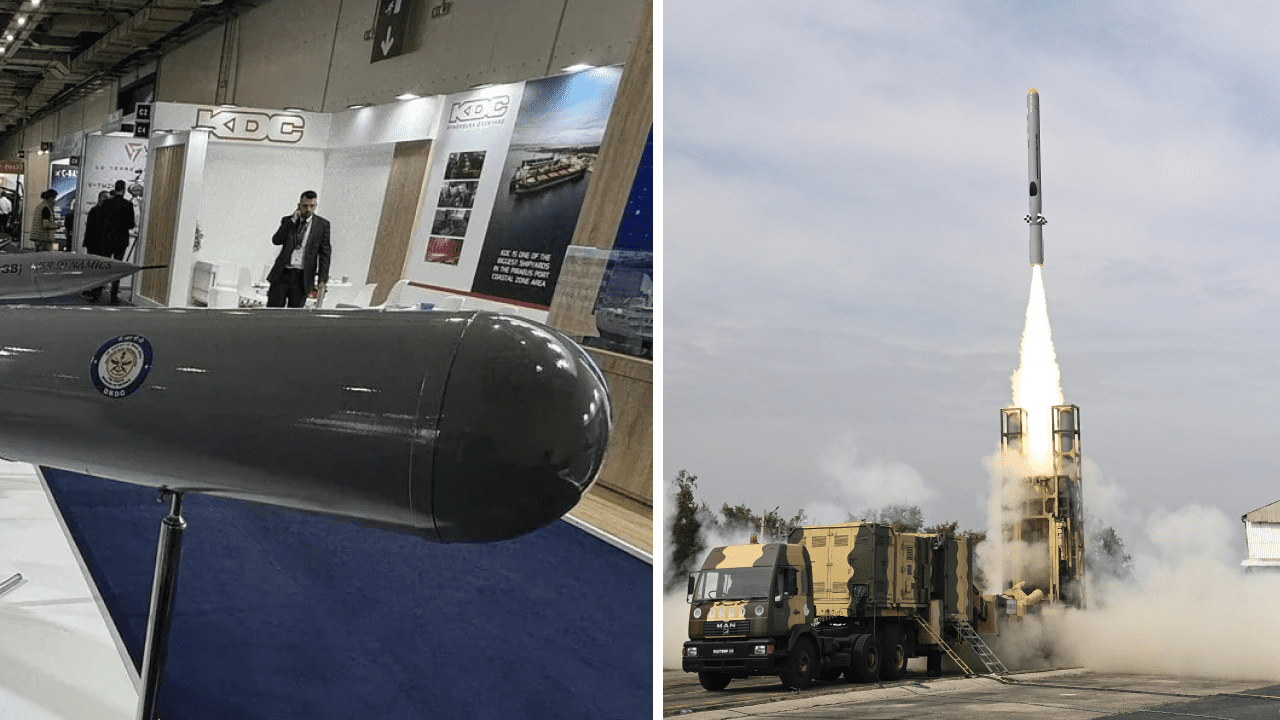
India has achieved a significant milestone in its indigenous defence modernization programme with the successful test of the Long Range Land Attack Cruise Missile (LRLACM), a next-generation cruise missile developed by the Defence Research and Development Organisation (DRDO). Conducted from the Integrated Test Range (ITR) at Chandipur on the Odisha coast on June 15, the trial demonstrated the missile’s ability to accurately engage a target approximately 1,000 kilometres away.
The successful launch is particularly notable because the LRLACM emerges from the lessons learned during the development of the Nirbhay cruise missile programme, which faced several technical setbacks over the years. Defence officials described the latest test as a “textbook” firing, indicating that the missile met all key mission parameters and validated critical technologies developed for long-range precision strike operations.
Designed to strengthen India’s conventional deterrence capability, the LRLACM is expected to become an important component of the country’s future military arsenal as regional security dynamics continue to evolve.
A New Generation of Indigenous Cruise Missiles
The LRLACM has been developed as the successor to the Nirbhay project, incorporating major improvements in guidance, navigation, and mission reliability. According to defence officials, the missile successfully resolved many of the technical challenges encountered during earlier developmental efforts.
The subsonic cruise missile is capable of reaching speeds of up to Mach 0.8 while maintaining low-altitude flight profiles that allow it to evade enemy radar detection. By flying close to the terrain, the missile can penetrate heavily defended airspaces and strike strategic targets with greater precision.
Officials also indicated that the missile is designed for deployment from multiple platforms, including mobile land launchers, naval vessels, and sub-surface platforms. This flexibility significantly enhances India’s ability to conduct long-range precision strikes across different operational environments.
The weapon reportedly carries a 500-kilogram warhead, providing substantial destructive capability against high-value targets deep inside adversary territory.
Why the LRLACM Test Matters
The successful demonstration comes at a time when long-range stand-off weapons are becoming increasingly important in modern warfare. Militaries around the world are investing heavily in systems capable of striking targets from significant distances while minimizing exposure to enemy air defences.
For India, the LRLACM fills a critical capability gap by providing an indigenous long-range land-attack cruise missile capable of precision engagement beyond 1,000 kilometres. Such systems allow commanders to target strategic infrastructure, command centres, logistics hubs, and military installations without deploying aircraft into contested airspace.
The achievement also underscores India’s growing emphasis on self-reliance in defence technology and indigenous weapons development.
Also read: India’s Nationwide Emergency Alert Test Sparks Panic, Signals New Era in Disaster Communication
Expert Analysis / What This Means
The successful LRLACM test represents more than just another missile trial it signals the maturation of India’s long-range precision strike ecosystem. After years of developmental challenges under the Nirbhay programme, the latest success suggests that DRDO has overcome key technological hurdles associated with guidance accuracy, reliability, and low-altitude flight performance.
For the armed forces, the missile offers a valuable stand-off strike option capable of engaging strategic targets while reducing operational risks to personnel and platforms. Its ability to fly at terrain-hugging altitudes makes interception considerably more difficult compared to conventional ballistic trajectories.
From a regional security perspective, the missile strengthens India’s deterrence posture in an environment where neighbouring countries already field advanced cruise missile capabilities. It also aligns with the broader military trend toward networked precision warfare, where long-range missiles play a central role in shaping battlefield outcomes.
The successful test further reinforces India’s ambition to reduce dependence on foreign weapon systems and develop indigenous alternatives comparable to globally deployed cruise missile platforms. If future trials proceed as planned, the LRLACM could become one of the most important additions to India’s conventional strike arsenal over the coming decade.
Industry / Market Impact
The successful LRLACM programme is expected to provide momentum to India’s defence manufacturing ecosystem. Indigenous missile development generates opportunities across multiple sectors, including propulsion systems, advanced electronics, guidance technologies, composite materials, and defence software.
The programme also supports the government’s broader push for defence self-reliance, encouraging greater participation from domestic industry partners and reducing long-term dependence on imported strategic weapon systems.
As India continues to invest in advanced missile technologies, successful indigenous programmes could enhance export potential and strengthen the country’s position in the global defence market.
Background Context
India’s pursuit of long-range cruise missile capability has evolved over several years. The Nirbhay programme, initiated to provide an indigenous long-range cruise missile solution, encountered multiple developmental setbacks during testing phases.
The LRLACM represents the next phase of that effort, incorporating technological refinements aimed at improving mission success rates and operational effectiveness.
The development also comes amid growing regional missile capabilities. Pakistan has operated the Babur cruise missile for more than a decade, while China maintains a diverse inventory of conventional and nuclear-capable cruise missile systems. Against this backdrop, India’s continued investment in indigenous precision-strike technologies is viewed as an important component of maintaining strategic balance and deterrence.
What Happens Next
Although the latest trial marks a major achievement, the missile has not yet entered operational service. Defence officials indicated that the LRLACM is expected to undergo two additional developmental trials followed by two user evaluation trials over the next two years.
These tests will validate the missile’s performance under different operational conditions and ensure readiness for deployment with the Indian armed forces.
Upon successful completion of the testing cycle, the missile is expected to be inducted into service, providing India with a domestically developed long-range land-attack cruise missile capable of enhancing strategic and tactical strike operations.