
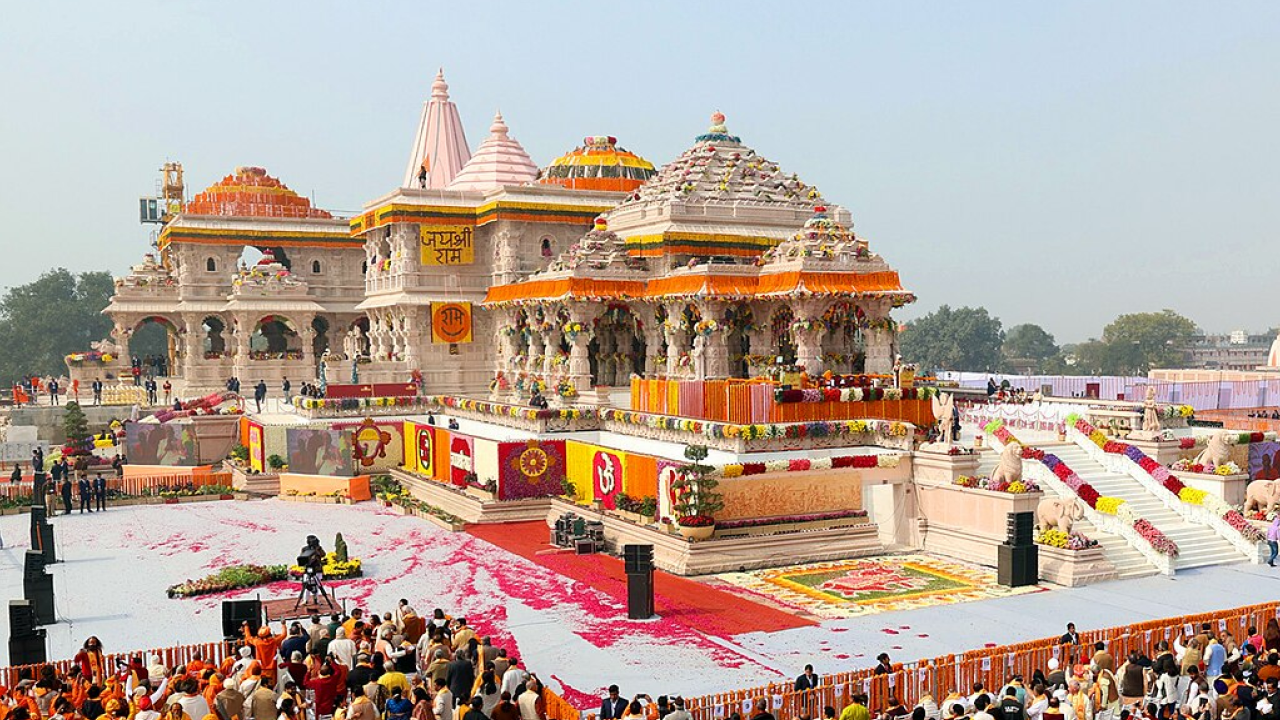
The Shri Ram Janmabhoomi Teerth Kshetra Trust is set to hold a decisive meeting in Ayodhya on Monday to determine the future of its senior leadership, including general secretary Champat Rai and trustee Anil Kumar Mishra, following serious allegations of donation mismanagement and theft linked to the Ram Mandir. The high-stakes meeting comes as a Special Investigation Team (SIT) continues probing irregularities in temple donations, with multiple arrests already made and recovered cash nearing ₹80 lakh. The outcome of the meeting is expected to reshape the administrative structure of one of India’s most closely watched religious institutions, as scrutiny intensifies over financial transparency and governance of the Ram Mandir project.
The meeting, scheduled for 3 pm at the Yatri Suvidha Kendra within the Shri Ram Janmabhoomi complex, will bring together trustees, government representatives, and legal experts in person and virtually. While resignations of both Rai and Mishra were submitted earlier, the Trust is now expected to formally decide whether to accept them and move ahead with administrative restructuring. The gathering also marks the first time a Trust meeting is being held inside the Ram Mandir premises itself, a shift seen as significant amid rising sensitivities and heightened confidentiality.
Also read: Fresh Violence Erupts in Manipur’s Kamjong District as Naga and Kuki Groups Trade Arson Allegations
Leadership Shake-Up and Administrative Reset Under Consideration
At the centre of today’s deliberations is the resignation of two key figures, Champat Rai, the Trust’s general secretary, and trustee Anil Kumar Mishra, both of whom stepped down following mounting allegations linked to irregularities in donation handling. According to sources familiar with the process, the Trust is likely to accept the resignations, effectively formalising their exit from the institution.
The agenda goes beyond resignations, extending to broader governance concerns. The Trust is expected to review preliminary findings submitted by the SIT, which is examining how donations collected at the temple were counted, recorded, and safeguarded. Alongside this, discussions on audit procedures for the financial year 2025–26 and internal restructuring of temple administration are also expected.
Names such as Bajrang Bangda and Neeraj Dauneria have surfaced as potential replacements for leadership positions, although no formal decision has been indicated yet. Any appointment would require consensus within the Trust, which operates under a structured voting mechanism.
Investigation Deepens as SIT Expands Financial Scrutiny
The controversy surrounding the Trust intensified after allegations of donation theft emerged in early June, triggering a formal investigation by the Uttar Pradesh government. A Special Investigation Team was subsequently constituted to probe the matter, leading to arrests of eight individuals associated with the cash-counting team.
Authorities have reportedly recovered ₹79,85,493 in cash from the accused, with evidence suggesting that funds were hidden in unusual locations including bathrooms, agricultural storage spaces, and even animal feed materials. The arrested individuals include members of interconnected groups, some of whom are linked by familial or close associate ties to individuals within the Trust’s administrative ecosystem.
The SIT has widened its scope beyond immediate cash handling, initiating a broader re-audit of temple finances over a five-year period. This includes scrutiny of valuables such as gold, silver, jewellery, and other offerings made by devotees. Officials have also questioned former Trust members and administrative personnel as part of the ongoing inquiry.
Political Reactions Intensify as Case Gains National Attention
The allegations have rapidly escalated into a political flashpoint. Opposition leaders have demanded greater transparency and even called for a Supreme Court-monitored investigation into the alleged misappropriation of temple donations. Some political figures have framed the controversy as a broader governance failure, intensifying pressure on both the Trust and state authorities.
At the same time, the ruling side has pushed back strongly, accusing opposition parties of politicising a religious institution. The debate has widened beyond Ayodhya, touching on broader narratives around temple management, state oversight, and public trust in religious institutions.
Meanwhile, the Vishva Hindu Parishad (VHP) has urged police authorities to investigate public statements made by opposition leaders regarding the donation controversy, arguing that unverified claims could inflame public sentiment. The organisation has also called for accountability if allegations are found to be unfounded.
Internal Distancing and Calls for Fair Investigation
Within the Trust, treasurer Govind Dev Giri has publicly distanced himself from the day-to-day handling of donation operations, stating that audit records are intact and accessible to authorised individuals. He has emphasised that the investigation must remain impartial and guided by legal process, expressing confidence in the SIT and judiciary.
His remarks reflect a broader attempt within the Trust to project institutional neutrality amid growing public scrutiny. Several trustees have echoed similar sentiments, stressing that wrongdoing, if proven, should be addressed regardless of rank or position within the organisation.
Expert Analysis / What This Means
The unfolding crisis represents one of the most serious administrative challenges faced by the Ram Janmabhoomi Teerth Kshetra Trust since its formation.
It highlights the vulnerability of large religious institutions that manage significant cash and asset inflows without fully centralised digital auditing systems.
The acceptance of resignations, if confirmed, signals an attempt to restore public confidence by demonstrating internal accountability rather than external compulsion.
However, the widening SIT probe suggests that the issue may extend beyond individual misconduct to systemic weaknesses in donation tracking and oversight.
Politically, the case has become highly sensitive, intersecting with broader debates on temple governance and state involvement in religious institutions.
Future reforms are likely to focus on digitisation, real-time auditing, and stricter segregation of duties in donation handling.
The outcome of this case could also set a precedent for how major temple trusts across India manage financial transparency going forward.
Industry / Institutional Impact
The controversy is expected to influence governance standards across major temple trusts in India, many of which handle substantial voluntary donations. Increased scrutiny may push institutions toward adopting formal audit frameworks similar to corporate financial systems.
It may also accelerate government-backed discussions on standardising donation management protocols, especially for large pilgrimage centres.
Religious institutions could face greater pressure to adopt technology-based tracking systems for cash and valuables to prevent future irregularities.
What Happens Next
The immediate outcome depends on the Trust’s decision on accepting the resignations of Rai and Mishra. If accepted, interim leadership arrangements will likely be announced.
The SIT is expected to continue its re-audit process, which may expand further depending on preliminary findings.
Additional questioning of former and current officials remains possible as investigators map the full financial flow of donations.
Political debate around the issue is also expected to intensify as opposition parties demand greater oversight.
Background Context
The Shri Ram Janmabhoomi Teerth Kshetra Trust was constituted in February 2020 to oversee the construction and management of the Ram Mandir in Ayodhya. It includes ex-officio government representatives as well as appointed trustees from religious, legal, and administrative backgrounds.
The current controversy emerged after allegations surfaced regarding irregularities in donation counting operations, leading to arrests of personnel linked to cash handling.
The SIT investigation and subsequent administrative resignations mark the most significant crisis faced by the Trust since its establishment.