
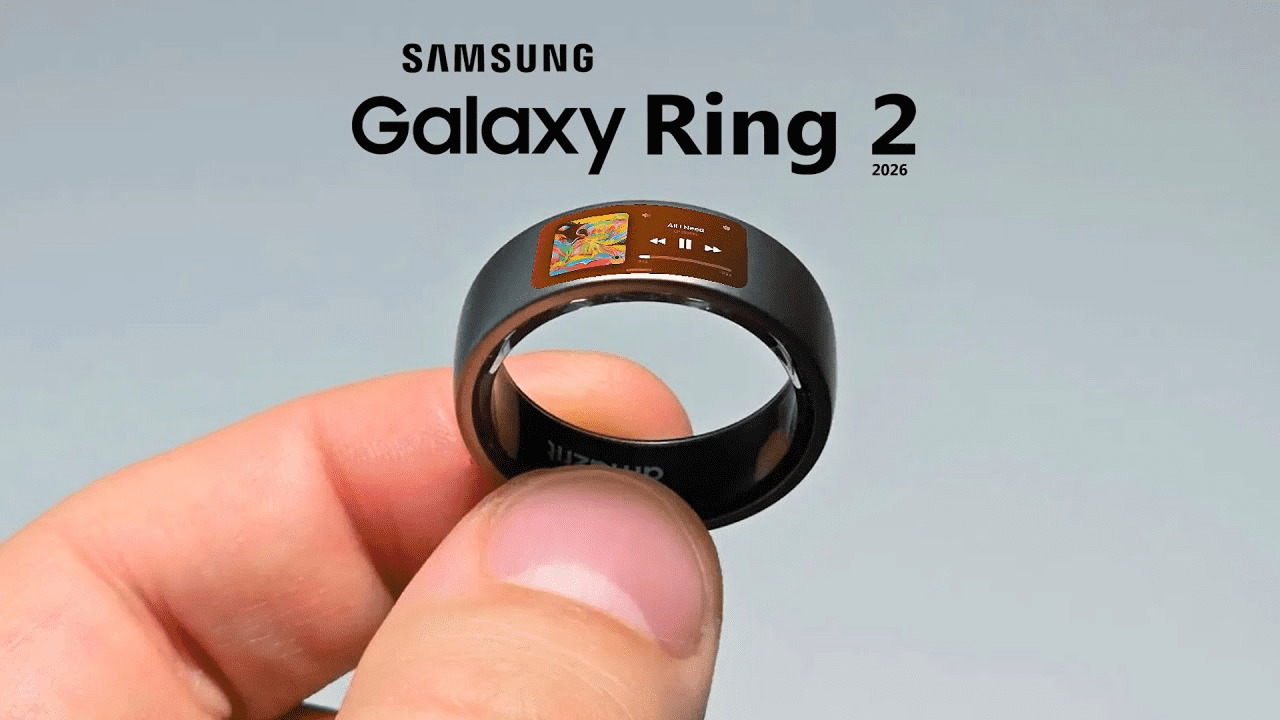
Samsung has officially confirmed that the Galaxy Ring 2 is in development, ending months of speculation about the future of its smart ring lineup. While the company has not revealed a launch date or detailed specifications, senior executives have indicated that the next-generation wearable will focus less on hardware upgrades and more on AI-powered software, connected health services, and a broader ecosystem. One of the biggest takeaways from Samsung’s latest comments is a strong hint that the Galaxy Ring 2 could eventually support Apple’s iPhone, potentially expanding its reach beyond the Android ecosystem.
The confirmation came during an interview with Forbes, where Dr. Hon Pak, Samsung’s Senior Vice President and Head of the Digital Health Team, outlined the company’s long-term vision for wearable technology. Rather than competing solely on sensor technology, Samsung believes the future of smart rings will be defined by intelligent health insights, personalized coaching, and seamless integration across multiple connected devices.
Samsung Shifts Focus from Hardware to Intelligent Health Software
According to Dr. Pak, wearable sensors have reached a point where differences between competing smart rings are becoming increasingly marginal. As a result, Samsung sees software and digital health services as the true competitive advantage.
Instead of attempting to create a single wearable capable of doing everything, Samsung is building an ecosystem where the Galaxy Ring, Galaxy Watch, smartphones, Samsung Health, and SmartThings-enabled devices work together to provide a more comprehensive picture of a user’s health.
The company’s strategy centers on collecting data from multiple devices and transforming that information into personalized recommendations powered by artificial intelligence. This approach aligns with Samsung’s broader healthcare ambitions, which include preventive monitoring and long-term wellness management rather than simple fitness tracking.
Also read: Xiaomi Watch S5 Launch Signals New Challenge to Apple and Samsung With 21-Day Battery Life
iPhone Compatibility Could Be the Biggest Upgrade
Perhaps the most significant revelation was Samsung’s suggestion that the Galaxy Ring 2 may finally support iPhones.
When asked directly about compatibility with Apple’s devices, Dr. Pak declined to confirm the feature but hinted that users would be “very pleased” with upcoming announcements. Although not an official confirmation, the response strongly suggests Samsung is considering expanding beyond Android.
Unlike smartwatches, smart rings do not rely heavily on notifications or on-device displays. Most functions including sleep tracking, heart rate monitoring, activity analysis, and wellness insights operate through companion applications. If Samsung brings both Galaxy Wearable and Samsung Health to iOS with full functionality, the Galaxy Ring could become the company’s first wearable to offer meaningful cross-platform support.
Such a move would significantly increase Samsung’s potential customer base and allow it to compete more directly with established players in the premium smart ring market.
Expected Hardware Improvements
Samsung has not officially announced the Galaxy Ring 2’s technical specifications, but industry reports suggest several notable hardware enhancements are under consideration.
Expected upgrades include:
- Longer battery life, potentially increasing from seven days to as much as nine or ten days.
- A thinner and lighter titanium design with improved internal component layout.
- More accurate health sensors for sleep analysis and cardiovascular monitoring.
- Improved energy efficiency through next-generation battery technology, including silicon-carbon batteries currently under development.
There has also been speculation surrounding non-invasive blood glucose monitoring. However, this remains a long-term research objective rather than a confirmed feature, and Samsung has not indicated that the technology is ready for commercial release.
Samsung’s Growing AI Health Ecosystem
Beyond the hardware itself, Samsung is investing heavily in expanding its digital health platform.
The company’s health ecosystem already analyzes metrics such as heart rate, blood oxygen levels, respiratory rate, sleep quality, physical activity, and stress. One planned feature establishes a personal health baseline after approximately one week of monitoring and alerts users when significant deviations occur.
Samsung is also developing a Heart Health Score designed to assess cardiovascular wellness using multiple lifestyle factors, including sleep, nutrition, activity levels, and stress.
Looking further ahead, Samsung plans to introduce an AI Health Coach capable of learning individual user behavior instead of providing generic recommendations. Rather than delivering identical reminders to every user, the AI system aims to personalize coaching style, timing, and motivation based on each person’s habits and responses.
The ecosystem extends beyond wearable devices. Through SmartThings integration, Samsung envisions smart home appliances such as refrigerators, microwaves, and cooking ranges contributing to healthier lifestyle recommendations, including recipe suggestions based on ingredients already available at home.
Expert Analysis / What This Means
Samsung’s confirmation signals that the next phase of wearable technology is shifting from hardware innovation toward intelligent software experiences. As sensor technology becomes increasingly standardized across the industry, companies are competing on how effectively they interpret and use health data rather than simply collecting it.
Potential iPhone compatibility would represent one of Samsung’s most significant wearable strategy changes in years, opening the Galaxy Ring to millions of users previously excluded from its ecosystem. This could substantially strengthen Samsung’s position against dedicated smart ring manufacturers while increasing competition across the wearable health market.
The growing emphasis on AI-powered coaching also reflects a broader trend in digital healthcare, where personalized preventive care is becoming more valuable than isolated fitness metrics. If Samsung successfully combines data from smart rings, watches, smartphones, and connected home devices, it could create one of the industry’s most comprehensive consumer health platforms.
However, software execution will ultimately determine the Galaxy Ring 2’s success. Better sensors alone are unlikely to differentiate future smart rings, meaningful insights, actionable recommendations, and user trust will be the deciding factors.
Industry / Market Impact
The smart ring segment has evolved into one of the fastest-growing categories within wearable technology. As more companies enter the market, differentiation through hardware alone has become increasingly difficult.
Samsung’s strategy reflects a wider industry shift toward ecosystem-driven products. Rather than selling standalone devices, manufacturers are creating integrated platforms where multiple connected products enhance each other’s functionality.
Opening the Galaxy Ring to iPhone users would also remove one of Samsung’s biggest competitive limitations and could reshape consumer expectations regarding cross-platform wearable compatibility.
What Happens Next
Although Samsung has officially confirmed development of the Galaxy Ring 2, the company has not announced a release schedule.
Industry reports suggest a launch is more likely in 2027 than in the near term, with ongoing development focused on software capabilities, battery improvements, and AI health services. Some reports also indicate that legal challenges involving patent disputes in the smart ring industry may influence the overall timeline.
Until Samsung formally unveils the device, many of the rumored hardware improvements remain unconfirmed. However, the company’s latest statements make it clear that the Galaxy Ring 2 will be positioned as more than a fitness tracker it is intended to become a central component of Samsung’s expanding AI-powered health ecosystem.